Pakistan’s leaders hail first astronaut aboard Chinese craft: ‘Proud one of us has gone into space’
 British tourist travels 29 hours from Mumbai to Amritsar for ₹5,461, rates Indian Railways 10/10 | Viral video
 The Supreme Court will decide whether assault weapons bans violate the Second Amendment
 A Critic of Beijing Falls Short in Taiwan’s Key Mayoral Election
 EPA says no rise in contamination after Army detonates lead azide stockpile in Iowa
Officials say a tanker’s steering failed before it crashed into a cruise ship in New Orleans
**
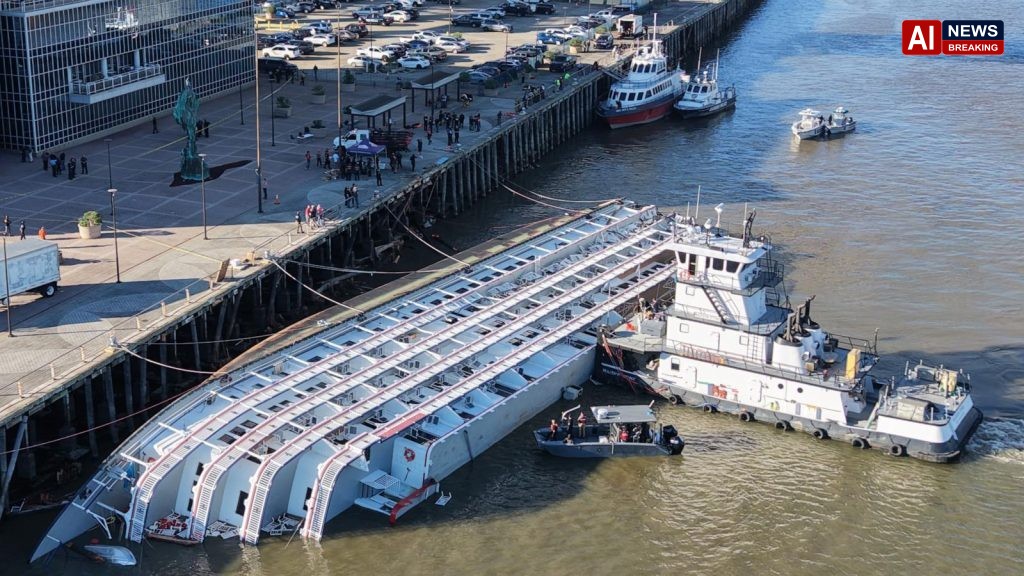
Officials say a tanker's steering failed before it crashed into a cruise ship in New Orleans - AI News Breaking
officials tankers steering failed:
federal investigators have announced a preliminary conclusion that a mechanical failure in the steering system of a tanker was the primary factor that caused the vessel to ram a cruise ship docked at the Port of New Orleans on 8 May. The finding, released by the National Transportation Safety Board (NTSB) and the Coast Guard’s Marine Safety office, indicates that the tanker’s rudder became stuck in a hard‑over position, leaving the crew powerless to correct the vessel’s course as it entered the busy harbor channel. The crash, which resulted in significant damage to the cruise liner and a brief evacuation of its passengers, is now being treated as a “steering‑system failure” incident pending a full investigation.The tanker, identified as the MV Marlon Elliott, is a 260‑metre, double‑hull oil carrier owned by a Panamanian‑registered company but operated by a U.S.‑based charterer..
At the time of the collision it was laden with light crude destined for a refinery in Texas. According to the Coast Guard’s initial report, the vessel entered the approach channel at the recommended speed of 6 knots, but shortly thereafter the steering gear disengaged, causing the rudder to swing fully to starboard. The ship’s automated navigation system logged a rapid change in heading from 040° to 090° within seconds, a movement that left the crew with only a few moments to react.Captain Luis Ramirez, who was on watch aboard the tanker, testified that alarms sounded for loss of steering and that the emergency steering pump failed to engage..
“We tried to revert to manual control, but the hydraulic pressure had dropped and the rudder stayed locked,” he said in an interview with investigators. The crew initiated an emergency stop and dropped anchor, yet the vessel continued to drift forward due to residual momentum, eventually striking the side of the cruise ship, the SS Magnolia Belle, which was moored at Pier 6 for routine maintenance.The SS Magnolia Belle, a 300‑metre, 4‑star cruise liner operated by a major U.S. cruise line, sustained a breach to its starboard hull near the waterline, flooding several lower decks..
Although the ship’s watertight doors sealed automatically, the impact caused the loss of power to the ship’s propulsion system, prompting the captain to order an immediate evacuation of the 2,150 passengers and 950 crew members. Emergency services from the harbor, including fireboats and medical teams, responded within minutes, and all individuals were accounted for and transferred to nearby shelters. No fatalities were reported, but 37 people suffered minor injuries ranging from cuts to bruises.Port authorities swiftly closed the main shipping lane for six hours while damage assessments were carried out and the tanker was towed to a nearby anchorage for a more thorough inspection..
The Coast Guard’s Marine Safety office later released photographs showing a severely bent rudder stock and torn hydraulic lines, supporting the steering‑failure hypothesis. Engineers from the tanker’s owner are now conducting a detailed forensic analysis of the steering gear, the hydraulic pump, and associated electronic control units to determine whether the fault was caused by a manufacturing defect, inadequate maintenance, or an external factor such as debris in the water.The incident has reignited debate over the aging infrastructure of the United States’ inland waterways and the regulatory oversight of foreign‑flagged vessels operating in domestic ports. Senator Maria Torres (D‑LA) issued a statement urging Congress to review the existing safety standards for large commercial ships, emphasizing that “the safety of our passengers and the integrity of our ports depend on rigorous, enforceable maintenance regimes.” The Senate Commerce Committee has scheduled a hearing for early next month to examine the NTSB’s preliminary findings and to explore potential legislative reforms.Meanwhile, the cruise line has announced that the SS Magnolia Belle will undergo extensive repairs at the Port of New Orleans shipyard, with an estimated downtime of three to four weeks..
The company has pledged to provide full refunds or rebooking options to affected passengers and has activated its crisis‑management team to address the broader reputational impact. In a press release, the line’s spokesperson said, “Our priority remains the safety and well‑being of our guests and crew, and we are working closely with federal agencies to ensure a swift and thorough resolution.”Industry analysts note that steering‑system failures, while rare, have historically led to high‑profile accidents when they occur in congested harbor environments. A 2018 incident in the Gulf of Mexico involving a similar failure resulted in a collision that caused an oil spill of over 5,000 barrels..
Those precedents have prompted the Maritime Administration to issue advisories encouraging operators to conduct more frequent checks of hydraulic and electronic steering components, especially on vessels that exceed 200 metres in length.The NTSB’s final report, expected later in the year, will likely address not only the technical causes but also the human factors that contributed to the event. Early indications suggest that communication breakdowns between the tanker’s bridge team and the on‑shore pilot may have limited the crew’s ability to implement emergency procedures effectively. Investigators will also review the adequacy of the port’s traffic‑management system, which has been praised for its real‑time vessel tracking but may need enhancements to mitigate the risk of similar incidents in the future.As the maritime community watches the unfolding inquiry, the collision serves as a stark reminder of the complex interplay between vessel technology, crew training, and port infrastructure..
While the immediate physical damage appears contained and no lives were lost, the financial repercussions for both the tanker’s owners and the cruise line could be substantial, potentially running into tens of millions of dollars when repair costs, compensation claims, and insurance premiums are taken into account. The incident underscores the importance of proactive maintenance regimes and robust regulatory frameworks to safeguard the safety of one of the nation’s busiest maritime gateways..
Preliminary NTSB and Coast Guard findings say a stuck rudder caused the MV Marlon Elliott to veer into the moored cruise liner SS Magnolia Belle, prompting an evacuation but no deaths. The crash has reignited calls for tougher oversight of vessel steering systems and port safety standards.
A steering‑system failure that crippled a massive oil tanker exposes how fragile the nexus of aging vessel hardware and lax oversight has become, prompting a reckoning on whether current maintenance mandates can truly protect congested U.S. ports.
If legislators act on the NTSB’s findings, tighter inspection regimes could raise operating costs but also shield the maritime gateway from costly accidents that jeopardize both passenger safety and the nation’s energy supply chain.