
 Pakistan’s leaders hail first astronaut aboard Chinese craft: ‘Proud one of us has gone into space’
 British tourist travels 29 hours from Mumbai to Amritsar for ₹5,461, rates Indian Railways 10/10 | Viral video
 The Supreme Court will decide whether assault weapons bans violate the Second Amendment
 A Critic of Beijing Falls Short in Taiwan’s Key Mayoral Election
 EPA says no rise in contamination after Army detonates lead azide stockpile in Iowa
Officials: Washington pulp mill violated safety standards before deadly tank rupture
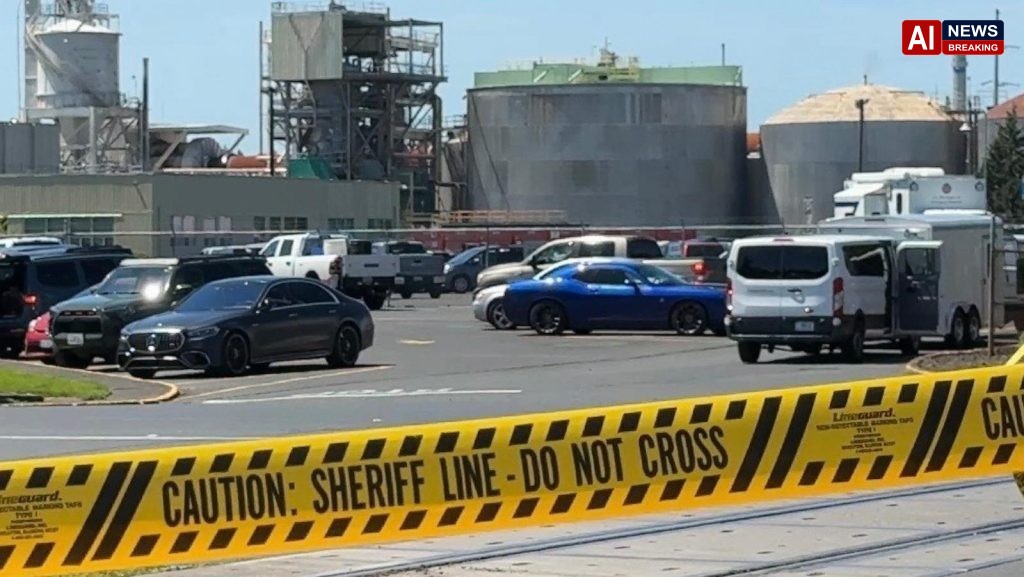
Officials: Washington pulp mill violated safety standards before deadly tank rupture - AI News Breaking
officials washington pulp mill:
The United States Department of Labor’s Occupational Safety and Health Administration (OSHA) released a detailed report last week that found the Washington-based pulp and paper mill involved in the May 15 tank rupture had repeatedly failed to meet basic safety requirements in the years leading up to the disaster. The report, which was made public after a request under the Freedom of Information Act, documents a pattern of neglect and regulatory non‑compliance that raises serious questions about the oversight of hazardous industrial facilities nationwide.At the heart of the incident was a 4‑tonne, high‑pressure chemical tank that exploded in the mill’s production line, sending a plume of toxic vapors across the surrounding community. Eleven people were killed and dozens more injured, some requiring long‑term rehabilitation..
The explosion occurred as workers were conducting routine maintenance on the tank, a task that should have been carried out under strict safety protocols. The OSHA report indicates that those protocols were not in place, or were ignored, in the weeks and months before the tragedy.According to the investigation, the mill had been cited for unsafe storage of hazardous materials on at least three separate occasions in the five years preceding the accident. The citations were issued by state regulators, not OSHA, and the mill’s management repeatedly failed to correct the deficiencies..
In one instance, workers were required to store flammable liquids in an area that had been previously identified as a fire risk due to inadequate ventilation. The mill’s own safety manual, which was updated in 2018, contained outdated procedures for handling high‑pressure systems, and employees were not provided with the training required to implement the revised guidelines.The report also highlighted a failure to maintain the tank’s safety valve, a critical component designed to release pressure if the system became unsafe. The valve had been inspected in 2019 and found to be non‑functional; however, the mill’s maintenance logs indicate that the valve was not repaired until early 2021, a delay of more than 18 months..
The delay was partially attributed to a shortage of spare parts, but the report notes that the company had received a notice from OSHA in 2020 warning that the valve was a critical safety risk. The notice was not acted upon, and the mill’s safety committee did not schedule a replacement until the following year.In addition to the physical safety issues, the investigation found a breakdown in communication between the mill’s engineering staff and its safety officers. In 2020, a new safety officer was appointed, but the officer’s qualifications were questioned by the mill’s senior management..
The officer’s resume listed a bachelor’s degree in industrial engineering but lacked any certification in occupational safety or hazardous materials management. During a routine audit in 2021, the officer was unable to explain how the company’s emergency response plan complied with federal regulations, leading to a reprimand from OSHA.The mill’s corporate parent has issued a statement expressing condolences to the families of those who died and promising to cooperate fully with all investigations. The statement also cited the company’s commitment to “maintaining the highest standards of safety and compliance.” However, the OSHA report indicates that the parent company had limited visibility into the day‑to‑day operations of its subsidiary and did not conduct its own risk assessments..
The parent’s board of directors, according to the report, was not informed of the 2019 safety valve inspection until a month after the fact, and the board only became aware of the 2021 delay in replacement during a meeting that followed the explosion.The federal investigation into the incident is ongoing, but early indications suggest that the company may face significant penalties. OSHA has a history of imposing fines that can reach into the millions of dollars for violations that result in loss of life or severe injury. The company’s legal counsel has stated that it is “fully cooperating with authorities and will provide any further information required.”Beyond the regulatory implications, the incident has sparked a broader debate over the regulation of chemical processing in the pulp and paper industry..
Critics argue that the industry has historically been slow to adopt best practices for hazardous material handling. Environmental groups have pointed to the mill’s history of chemical spills, noting that the company had been fined for discharging untreated effluent into a local river in 2017. While the mill has since installed new treatment systems, the effectiveness of those measures remains under scrutiny.The local community has responded with a mix of anger and grief..
Several residents have organized a petition demanding that the state revamp its oversight of the pulp and paper sector and that the company be required to rebuild the damaged plant in a safer configuration. A community leader who wished to remain anonymous told reporters that the town had “lost a vital part of its identity” in the wake of the tragedy. The town’s mayor, meanwhile, has pledged to support the families and to work with state authorities to ensure that such a disaster never occurs again.In the wake of the report, the Occupational Safety and Health Administration has announced a “comprehensive review” of all pulp and paper mills in the United States..
The review will focus on the storage of hazardous chemicals, maintenance of high‑pressure vessels, and emergency response protocols. OSHA has also signalled that it will increase inspections of facilities that have a history of non‑compliance, as well as those located in communities with high population densities.The Washington mill’s failure to address known safety hazards before the accident has been described by industry experts as “a textbook example of systemic failure.” An analyst for a leading industrial safety consultancy noted that “when a company fails to correct known risks, the probability of a catastrophic event increases dramatically.” The analyst added that the mill’s leadership had “ignored the warning signs and failed to act in the best interests of its employees and the surrounding community.”The final outcome of the investigation will depend on the findings of both federal and state agencies. However, the pattern of violations revealed by OSHA’s report will likely influence future policy..
The state’s Department of Labor has already hinted at plans to tighten its enforcement of hazardous material regulations and to impose stricter penalties for companies that fail to comply. The federal government has indicated that it will review the adequacy of the existing regulatory framework and consider whether additional oversight is necessary for industries that handle large volumes of hazardous substances.As the investigation continues, the mill’s future remains uncertain. The company’s leadership has not yet announced whether it will seek to rebuild the plant, relocate its operations, or shut down entirely..
In the meantime, the community and the nation are left to grapple with the consequences of a failure to enforce safety standards in an industry that has long posed a significant risk to both workers and the environment. The incident serves as a stark reminder of the critical importance of rigorous safety protocols, effective oversight, and a culture of accountability in protecting human life.
OSHA’s latest report exposes a pattern of safety lapses at a Washington pulp mill that led to a fatal tank explosion, revealing ignored warnings and delayed repairs that cost 11 lives. The findings are sparking a nationwide review of hazardous‑material handling in the industry and hint at steep penalties for the company’s regulatory failures.
The pattern of ignored warnings exposes a systemic cultural flaw where profit trumps safety, turning regulatory alerts into bureaucratic paperwork. This failure not only erodes worker trust but signals to the industry that complacency will be tolerated until tragedy forces costly redress.







