 TTD approves pay revision, ₹10 lakh pilot insurance for pilgrims
  Oil and Gas Electrification Faces a New Challenge: Can Power Grids Keep Up
  Anthropic AI Safety Researcher Warns AI Could Kill All Humans Within 10 Years
  Supreme Court questions whether BCCI must follow National Sports Governance Act
  Dutch town uses Netflix series in school curriculum for media literacy
 Oil and Gas Electrification Faces a New Challenge: Can Power Grids Keep Up
The oil and gas industry is increasingly turning to electrification to cut emissions and improve efficiency, but the shift is creating a new bottleneck: access to reliable, affordable and low-carbon electricity.
Oil and Gas Electrification Faces a New Challenge: Can Power Grids Keep Up - AI News Breaking
electrification faces challenge power:
Oil and gas electrification: the next energy transition bottleneck
The oil and gas industry is undergoing a transformation that would have seemed counterintuitive a decade ago. Producers are increasingly replacing gas turbines, diesel generators and other fossil-fuel-powered equipment with electric systems in an effort to reduce emissions, improve efficiency and comply with tightening climate regulations.
But electrifying oil and gas operations does not make the industry’s energy problem disappear. It changes the problem.
Instead of asking how much fuel an offshore platform, drilling operation or processing facility needs, operators increasingly have to ask a different question: Where will all the electricity come from?
That question is becoming particularly important as electricity demand rises across the global economy. Data centres, electric vehicles, industrial facilities, heat pumps and other forms of electrification are competing for the same transmission capacity. In some regions, oil and gas companies themselves are becoming major drivers of new electricity demand.
A striking example is the Permian Basin in Texas, where electricity requirements are expected to increase dramatically as oil and gas producers electrify equipment. Texas regulators recently approved a major transmission expansion aimed at addressing the region’s growing power requirements.
The result is an emerging paradox: the oil and gas industry wants to electrify to reduce its carbon footprint, but electrification itself requires enormous amounts of new power infrastructure.
Why oil and gas companies are electrifying
Traditionally, many oil and gas facilities have generated electricity on-site.
Offshore platforms, for example, commonly use natural-gas turbines to generate the electricity required to run compressors, pumps, drilling equipment and other machinery.
This arrangement has an obvious advantage: the fuel is already available.
But it also produces substantial emissions.
Electrification offers an alternative. Electricity can be supplied from the mainland through subsea cables or generated using renewable energy sources such as offshore wind. Electric motors can then replace combustion-based equipment.
Research into offshore oil and gas electrification identifies onshore electricity connections and renewable-powered offshore microgrids as two important pathways for replacing conventional fossil-fuel generation.
The potential benefits include:
- Lower direct carbon emissions
- Higher equipment efficiency
- Reduced dependence on platform gas turbines
- Lower local air pollution
- Greater integration with renewable energy
- Potentially lower operating costs over the long term
- Reduced exposure to future carbon pricing
For companies facing increasingly strict emissions targets, electrification can therefore become an important part of their decarbonisation strategy.
But there is a major condition.
The electricity has to be available—and preferably clean.
Electrification does not automatically mean lower emissions
This is one of the most important issues surrounding the oil and gas industry’s electrification plans.
Moving an operation from gas-powered generation to grid electricity does not automatically eliminate its carbon footprint.
The environmental benefit depends heavily on how the electricity is produced.
If an offshore platform switches from its own gas turbines to electricity generated predominantly from coal or other high-carbon sources, part of the emissions may simply move from the platform to the power sector.
A major 2026 assessment of offshore oil and gas facilities found that the climate benefits of electrification vary substantially depending on the cleanliness of the electricity supplying the platforms. The study examined 957 offshore sites across 49 countries and found that economically attractive electrification does not necessarily translate into equivalent emissions reductions.
That creates a critical policy challenge.
Oil companies need electricity.
But policymakers also need to ensure that the electricity system supplying those companies is becoming cleaner.
The grid is becoming the industry’s new bottleneck
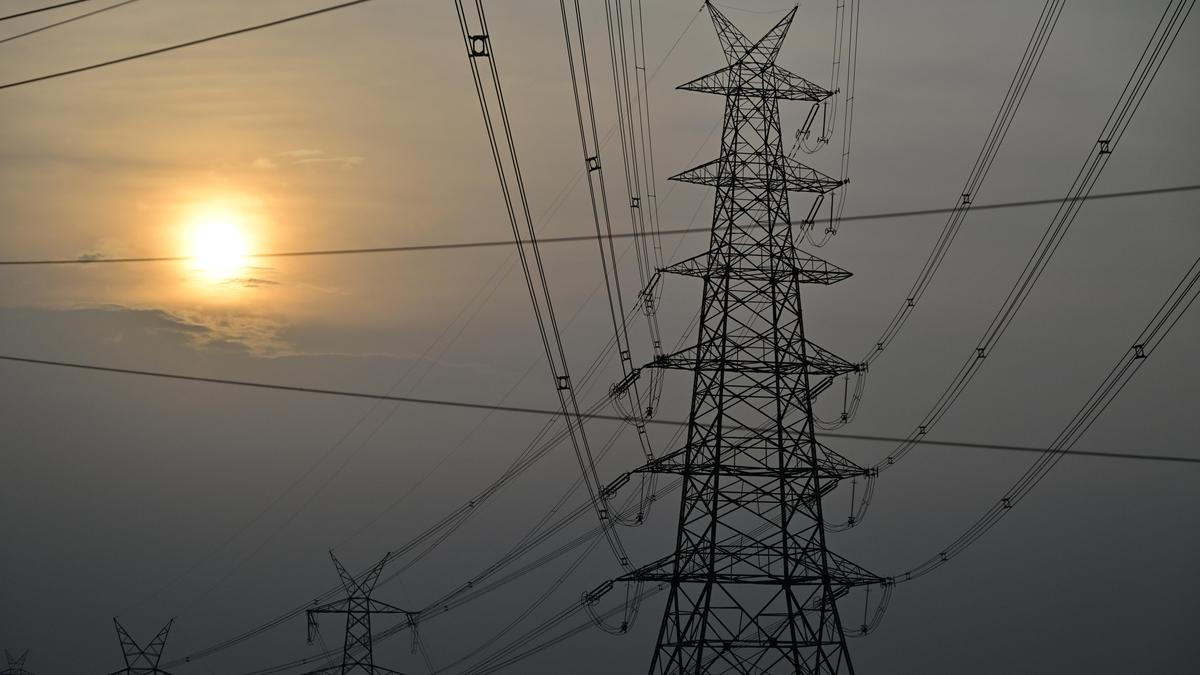
Electricity grids were not designed around today’s combination of rapidly increasing demand, intermittent renewable generation and increasingly electrified industrial activity.
Building a new transmission line can take years because projects require planning, environmental assessments, land acquisition, regulatory approvals and substantial investment.
That creates a mismatch between the speed at which companies want to electrify and the speed at which electricity infrastructure can be built.
The problem is already visible in the United States.
In the Permian Basin, increasing power demand from oil and gas operations has pushed Texas towards a major transmission expansion. A recently approved plan involves high-voltage transmission infrastructure costing billions of dollars. The broader Texas programme has faced criticism over land impacts and questions about who should ultimately pay for the infrastructure.
The Permian is therefore becoming an important case study in the future of industrial electrification.
The issue is no longer simply whether electricity can technically replace fossil fuels.
It is whether the grid can deliver that electricity fast enough, cheaply enough and reliably enough.
Offshore platforms face an even bigger challenge
The power problem becomes more complicated offshore.
An industrial facility located close to a major transmission network can potentially connect directly to the grid.
An oil platform hundreds of kilometres offshore cannot.
For offshore operations, electrification may require subsea power cables capable of transmitting large quantities of electricity over considerable distances.
The technical challenges include voltage conversion, transmission losses, subsea equipment, protection systems and maintaining reliability in a harsh marine environment.
High-voltage direct current, or HVDC, is one technology being examined for longer-distance offshore power transmission.
Another possibility is to combine offshore oil and gas infrastructure with renewable generation, storage and local power systems.
But those solutions are capital-intensive.
A 2026 study examining renewable-powered offshore oil and gas platforms found that fully renewable systems can be technically feasible, but may still be considerably more expensive than conventional fuel-based systems under current conditions. Hybrid configurations combining renewable generation with thermal generation and storage can provide a more economical transition pathway.
That economic reality matters.
Oil and gas companies are unlikely to invest billions of dollars in electrification simply because the technology exists. Projects have to make financial sense over the remaining productive life of an asset.
The economics are becoming harder
Electrification works best when several conditions come together:
- Cheap electricity is available.
- The grid has sufficient capacity.
- The electricity supply is reliable.
- Carbon prices or regulations make fossil-fuel generation increasingly expensive.
- The facility will operate long enough to recover the investment.
If one or more of these conditions is missing, electrification becomes much more difficult to justify.
Norway provides a useful illustration.
The country has promoted electrification of offshore petroleum production as part of its emissions-reduction strategy. But rising costs have also forced companies to reconsider some projects.
In 2025, Equinor cancelled plans to electrify several Norwegian offshore platforms, citing rising costs. The decision highlighted the tension between emissions reduction and the economics of upgrading ageing or existing oil and gas assets.
This illustrates a broader problem facing the industry: decarbonising an existing oil and gas facility can require large upfront investment even when the facility itself may have a limited remaining operating life.
Electricity demand is rising everywhere
The oil and gas industry’s power challenge is also occurring at the same time as electricity demand is increasing across other sectors.
Artificial intelligence and data centres are creating enormous new electricity requirements.
Electric vehicles are shifting energy consumption from petrol and diesel towards electricity.
Buildings are increasingly being electrified.
Industrial companies are replacing combustion equipment with electric alternatives.
Heat pumps are expanding.
Manufacturing is becoming more electricity-intensive.
That means oil and gas producers are not competing for electricity in isolation.
They are competing with almost every other major electrification trend.
Reuters recently reported that rising global electricity demand and grid constraints are contributing to a structural increase in power-system costs, while transmission expansion faces major capital, permitting and supply-chain obstacles.
This could fundamentally alter the economics of industrial electrification.
Renewables alone may not solve the problem
It may be tempting to assume that rapidly expanding solar and wind capacity will automatically provide the electricity needed by oil and gas companies.
But installed renewable capacity is not the same thing as reliable electricity supply.
Solar generation falls at night.
Wind output varies with weather conditions.
Oil and gas facilities, meanwhile, often require continuous electricity.
That means electrification projects may need combinations of:
- Grid electricity
- Solar power
- Wind power
- Battery storage
- Gas-fired backup generation
- Hydrogen or other energy-storage technologies
- Demand management
- Dedicated renewable projects
The challenge is therefore moving from simply building renewable generation to building an integrated power system.
India provides a useful illustration of this broader issue. Clean energy sources have now overtaken fossil fuels in installed generating capacity, but coal still supplies the majority of actual electricity generation. The next challenge is increasingly about transmission, storage and grid flexibility rather than simply adding renewable capacity.
The same principle applies to oil and gas electrification globally.
Electrification could increase pressure on electricity prices
There is another potential consequence.
If industrial customers suddenly require huge amounts of electricity, utilities may need to build new generation and transmission infrastructure.
Someone has to pay for that investment.
Depending on the market structure, the costs could fall on oil and gas companies, electricity consumers, taxpayers or a combination of them.
That issue is already emerging in Texas, where proposed transmission investments linked partly to Permian Basin demand have triggered arguments over whether ordinary electricity customers should shoulder infrastructure costs associated with industrial expansion.
This could become one of the biggest political questions surrounding industrial electrification.
Who pays for the grid required to decarbonise heavy industry?
The paradox of cleaner oil
There is also a strategic question for oil and gas companies.
Electrification can make the production of oil and gas less carbon-intensive.
But it does not eliminate emissions associated with the eventual combustion of those fuels by consumers.
That means electrification primarily addresses the production-side emissions of the industry.
For companies facing pressure from investors, governments and customers to reduce Scope 1 and Scope 2 emissions, that can still be valuable.
It can lower the emissions intensity of each barrel of oil or unit of gas produced.
However, the broader energy transition is simultaneously reducing demand for some fossil fuels.
China’s recent energy trends demonstrate how electrification can affect oil demand itself. In the second quarter of 2026, China’s carbon emissions fell year-on-year alongside a sharp reduction in oil consumption and rapid growth in electric vehicles and electrified transport.
This creates an uncomfortable investment calculation for oil producers.
Should companies spend billions electrifying assets that may eventually face declining demand?
The power problem could determine the speed of oil and gas decarbonisation
The oil and gas industry has the technology to electrify many operations.
The harder question is whether the electricity infrastructure can keep up.
Electrification requires much more than replacing a gas turbine with an electric motor.
It can require:
New generation → transmission upgrades → substations → subsea cables → storage → backup capacity → digital grid management → new industrial equipment.
Every step costs money and takes time.
This is why the next phase of the oil and gas energy transition may be determined less by the availability of electric equipment and more by the availability of electricity itself.
The industry is effectively moving from a fuel-based energy model to a power-based model.
And power has a very different infrastructure requirement.
What happens next?
The most realistic pathway is unlikely to be complete electrification overnight.
Instead, the industry is likely to adopt a combination of technologies.
Large, long-life offshore facilities close to clean power sources could increasingly connect to the grid.
New offshore developments may be designed with electrification in mind from the beginning.
Renewable-powered microgrids could serve remote installations where grid connections are impractical.
Battery storage and other flexibility technologies could help manage variable renewable generation.
Gas turbines may remain as backup systems for critical infrastructure.
At the same time, companies will increasingly evaluate electrification projects according to their carbon-reduction value and economic payback.
The strongest projects will probably be those where cheap clean electricity, strong grid infrastructure and long asset lifetimes overlap.
The real energy transition is now a grid transition
The oil and gas industry’s electrification push reveals a larger truth about the global energy transition.
Replacing fossil-fuel equipment with electric equipment is only the beginning.
The world also has to build the electricity infrastructure capable of powering everything that is being electrified.
That means more generation, stronger transmission networks, storage, smarter distribution systems and greater resilience against extreme weather and supply disruptions.
For oil and gas companies, the irony is particularly striking. An industry historically built around extracting and transporting energy is increasingly becoming dependent on another energy system: the electricity grid.
The winners in the next phase of the transition may therefore not simply be companies with the most ambitious electrification targets.
They may be the companies that can secure reliable, affordable and genuinely low-carbon electricity before everyone else needs it.
The future of oil and gas electrification may ultimately depend not on the electric motor, but on the power line.
Key takeaway
Oil and gas electrification can substantially reduce operational emissions, particularly for offshore facilities that currently rely on gas turbines. But electrification shifts the industry’s dependence from hydrocarbons to electricity. Unless generation, transmission, storage and grid capacity expand alongside industrial demand, power availability could become the biggest constraint on the sector’s decarbonisation ambitions.