
 Pakistan’s leaders hail first astronaut aboard Chinese craft: ‘Proud one of us has gone into space’
 British tourist travels 29 hours from Mumbai to Amritsar for ₹5,461, rates Indian Railways 10/10 | Viral video
 The Supreme Court will decide whether assault weapons bans violate the Second Amendment
 A Critic of Beijing Falls Short in Taiwan’s Key Mayoral Election
 EPA says no rise in contamination after Army detonates lead azide stockpile in Iowa
Parliament Winter Session Delay Raises Question Hour Concerns, John Brittas Flags 15-Day Notice Rule
**
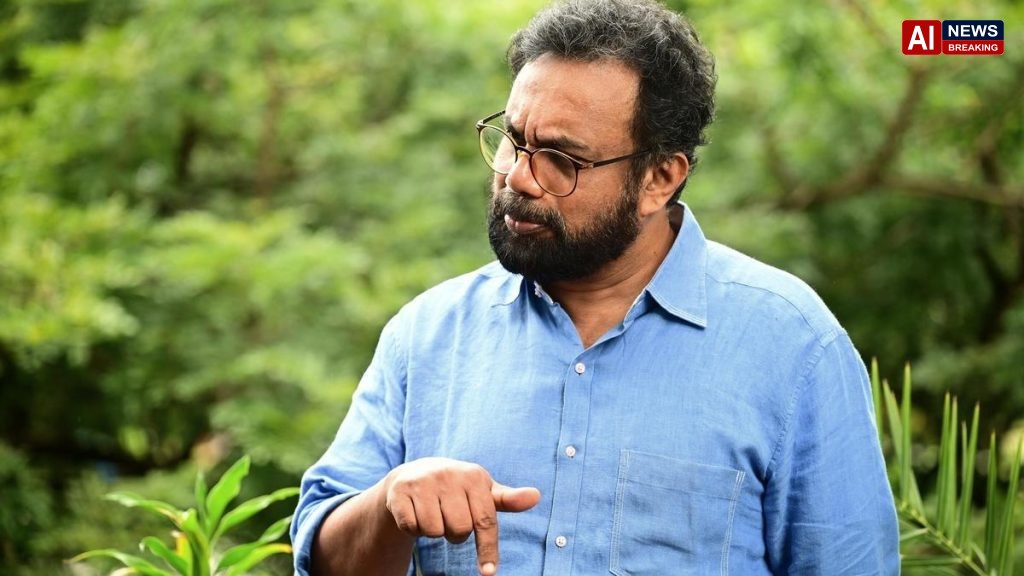
Parliament Winter Session uncertainty puts Question Hour at risk: John Brittas - AI News Breaking
The looming uncertainty surrounding the schedule of Parliament’s winter session has raised fresh concerns about the functioning of Question Hour, a cornerstone of parliamentary scrutiny, said John Brittas, the senior journalist‑turned‑political commentator, citing remarks made by CPI(M) leader in the Rajya Sabha. The opposition figure warned that without a confirmed timetable, the procedural requirement for members to submit their questions at least fifteen days before the session cannot be met, potentially sidelining a key mechanism for holding the government to account.The winter session, traditionally convened in November and December, has been delayed repeatedly this year amid a series of political and administrative challenges. The government’s reluctance to announce a definitive start date has been attributed to a combination of factors: the need to accommodate the monsoon‑affected agricultural calendar, pending legislative priorities, and the lingering fallout from the recent general election that left several key ministries in a caretaker mode..
As a result, the parliamentary calendar remains fluid, leaving MPs in a state of limbo.Question Hour, which occupies the first half‑hour of each sitting day, allows members of Parliament to pose oral questions to ministers, compelling immediate responses and fostering transparency. It is a procedural right enshrined in the rules of both houses and is widely regarded as a barometer of legislative vigilance. In the Rajya Sabha, the protocol stipulates that written questions must be submitted at least fifteen days prior to the scheduled sitting, a timeline that enables clerical processing and ensures that ministers have adequate preparation time to answer substantively.“The fifteen‑day rule is not a bureaucratic formality; it is the very foundation that gives Question Hour its efficacy,” Brittas explained during a televised interview..
“If the session’s start is not fixed, members cannot meet this deadline, and the whole exercise collapses.” He added that the lack of clarity not only hampers opposition scrutiny but also diminishes the public’s ability to gauge government performance on pressing issues such as inflation, employment, and the ongoing pandemic response.CPI(M) leader and Rajya Sabha member, S. Balasubramaniam, underscored the procedural dilemma in a recent parliamentary debate. He pointed out that the Constitution mandates that the President, on the advice of the Council of Ministers, summons each house at least twice a year, but the exact dates are at the government’s discretion..
“We have been patient for months, waiting for a proclamation of the winter session. Yet the administrative machinery that underpins Question Hour cannot function in this vacuum,” he said, urging the government to announce the calendar promptly.The opposition’s frustration is compounded by a series of high‑profile questions that remain unanswered from the previous sessions. Topics ranging from the allocation of funds for the National Education Policy rollout to the status of the controversial agricultural reform bills have been left pending, with ministers citing insufficient time to prepare comprehensive replies..
Critics argue that this backlog threatens to erode the credibility of parliamentary oversight, especially at a juncture when public trust in institutions is already strained.Government officials, while acknowledging the scheduling challenges, have defended the delay as a necessary measure to accommodate the “complexities of governance.” A spokesperson from the Ministry of Parliamentary Affairs remarked that the executive is consulting with the Speaker of the Lok Sabha and the Chairman of the Rajya Sabha to finalize dates that would avoid clashes with state legislative assemblies and the fiscal year-end. “We are committed to upholding the sanctity of Question Hour and will ensure that all procedural requirements are met once the session is convened,” the statement read.Legal scholars note that the Constitution does not prescribe a strict deadline for the summons of the winter session, granting the executive considerable leeway. However, they caution that prolonged postponement may set a precedent that weakens parliamentary checks and balances..
Professor Ananya Mehta of the Indian Institute of Constitutional Law observed, “While the government technically retains the authority to set the session’s timetable, it also bears the responsibility to preserve democratic norms. Ignoring procedural timelines could be construed as a dereliction of that duty.”The potential fallout extends beyond the immediate procedural inconvenience. Civil society groups have warned that a muted Question Hour could diminish citizen engagement with legislative processes..
“When MPs cannot ask questions, the public loses a vital conduit for voicing concerns,” said Raghav Sharma, director of the watchdog organization Parliament Watch. “The transparency that Question Hour provides is essential for a healthy democracy, especially when other avenues of accountability, such as media scrutiny, are under pressure.”In response to the mounting pressure, the government’s parliamentary affairs ministry announced an internal review to assess the impact of the delay on legislative business. Sources close to the ministry suggest that a provisional schedule may be released within the next week, aiming to provide a minimum notice period of ten days for the first sitting..
While this falls short of the fifteen‑day requirement, officials are reportedly considering a temporary amendment to the rules to accommodate the compressed timeline.Opposition parties have signalled their readiness to challenge any such amendment, viewing it as an erosion of established parliamentary practice. In a joint statement, the Congress, Trinamool Congress, and Aam Aadmi Party demanded that the government adhere to the existing fifteen‑day rule or face a motion of no‑confidence in the Speaker’s authority to permit questions without due notice. “We will not allow procedural shortcuts to become a tool for diluting parliamentary oversight,” the statement declared.The debate has reignited broader discussions about the need for reforming parliamentary schedules to make them more predictable and resilient..
Some legislators have proposed a fixed calendar, akin to the practice in several Commonwealth nations, which would stipulate exact dates for each session well in advance. Advocates argue that such a framework would prevent the kind of uncertainty currently threatening Question Hour and would provide a clearer roadmap for legislative planning.As the winter session’s start date remains unsettled, the immediate focus shifts to how MPs will navigate the procedural impasse. Many members have begun drafting their questions in anticipation, hoping to submit them as soon as a formal notice is issued..
“We have been preparing on the assumption that the session will commence by early December,” said MP Priya Deshmukh of Maharashtra, a senior member of the opposition’s Committee on Public Accounts. “Our constituents are awaiting answers on critical issues, and we intend to deliver them, regardless of the timing.”The unfolding situation highlights the delicate balance between executive discretion and parliamentary prerogative. While the Constitution grants the government flexibility in convening sessions, the practical implications of delayed scheduling reverberate through the mechanisms of accountability that sustain democratic governance..
As the clock ticks, the onus lies on the ruling coalition to demonstrate its commitment to upholding the traditions of parliamentary scrutiny, lest the credibility of Question Hour—and by extension, the very fabric of legislative oversight.
Updated: November 20, 2026
Summary: Parliament’s delayed winter session threatens the 15‑day pre‑submission rule that underpins Question Hour, a key tool for holding the government accountable. Opposition parties urge the government to set dates soon, warning that any procedural shortcuts could erode public confidence in parliamentary oversight.
The delay is more than a calendar glitch; it signals a growing disconnect between the executive’s timetable and Parliament’s watchdog role, eroding public confidence in accountability. If the government keeps sliding the start date, Question Hour risks becoming a ceremonial pause rather than a pressure‑testing engine for democracy.






