Europe warns of Russia’s hybrid attacks but struggles to counter them
  Former chief election commissioner calls SIR scheme illegal.
  A Corruption Scandal Is Reshaping Brazil’s Presidential Election
  US citizen injured in Illinois after ICE agents mistook him for fugitive, tried to arrest him
  At 10 years old, Smithsonian’s Black museum is undaunted amid pressure from Trump administration
 PM Modi congratulates Major Abhilasha Barak on being conferred UN Military Gender Advocate Award
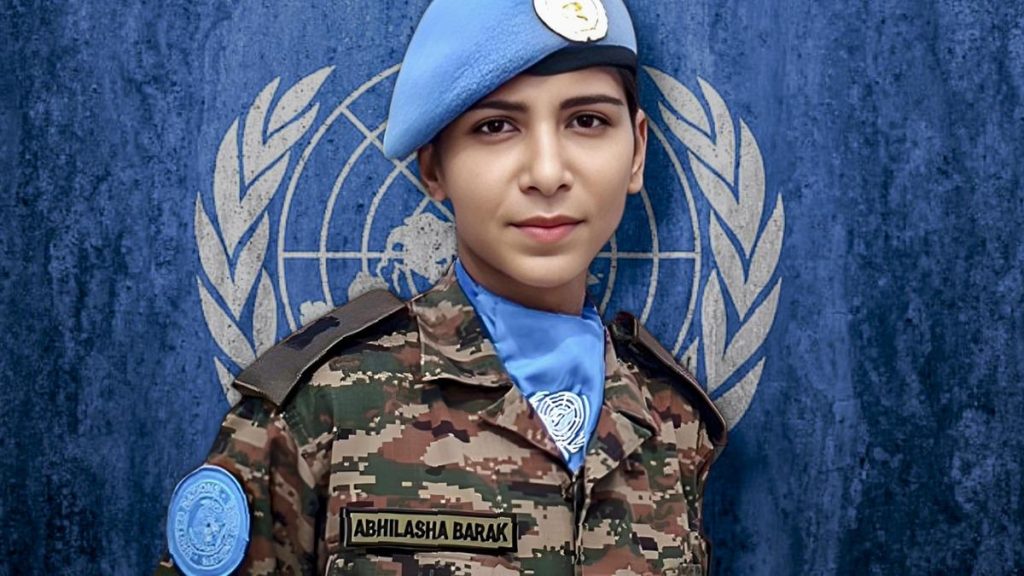
In a recognition that underscores both India’s expanding role in United Nations peacekeeping and the evolving place of women in global military operations, Major Abhilasha Barak of the Indian Army has been conferred the UN Military Gender Advocate Award for her work during her deployment with the UN mission in Lebanon. Prime Minister Narendra Modi publicly congratulated her, calling the honour a reflection of India’s commitment to gender inclusion in uniformed services and peacekeeping operations.
The award, one of the United Nations’ most visible acknowledgements for gender-responsive peacekeeping, is given annually to a military peacekeeper who has made exceptional efforts to promote the principles of the UN’s Women, Peace and Security agenda. Major Barak’s selection places her among a small cohort of officers globally who have been recognized for translating policy into practice in conflict-affected environments.
Her work in Lebanon, where she served with the United Nations Interim Force in Lebanon (UNIFIL), reportedly focused on outreach programs with women and girls in local communities. While UN peacekeeping missions are traditionally associated with ceasefire monitoring and border stabilization, the gender advocate role places emphasis on a different but increasingly central dimension of modern peace operations: building trust with civilian populations, particularly women, and ensuring their access to security institutions.
Prime Minister Modi’s congratulatory message, posted publicly, framed the award not merely as an individual achievement but as part of a broader institutional shift within India’s armed forces. Over the past decade, India has steadily expanded opportunities for women in combat-support and select combat roles, including military aviation and UN deployments.
Major Barak’s recognition is particularly notable given her background. She belongs to a generation of Indian Army officers who have entered non-traditional roles previously closed to women. As one of the first women to be inducted into the Army Aviation Corps as a combat aviator, she has already been part of a historic transition within India’s military structure.
The UN Military Gender Advocate Award itself was established to recognize the operational importance of gender perspectives in peacekeeping. Unlike medals for bravery in combat, it is designed to highlight contributions that often remain invisible in conventional military evaluation frameworks: engagement with local women’s groups, prevention of gender-based violence, and efforts to ensure that peacekeeping operations are responsive to the needs of half the population that is frequently excluded from security decision-making processes.
The Lebanon Mission Context: UNIFIL, where Major Barak served, is one of the United Nations’ longest-running peacekeeping missions, established in 1978 and significantly reinforced after the 2006 Israel-Hezbollah conflict. Operating in southern Lebanon along the Blue Line separating Lebanon and Israel, the mission is tasked with monitoring cessation of hostilities, supporting the Lebanese Armed Forces, and helping ensure humanitarian access and stability in a region frequently shaped by geopolitical tensions.
Within this environment, peacekeepers operate not only in a military capacity but also as intermediaries between local communities and state or quasi-state actors. The inclusion of gender advisors and advocates in such missions reflects a broader evolution in UN doctrine, particularly following UN Security Council Resolution 1325, which formally recognized the importance of women in peacebuilding processes.
In practice, gender advocacy roles in missions like UNIFIL involve direct engagement with local communities, often through structured outreach programs, workshops, and coordination with local NGOs. Officers in these roles are expected to identify barriers faced by women in conflict-affected societies—ranging from restricted mobility and limited political participation to exposure to violence—and work within the constraints of the mission to address them.
While the United Nations has not disclosed detailed operational specifics of Major Barak’s initiatives, her recognition suggests sustained engagement with these objectives over the course of her deployment.
India’s Growing Footprint in UN Peacekeeping: India has long been one of the largest contributors to UN peacekeeping operations globally, having deployed more than 250,000 personnel across various missions since independence. Indian peacekeepers have served in conflict zones across Africa, the Middle East, and Southeast Asia, often in demanding operational environments.
In recent years, India has also positioned itself as a strong advocate for increasing female participation in peacekeeping missions. Women officers from the Indian Armed Forces have been deployed in roles ranging from military observers to staff officers and medical personnel. However, their presence in leadership and specialized advocacy roles has grown more gradually.
Major Barak’s recognition comes at a time when the UN itself has been under pressure to improve gender balance within peacekeeping contingents. Despite policy commitments, women still represent a minority of deployed military personnel in most missions. Against this backdrop, gender advisors and advocates serve as both symbolic and operational bridges between policy goals and field implementation.
Within India, the recognition has also been read as part of a wider cultural transformation within the armed forces. The gradual opening of combat aviation, the Supreme Court’s interventions on permanent commission for women officers, and policy changes enabling women in more operational roles have collectively reshaped the gender landscape of the military.
Major Barak’s trajectory reflects these shifts. Her entry into the Army Aviation Corps marked a significant milestone at the time, as it placed her in a field traditionally dominated by men and associated with high operational demands. The aviation wing of the Army is responsible for reconnaissance, logistics, casualty evacuation, and battlefield mobility—functions that require technical precision and operational readiness in often hostile environments.
Her subsequent deployment to a UN mission further expanded the scope of her service from national defense to international peace operations, a transition that is increasingly common among Indian officers selected for UN assignments.
The role of gender advocacy in peacekeeping has evolved significantly over the past two decades. Initially conceived as an auxiliary function, it is now considered integral to mission effectiveness. The UN’s internal assessments have repeatedly highlighted that peace processes are more durable when women are actively included in negotiation, reconstruction, and governance frameworks.
In conflict zones such as southern Lebanon, where social structures are shaped by a combination of local traditions, political fragmentation, and external geopolitical pressures, engagement with women’s communities is often a critical channel for understanding broader societal dynamics.
Officers like Major Barak operate at this intersection of military presence and social engagement. Their work may include facilitating dialogue with local women leaders, supporting education and vocational initiatives, or helping ensure that UN operations are sensitive to gender-based vulnerabilities in the area of deployment.
Major Abhilasha Barak’s recognition by the United Nations, and the public endorsement from India’s prime minister, represents more than an individual milestone. It reflects the gradual but significant redefinition of military professionalism in the 21st century—one in which operational effectiveness is increasingly measured not only by tactical success but also by the ability to engage constructively with civilian populations.
As UN peacekeeping continues to adapt to complex, hybrid conflict environments, the role of gender-focused engagement is likely to expand further. In that evolving landscape, officers like Major Barak occupy a space that bridges traditional military discipline with emerging expectations of inclusivity, diplomacy, and social awareness.
Her award, while personal in its attribution, thus stands as a marker of institutional change—within the United Nations, within India’s armed forces, and within the broader architecture of global peacekeeping itself.