
 Pakistan’s leaders hail first astronaut aboard Chinese craft: ‘Proud one of us has gone into space’
 British tourist travels 29 hours from Mumbai to Amritsar for ₹5,461, rates Indian Railways 10/10 | Viral video
 The Supreme Court will decide whether assault weapons bans violate the Second Amendment
 A Critic of Beijing Falls Short in Taiwan’s Key Mayoral Election
 EPA says no rise in contamination after Army detonates lead azide stockpile in Iowa
Punjab Congress chief urges PM to reopen Kartarpur Corridor, resume Attari-Wagah trade
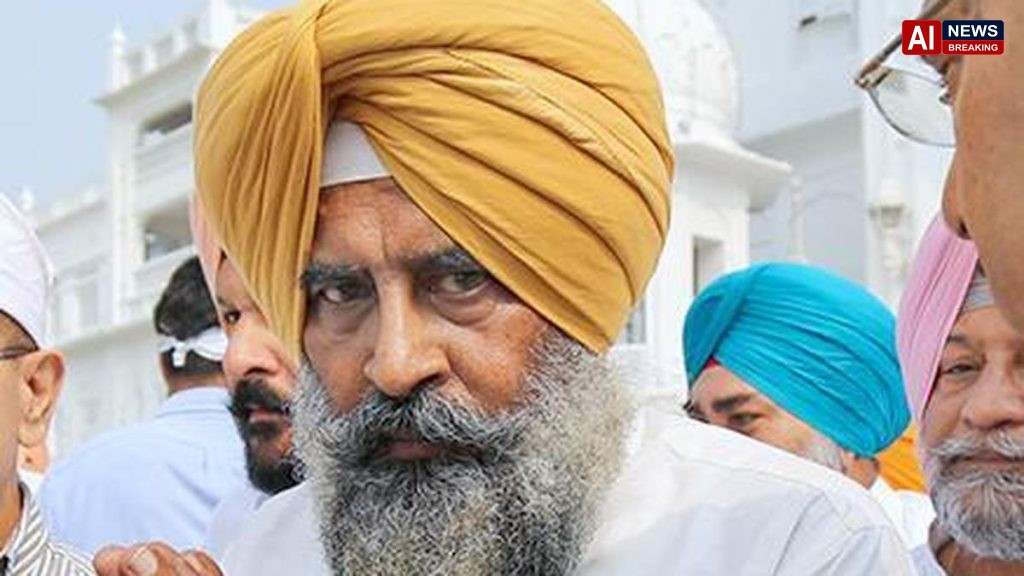
Punjab Congress chief urges PM to reopen Kartarpur Corridor, resume Attari-Wagah trade - AI News Breaking
Title Punjab Congress chief urges PM to reopen Kartarpur Corridor, resume Attari‑Wagah trade — 1. In a tightly worded letter sent to Prime Minister Narendra Modi on November 23, Punjab’s senior Congress leader Pargat Singh called for the immediate reopening of the Kartarpur Corridor and the resumption of trade across the Attari‑Wagah border. Singh’s appeal, drafted at the behest of the Sikh community, highlights the corridor’s symbolic importance as “the deepest spiritual sentiment of the Sikh community.” The letter is one of several diplomatic overtures aimed at easing cross‑border tensions that have lingered since the 2019 pandemic‑related shutdowns..
The Kartarpur Corridor, opened in 2019, allows Indian pilgrims to visit the Gurdwara Darbar Sahib in Pakistan without a visa, a milestone for Indo‑Pak relations. Singh’s letter stresses that its closure has not only hampered religious pilgrimages but also damaged the local economy, particularly in rural districts that rely on the daily flow of visitors. He further argues that the corridor’s re‑activation would signal goodwill, reinforcing the notion of shared faith as a bridge between the two nations..
Concurrently, Singh demands that trade at the Attari‑Wagah frontier resume at the pre‑COVID level. The two border points are critical arteries for goods such as textiles, electronics, and agricultural produce. Over the past eighteen months, customs officials have reported a 40 % decline in cross‑border commerce, leading to mounting concerns among traders, particularly small‑to‑medium enterprises that depend on timely shipments..
The congressman’s appeal is framed as a plea to safeguard livelihoods that were suddenly jeopardised by a chain of logistical restrictions. Contextual backdrop The broader context is a volatile geopolitical landscape. Pakistan’s decision to shut the corridor came amid rising tensions over the Kashmir dispute and a wave of anti‑terrorism measures..
Meanwhile, the Indian government has been cautious, citing national security concerns. Pargat Singh’s letter arrives at a time when both sides have expressed interest in reopening the border for humanitarian reasons, yet operational details remain unresolved. The appeal underscores the urgency for a pragmatic, multilateral approach that balances faith, commerce, and security..
Reaction from Delhi Prime Minister Modi’s spokesperson, Sanjay Sharma, declined to comment directly on Singh’s letter. However, a brief statement emphasised that “India remains committed to fostering peaceful relations with Pakistan” while insisting that any reopening of the corridor or trade routes must first satisfy rigorous security protocols. Sharma’s remarks echo earlier assurances that the central government will not compromise on safety, even as it explores diplomatic solutions to ease restrictions..
Punjab’s economic stakes Punjab’s economy, heavily dependent on agriculture and textile manufacturing, stands to benefit substantially from the corridor’s revival. Singh notes that the Gurdwara’s visitors contribute to the tourism sector, with ancillary services such as accommodation, transport, and local markets seeing measurable inflows. “Every pilgrim is a potential patron of our local businesses,” he writes, underscoring a symbiotic relationship that extends beyond spirituality..
The economic case is bolstered by data from the Punjab State Trade Development Council, which attributes a 5 % annual growth in border trade to the corridor’s operation. Community response Within the Sikh diaspora, Singh’s letter has resonated strongly. A press briefing in Chandigarh saw representatives from the Sikh community express a mixture of relief and frustration..
“We have endured months of uncertainty, and our faith community needs closure,” said Bhupinder Singh, a local Gurdwara trustee. The sentiment is echoed by many, who fear that the corridor’s closure could erode cultural ties that have been nurtured for generations. Community leaders have called upon the government to prioritize the corridor’s reopening as a matter of religious freedom..
International perspectives The United Nations Human Rights Council, in a separate briefing, noted that the closure of the Kartarpur Corridor had “humanitarian implications.” While the UN does not have jurisdiction over bilateral border policies, the statement indicates that the international community is watching India and Pakistan’s handling of the issue with interest. In addition, the European Union’s foreign policy office has urged both governments to seek a “mutually satisfactory solution” that respects religious rights and promotes regional stability. Security considerations Critics argue that reopening the corridor could present significant security challenges, particularly in the aftermath of the 2020 Lahore terror attacks..
The Indian government maintains that any reopening would be contingent on a comprehensive security framework that includes biometric verification, real‑time monitoring, and joint intelligence sharing. Singh counters that security can be preserved while still honoring the corridor’s sanctity, citing Pakistan’s own rigorous checkpoints at the site as a model for cooperation. Policy alternatives In addition to the corridor, Singh proposes a limited resumption of trade in specific sectors such as pharmaceuticals and agriculture..
The suggestion is that a phased approach could allow customs officials to monitor compliance more effectively. The proposal has sparked debate among policymakers, with some advocating for a full-scale reopening while others push for a cautious, incremental strategy that prioritises safety over speed. Legal implications The Indian Supreme Court recently ruled that any border policy must be in line with constitutional guarantees of religious freedom..
Singh references this ruling to bolster his appeal, arguing that the current closure infringes upon citizens’ rights. Legal experts note that while the court’s decision does not override national security prerogatives, it does set a precedent that could influence future judicial scrutiny over the corridor’s status. Potential diplomatic outcomes Diplomats on both sides predict a.
Updated: November 24, 2026
Punjab’s senior Congress leader Pargat Singh has penned a stern letter to Prime Minister Modi, urging the immediate reopening of the Kartarpur Corridor and a return to pre‑COVID trade levels across the Attari‑Wagah border. The plea frames the corridor’s closure as both a religious grievance and an economic blow, calling for a balanced security‑and‑freedom approach while noting the 40 % decline in cross‑border commerce
Insight: This development highlights evolving dynamics and may have broader implications in the near term.






