Europe warns of Russia’s hybrid attacks but struggles to counter them
  Former chief election commissioner calls SIR scheme illegal.
  A Corruption Scandal Is Reshaping Brazil’s Presidential Election
  US citizen injured in Illinois after ICE agents mistook him for fugitive, tried to arrest him
  At 10 years old, Smithsonian’s Black museum is undaunted amid pressure from Trump administration
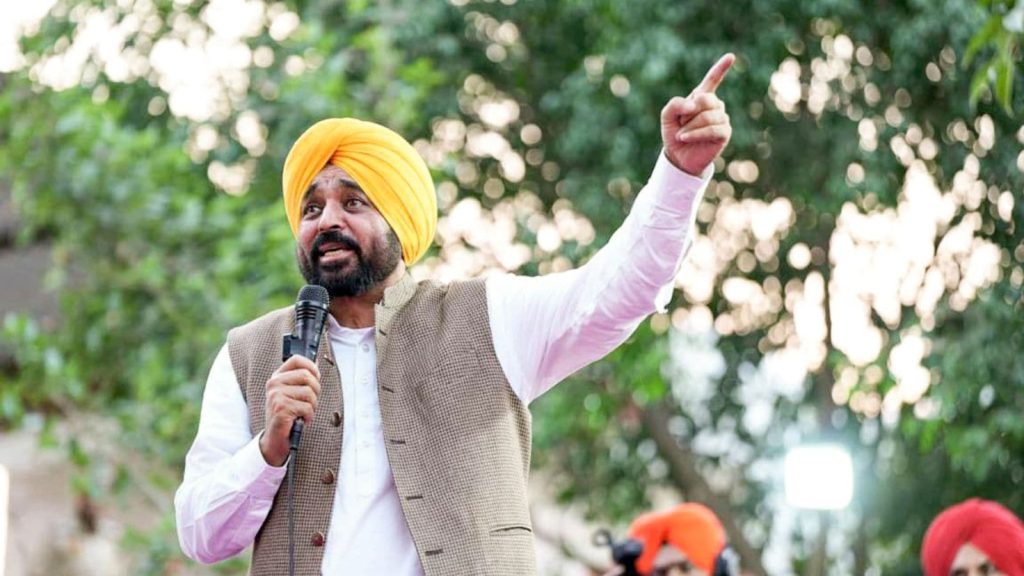
 Punjab Politics on Edge: Farmer and Social Groups That Fueled AAP’s 2022 Victory Now Turn Protesters, Raising Early Warning Signs for Party
punjab politics edge farmer:
Several farmer unions and social groups that played a crucial role in AAP’s sweeping 2022 Punjab election victory are now staging protests against the government. Their growing discontent over unmet promises and policy disputes is emerging as a political challenge for the ruling party. Analysts say this shift could signal early warning signs ahead of future electoral battles in the state.
When the Aam Aadmi Party (AAP) stormed to power in Punjab in 2022, it did so on the back of an unusually broad coalition of support. Farmer unions, youth groups, and sections of civil society—many of whom had previously remained outside traditional party politics—helped amplify AAP’s message of governance reform, anti-corruption, and change.
Three years later, some of those very groups are now on the streets, protesting against the same government they once helped bring to power.
The shift does not yet amount to a full political rupture. But it has become significant enough to raise questions within Punjab’s political circles about whether the ruling party is beginning to lose some of its most influential grassroots allies.
The groups now expressing dissatisfaction include sections of farmer unions, certain employee associations, and local activist networks that had mobilized strongly during the 2022 Assembly elections.
At that time, Punjab’s political climate was shaped by:
- Anti-incumbency against the previous government
- The aftermath of large-scale farmer protests against national farm laws
- A strong desire for administrative change
- A fragmented opposition vote base
AAP benefited from this convergence, positioning itself as a clean alternative with promises of governance reform, improved public services, and responsiveness to grassroots concerns.
However, governance has proved more complex than electoral messaging. As policy decisions accumulated—ranging from procurement policies and fiscal management to law-and-order issues—some of these groups began voicing concerns over what they describe as slow implementation and unmet assurances.
What Is Driving the Protests?
The current wave of protests is not driven by a single issue, but rather a combination of grievances that have built up over time.
Among the recurring themes:
1. Unfulfilled Policy Commitments
Some groups argue that promises made during the election campaign regarding agricultural support, employment generation, and welfare schemes have not been fully delivered or have progressed more slowly than expected.
2. Economic Pressure on Rural Communities
Punjab’s rural economy continues to face structural stress, including debt burdens, fluctuating crop returns, and rising input costs. Farmer organizations say government intervention has not sufficiently eased these pressures.
3. Administrative Frictions
There have also been reports of friction between protest groups and district-level administration over protest permissions, implementation timelines, and bureaucratic delays.
4. Perception Gap Between Governance and Expectations
Perhaps most significantly, there appears to be a widening gap between expectations created during the election cycle and the realities of governance constraints.
This is a common political pattern: movements built on high expectations often face early friction once in power.
Why This Matters Politically
In Punjab’s political landscape, farmer unions and grassroots networks are not peripheral actors—they are often decisive forces in shaping electoral outcomes, particularly in rural constituencies that dominate the state’s political geography.
AAP’s 2022 victory was unusual in that it did not rely heavily on traditional caste-based or patronage networks. Instead, it benefited from:
- Issue-based mobilisation
- Anti-incumbency sentiment
- Coordinated grassroots campaigning
- Strong rural outreach
If even parts of this coalition begin to drift away, it could have implications for:
- Rural vote consolidation
- By-election performance
- Narrative control in media and public discourse
- Long-term organisational strength at the booth level
At this stage, the situation remains fluid rather than decisive—but political observers are watching closely.
Opposition Opportunity or Internal Correction?
Opposition parties in Punjab are likely to interpret these protests as evidence of governance fatigue. However, early-stage protest movements do not automatically translate into electoral shifts.
Two scenarios typically emerge in such situations:
Scenario 1: Escalation
If grievances intensify and remain unresolved, protests can expand, creating sustained political pressure and potentially eroding support in key constituencies.
Scenario 2: Negotiated Stabilisation
If the government engages with protest groups through policy adjustments or dialogue, tensions may reduce, and the coalition may partially stabilise.
Which path unfolds will depend largely on the government’s responsiveness and the ability of protest groups to maintain unity.
AAP’s Governance Challenge in Punjab
The AAP government in Punjab inherited a state with complex fiscal constraints, entrenched agricultural dependence, and high public expectations.
Key governance challenges include:
- Balancing welfare commitments with fiscal discipline
- Managing agricultural policy in a politically sensitive state
- Improving public service delivery at scale
- Maintaining coalition cohesion across diverse interest groups
Unlike in opposition, where messaging can unify diverse grievances, governance requires prioritisation and trade-offs—often leading to dissatisfaction among groups whose expectations are not immediately met.
The Role of Farmer Politics in Punjab
Punjab remains one of India’s most politically mobilised agrarian states. Farmer unions are not just interest groups; they often function as political actors with deep organisational reach.
Their influence extends across:
- Village-level mobilisation
- Protest coordination
- Candidate endorsement in some constituencies
- Issue framing in media and public discourse
This makes any shift in their stance politically significant, even if it is not immediately reflected in electoral outcomes.
A Familiar Cycle in Indian State Politics
The current situation also fits a broader pattern seen in Indian politics: movements that rise on protest energy often face governance pushback once in power.
Common trajectory:
- Protest movements support a new political alternative
- The alternative wins elections on reform promises
- Governance constraints limit speed of delivery
- Support groups become critical or disillusioned
- Political recalibration or protest escalation follows
Punjab may now be entering the fourth stage of this cycle.
What to Watch Next
The political trajectory will likely depend on several indicators:
- Whether protests expand or remain localised
- Government response—dialogue, policy revision, or confrontation
- Unity or fragmentation within farmer unions
- Performance in upcoming local body or by-elections
- Media framing and narrative control
These signals will determine whether current tensions represent a temporary phase or a deeper political shift.
The emerging friction between AAP and its earlier support base in Punjab illustrates a structural challenge in movement-based electoral politics: translating protest coalitions into durable governance alliances. Once in power, expectations anchored in moral or reformist narratives collide with fiscal and administrative constraints. The durability of AAP’s Punjab model will depend less on its original electoral messaging and more on its capacity to institutionalize dialogue mechanisms with grassroots actors whose support is no longer unconditional.