A Critic of Beijing Falls Short in Taiwan’s Key Mayoral Election
 EPA says no rise in contamination after Army detonates lead azide stockpile in Iowa
 Israeli Strike Kills 2 Workers at Gaza Clinic, Doctors Without Borders Says
 McQueen Pre-Fall 2027
 Mushfiqur Rahim to retire from Test cricket in February 2027
Rebel TMC MPs submit replies to Lok Sabha Speaker, claim constitutional legitimacy in leaving party
**
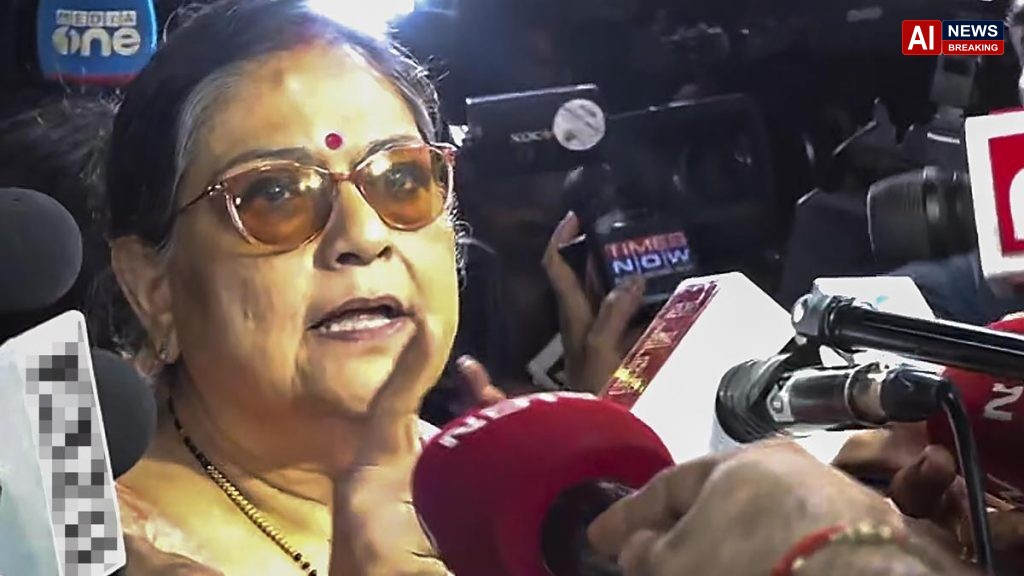
Rebel TMC MPs submit replies to Lok Sabha Speaker, claim constitutional legitimacy in leaving party - AI News Breaking
rebel submit replies sabha:
Rebel TMC MPs submit replies to Lok Sabha Speaker, claim constitutional legitimacy in leaving party The controversy surrounding the defection of twenty Trinamool Congress (TMC) members of parliament (MPs) from the party’s Lok Sabha caucus resurfaced this week as the rebel group formally responded to the Speaker’s notice. In a detailed set of replies, the MPs argued that their departure from the party was rooted in constitutional provisions rather than procedural violations, asserting that their actions were lawful and reflective of democratic principles. The submission, addressed to Speaker Om Birla, seeks to pre‑empt any disqualification under the anti‑defection law and underscores the political realignment that followed the party’s loss in the West Bengal Assembly elections in June..
The split, which saw twenty of the twenty‑seven TMC MPs aligning themselves with the newly formed Nationalist Congress Party Initiative (NCPI) and extending support to the National Democratic Alliance (NDA), has been a flashpoint in Indian politics. Critics have labelled the move a betrayal, while the rebels maintain that their decision was driven by a genuine loss of confidence in the party’s leadership and direction. The timing of the rebellion, immediately after TMC’s unexpected defeat to the BJP‑led opposition in the state, has intensified scrutiny over the motives and legality of the MPs’ shift..
In their replies, the MPs referenced Article 191 of the Indian Constitution, which guarantees the right of elected representatives to freely associate and withdraw from a political party, provided certain procedural safeguards are observed. They argued that the TMC’s internal disciplinary mechanisms failed to address their concerns, thereby justifying their exit under the broader constitutional guarantee of freedom of conscience. The document further highlighted that the party’s own constitution, adopted in 1998, allows for voluntary resignation by any member, a clause they claim was duly followed..
The anti‑defection law, enshrined in the Tenth Schedule of the Constitution, has traditionally been invoked to curb party hopping. However, the rebel MPs contend that their case falls under the “merger” exception, wherein a group representing at least two‑thirds of a legislative party can lawfully merge with another party without attracting disqualification. By citing the 20‑member count as exceeding the two‑thirds threshold of the TMC’s Lok Sabha representation, they argue that their alignment with the NCPI satisfies the legal criteria for a legitimate merger..
Legal analysts have offered mixed opinions on the validity of the rebels’ claim. Some point out that the two‑thirds rule applies primarily to formal mergers involving party organizations, not to ad‑hoc alignments for parliamentary support. Others note that the TMC’s internal bylaws do not expressly recognize a “merger” as defined by the anti‑defection statute, potentially leaving the MPs vulnerable to disqualification..
The Supreme Court’s earlier judgments on similar matters have emphasized the necessity of a clear, documented agreement between the merging parties, a condition that the rebels have yet to publicly demonstrate. The Speaker’s role in adjudicating such disputes is pivotal, as he holds the authority to decide whether the MPs should be disqualified from the Lok Sabha. Historically, speakers have exercised discretion with caution, often seeking legal advice before issuing a ruling..
In this instance, Speaker Birla has indicated that the matter will be examined in accordance with established parliamentary procedures, and that any decision will be communicated after thorough consideration of the evidence submitted by both the TMC leadership and the rebel MPs. TMC chief Mamata Banerjee has condemned the defections as a “betrayal of the people’s mandate” and warned that any attempt to legitimize the rebels’ actions would set a dangerous precedent for party discipline. In a press conference held on Monday, she reiterated her intent to file a petition before the Supreme Court challenging the Speaker’s jurisdiction to entertain the rebels’ defence..
Banerjee’s legal team argues that the anti‑defection law was enacted precisely to prevent such mass defections that could destabilise elected governments. The NCPI, a relatively new political formation, has welcomed the influx of experienced legislators, describing it as a “strengthening of democratic choice.” Its leader, former minister Arvind Sharma, stated that the rebels’ move reflects a broader disillusionment with regional politics and a desire for a more national, development‑oriented agenda. The NCPI’s pledge of support to the NDA has also raised questions about potential shifts in parliamentary dynamics, especially as the NDA seeks to consolidate its position ahead of the upcoming general elections..
Political commentators suggest that the episode could have far‑reaching implications for the stability of coalition governments in India. The anti‑defection law, while intended to preserve party cohesion, has often been tested by strategic defections aimed at altering power equations. If the Speaker ultimately rules in favour of the rebels, it may embolden other disaffected legislators to seek similar pathways, thereby challenging the law’s deterrent effect..
Conversely, a decision to disqualify the MPs could reinforce the law’s authority but also fuel accusations of partisan bias. Public reaction to the controversy remains divided. Supporters of the rebels argue that their representatives are exercising a constitutional right to reflect the changing political will of their constituents, especially after a significant electoral setback for the TMC..
Opponents, however, view the move as opportunistic, accusing the MPs of abandoning the platform on which they were elected for personal or ideological gain. Civil society groups have called for a transparent and swift resolution, emphasizing the need to uphold democratic norms while respecting the rule of law. The coming weeks will likely see intensified legal battles, parliamentary debates, and media scrutiny..
As the Speaker’s decision looms, both the TMC and the NCPI.
Updated: November 24, 2026
Twelve TMC MPs have formally argued that their exit from the party satisfies the anti‑defection law’s “merger” exception, citing constitutional guarantees of freedom of conscience. The Speaker will decide whether to uphold their claim or disqualify them, a verdict that could reshape the balance of the NDA‑backed government.
If the Speaker sides with the rebels, it could signal a loosening of anti‑defection enforcement, encouraging MPs to gamble on political realignments after electoral losses. Conversely, a disqualification would reinforce the law’s deterrent, but risk being seen as the ruling coalition wielding judicial power to silence