The Supreme Court will decide whether assault weapons bans violate the Second Amendment
 A Critic of Beijing Falls Short in Taiwan’s Key Mayoral Election
 EPA says no rise in contamination after Army detonates lead azide stockpile in Iowa
 Israeli Strike Kills 2 Workers at Gaza Clinic, Doctors Without Borders Says
 McQueen Pre-Fall 2027
Norway closes last coal mine on Sval
**
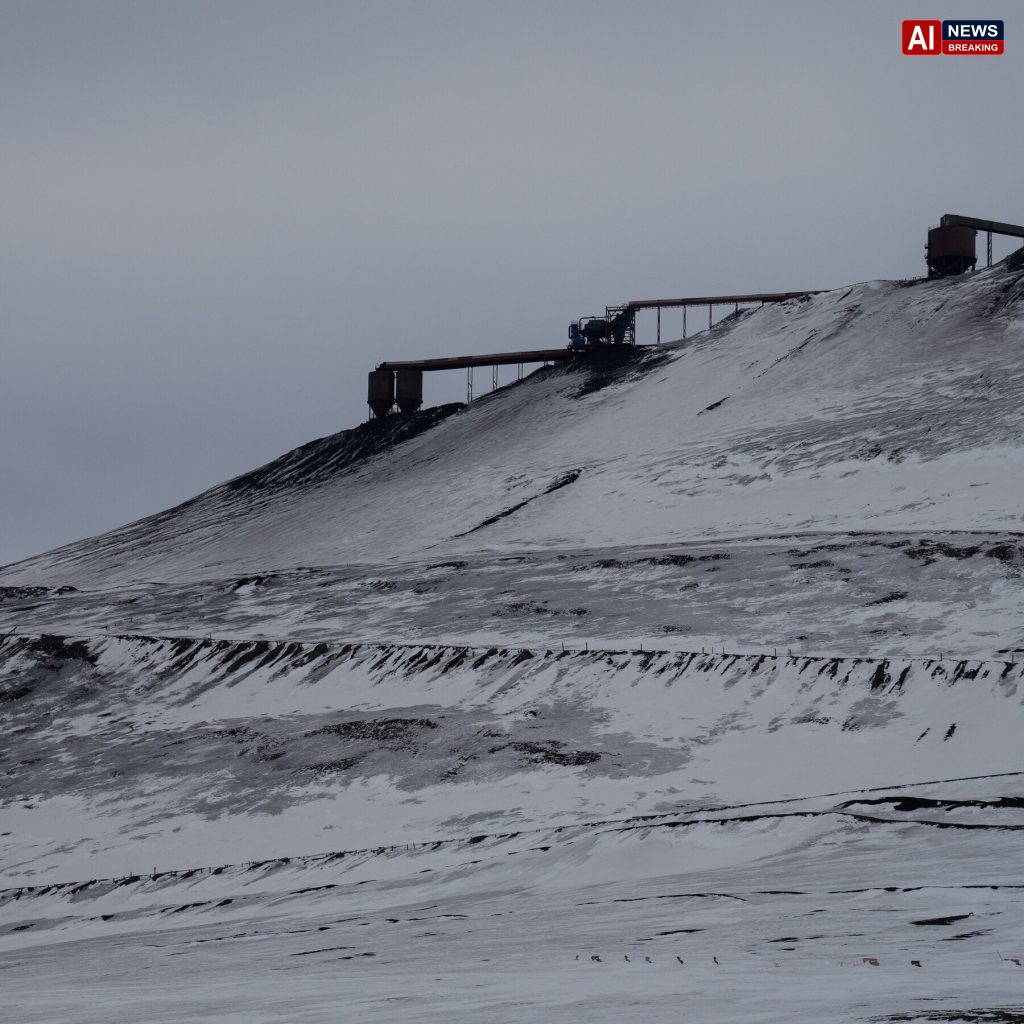
Norway Has Closed Its Last Coal Mine, Ending a Way of Life in the Arctic - AI News Breaking
Title Norway Has Closed Its Last Coal Mine, Ending a Way of Life in the Arctic Paragraph 1 Svalbard, the remote archipelago in the Arctic Ocean, has a mining history that stretches back more than a century. For decades the islands’ rugged terrain was dominated by the clatter of drills, the hiss of diesel engines, and the smell of coal dust that coated the lives of hundreds of miners and their families. The coal extracted there powered everything from local industry to the electricity grids of mainland Norway..
Yet in recent years, the region has been transformed into a glittering cruise‑ship destination, drawing visitors from around the world with its stark landscapes and polar bears. Paragraph 2 On 12 May 2024, Norway announced the permanent closure of the last active coal mine on the islands. The decision follows years of declining demand, mounting environmental scrutiny, and a strategic shift towards renewable energy..
The shutdown marks the end of a way of life that had defined the human presence on Svalbard for generations. It also signals a broader move by the Norwegian government to align the archipelago’s economy with global climate targets. Paragraph 3 The mine, located in the town of Longyearbyen, employed 45 people at the time of its closure..
Many of those workers have lived on the islands for more than a decade, their families intertwined with the rhythm of seasonal shifts and mining schedules. Interviews with former miners reveal a deep sense of loss: “We didn’t just work there; we built homes, raised children, and formed a community that has been part of Svalbard for so long.” The closure has prompted a wave of emotions ranging from pride in environmental progress to anxiety about future livelihoods. Paragraph 4 Norwegian authorities say the decision was made after a comprehensive assessment of the mine’s financial viability and environmental impact..
The coal extracted there had a carbon intensity that exceeded international benchmarks for sustainable operations. In addition, the global shift towards electric vehicles and cleaner energy sources has rendered Arctic coal virtually obsolete. The government estimates that the mine’s closure will reduce carbon emissions by approximately 200,000 tonnes of CO₂ annually, a figure that aligns with national climate commitments..
Paragraph 5 The closure is also a political statement. Svalbard sits at the intersection of Arctic sovereignty debates, with Russia, China, and the United States all maintaining a strategic interest in the archipelago. By ending coal extraction, Norway signals its intention to keep the islands free from the environmental risks associated with fossil fuel mining..
This move may also influence neighboring countries’ own policies toward Arctic resource development, encouraging a regional shift toward sustainable practices. Paragraph 6 From an economic perspective, the Norwegian state plans to invest heavily in the tourism sector as a replacement for mining revenue. Longyearbyen already attracts around 70,000 visitors each year, primarily cruise ship passengers..
Authorities anticipate that the mining shutdown will accelerate the diversification of local businesses, with an emphasis on eco‑tourism, scientific research stations, and digital services. In 2025, the government is set to roll out a €10 million fund aimed at training former miners in hospitality and renewable energy technologies. Paragraph 7 The transition is not without its challenges..
The islands’ harsh climate and limited infrastructure make job creation a logistical hurdle. Critics argue that the pace of the shift is too slow for the displaced workforce. In response, the Ministry of Labour has partnered with local educational institutions to offer accelerated courses in marine biology, polar climatology, and digital content creation..
These initiatives aim to equip former miners with skills that fit the emerging economic landscape. Paragraph 8 Environmental groups have hailed the closure as a watershed moment. The Arctic’s fragile ecosystems are increasingly vulnerable to industrial exploitation..
By ceasing coal operations, the Norwegian government has removed a major source of pollution, including heavy metals and particulate matter that once seeped into surrounding waters. Local scientists have reported a measurable recovery of marine life in nearby bays, with increased populations of ringed seals and Arctic cod. Paragraph 9 However, the closure also raises concerns about land use..
The abandoned mine sites contain extensive underground infrastructure, including ventilation shafts and drainage tunnels. Without proper remediation, these structures could pose hazards to wildlife and future visitors. The government has committed to a comprehensive decommissioning plan, scheduled to finish by 2028..
This plan will involve soil testing, tunnel sealing, and the installation of monitoring systems to detect potential leaks. Paragraph 10 In a broader context, Svalbard’s mining history has long been a point of contention among indigenous and scientific communities. The archipelago is uninhabited by indigenous peoples, but it hosts a large number of international researchers..
The end of coal extraction opens new research opportunities, allowing scientists to study the region’s climate without the interference of industrial pollution. Funding for polar research is expected to rise, with potential collaborations between Norwegian universities and institutions in Canada, Russia, and the United States. Paragraph 11 The international community has responded with mixed feelings..
The European Union praised Norway for taking decisive action to meet climate goals, while some Russian analysts warned that the move could be used to assert greater influence over Arctic governance. China, a major consumer of Norwegian energy, expressed support for the transition, noting that it aligns with global carbon neutrality timelines. Diplomatically, the mine’s closure underscores the delicate balance between economic interests and environmental stewardship in the Arctic..
Paragraph 12 For the people of Longyearbyen, the future remains uncertain. While the closure brings hope for greener opportunities, it also confronts.
Updated: November 24, 2026
Norway’s shuttering of Svalbard’s coal mine flips the island from a fossil‑fuel heartbeat to a climate‑proof laboratory, hinting that the Arctic will now be studied rather than exploited. This pivot may trigger a ripple of green‑tech jobs, but it also risks turning a once‑