
 Pakistan’s leaders hail first astronaut aboard Chinese craft: ‘Proud one of us has gone into space’
 British tourist travels 29 hours from Mumbai to Amritsar for ₹5,461, rates Indian Railways 10/10 | Viral video
 The Supreme Court will decide whether assault weapons bans violate the Second Amendment
 A Critic of Beijing Falls Short in Taiwan’s Key Mayoral Election
 EPA says no rise in contamination after Army detonates lead azide stockpile in Iowa
SC to hear on November 25 pleas of Sharjeel Imam, Umar Khalid seeking bail in UAPA case
**
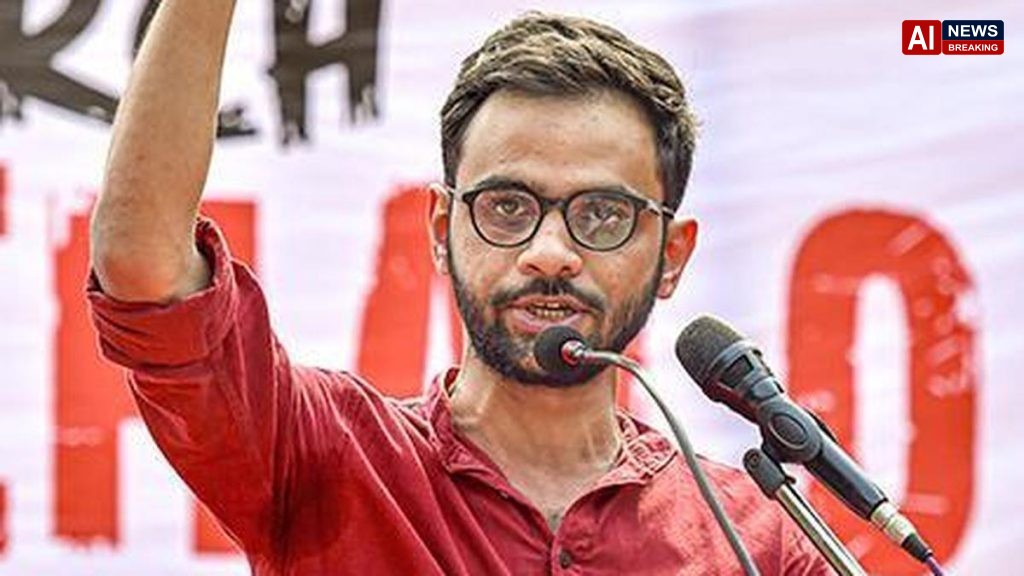
SC to hear on November 25 pleas of Sharjeel Imam, Umar Khalid seeking bail in UAPA case - AI News Breaking
hear november pleas sharjeel:
Title: SC to hear on November 25 pleas of Sharjeel Imam, Umar Khalid seeking bail in UAPA case The Supreme Court is scheduled to consider the bail petitions of two prominent activists, Sharjeel Imam and Umar Khalid, on Thursday, 25 November. The case, which is being adjudicated under the Unlawful Activities (Prevention) Act (UAPA), has attracted widespread attention from civil‑rights groups and political observers alike. Both petitioners argue that the prosecution has not fulfilled its statutory duty to examine protected witnesses, a key requirement in UAPA proceedings, and that the one‑year embargo imposed by the Court is close to expiring..
They seek a hearing in the high court to challenge the conditions of their detention and the validity of the UAPA charges. Sharjeel Imam, a former teacher turned activist, is accused of allegedly participating in an “unlawful” political protest that led to a violent clash with law enforcement. The prosecution’s case hinges largely on allegations that he coordinated the protest through a social media platform..
Imam maintains that he was merely a spokesperson and not a ringleader, and that the evidence presented was largely circumstantial. His legal team has pointed to the absence of testimony from a protected witness who was named in the indictment, arguing that this omission violates Article 14 of the Constitution and the procedural safeguards enshrined in the UAPA. Umar Khalid, an activist for labor rights, faces charges of “conspiracy to incite violence” after a series of strikes disrupted transport services across several states..
Khalid’s defense team has highlighted that the prosecution failed to produce a crucial protected witness who allegedly corroborated the claims that he had “planned” the strikes. According to Khalid’s counsel, the witness was protected under a prior Supreme Court order, and the prosecution’s failure to secure their testimony undermines the credibility of the charges. Khalid also stresses that the one‑year embargo, which bars any publication of the case details, is due to lapse on 28 November, potentially exposing sensitive information..
The UAPA, enacted in 2002, is designed to curb terrorism and unlawful activities. However, critics argue that its broad language and stringent procedural safeguards often result in the misuse of power against dissent. In the present case, the central issue is whether the prosecution complied with the “protected witnesses” rule, which requires the court to ensure that the testimony of witnesses who may be at risk of intimidation is recorded in a sealed environment..
Failure to do so is deemed a violation of the witness’s constitutional right to a fair trial. The Supreme Court’s order on 28 November last year imposed a one‑year embargo on the case, citing concerns that the proceedings could be “misused for political ends.” The embargo forbids any public commentary or media coverage about the case’s particulars, aiming to protect the integrity of the trial. Critics say that the embargo also curtails transparency, especially when the accused claim procedural lapses..
Both Imam and Khalid’s lawyers have urged the Court to lift the embargo, arguing that the delay would prejudice their case and that the public interest in a fair trial outweighs the Court’s concerns about potential misuse. In their petitions, Imam and Khalid have also filed affidavits detailing the alleged procedural violations. Imam’s affidavit, sworn before the High Court, lists ten instances where the prosecution allegedly failed to conduct a proper hearing with the protected witnesses..
He further cites a 2018 High Court ruling that emphasizes the necessity of a witness protection program in UAPA cases. Khalid’s affidavit, on the other hand, includes a timeline of the protest events and shows that the protected witness was identified in an earlier court order but was never called to testify. The petitions argue that such omissions constitute a breach of Article 21, which guarantees the right to life and personal liberty..
The Central Government’s response to the petitions has been muted, with a spokesperson stating that the UAPA remains “an indispensable tool to protect national security.” The spokesperson also highlighted that the court’s embargo and the “protected witness” provisions are “necessary safeguards” to prevent intimidation and ensure that the judicial process remains fair and unbiased. No official statement from the Ministry of Home Affairs has yet addressed the specific allegations raised by Imam and Khalid. The government’s silence has only intensified speculation about the case’s political implications..
Opposition parties and civil‑rights organisations have voiced strong support for the petitioners. The Indian National Congress has called for a “review of the UAPA” after the Supreme Court’s impending hearing. The Delhi High Court has previously ruled in favour of several activists facing UAPA charges, citing procedural lapses and the need for a transparent judicial process..
The National Commission for Women (NCW) has also urged the Supreme Court to examine the “protective measures” for witnesses more closely, emphasizing the vulnerability of activists to intimidation. Legal scholars have noted that the Supreme Court’s decision could set a precedent for how UAPA cases are handled across the country. Professor Ranjan Gupta of the University of Delhi wrote in a recent editorial that “if the Court accepts the petitions, it could signal a shift toward greater procedural accountability in UAPA prosecutions.” He also warned that the Court should balance the need for national security with the fundamental rights of individuals..
Meanwhile, human‑rights activist Shabana Azmi has highlighted that the UAPA has been misused to silence dissent, citing cases where activists have been jailed without proper examination of protective witnesses. The hearing is scheduled to take place in the Supreme Court’s Delhi bench on Thursday, 25 November, at 10 a.m. The petitioners will be represented by senior counsel Mr..
Updated: November 24, 2026
The Supreme Court’s scrutiny of the “protected‑witness” lapse could recalibrate the balance between state security and dissenting freedoms, forcing a procedural overhaul of UAPA prosecutions. A favorable ruling would not only embolden activists but also signal a judiciary willing to curtail the act’s broad, often opaque, reach.






