Pakistan’s leaders hail first astronaut aboard Chinese craft: ‘Proud one of us has gone into space’
 British tourist travels 29 hours from Mumbai to Amritsar for ₹5,461, rates Indian Railways 10/10 | Viral video
 The Supreme Court will decide whether assault weapons bans violate the Second Amendment
 A Critic of Beijing Falls Short in Taiwan’s Key Mayoral Election
 EPA says no rise in contamination after Army detonates lead azide stockpile in Iowa
Shenzhen prepares city for APEC summit.
**
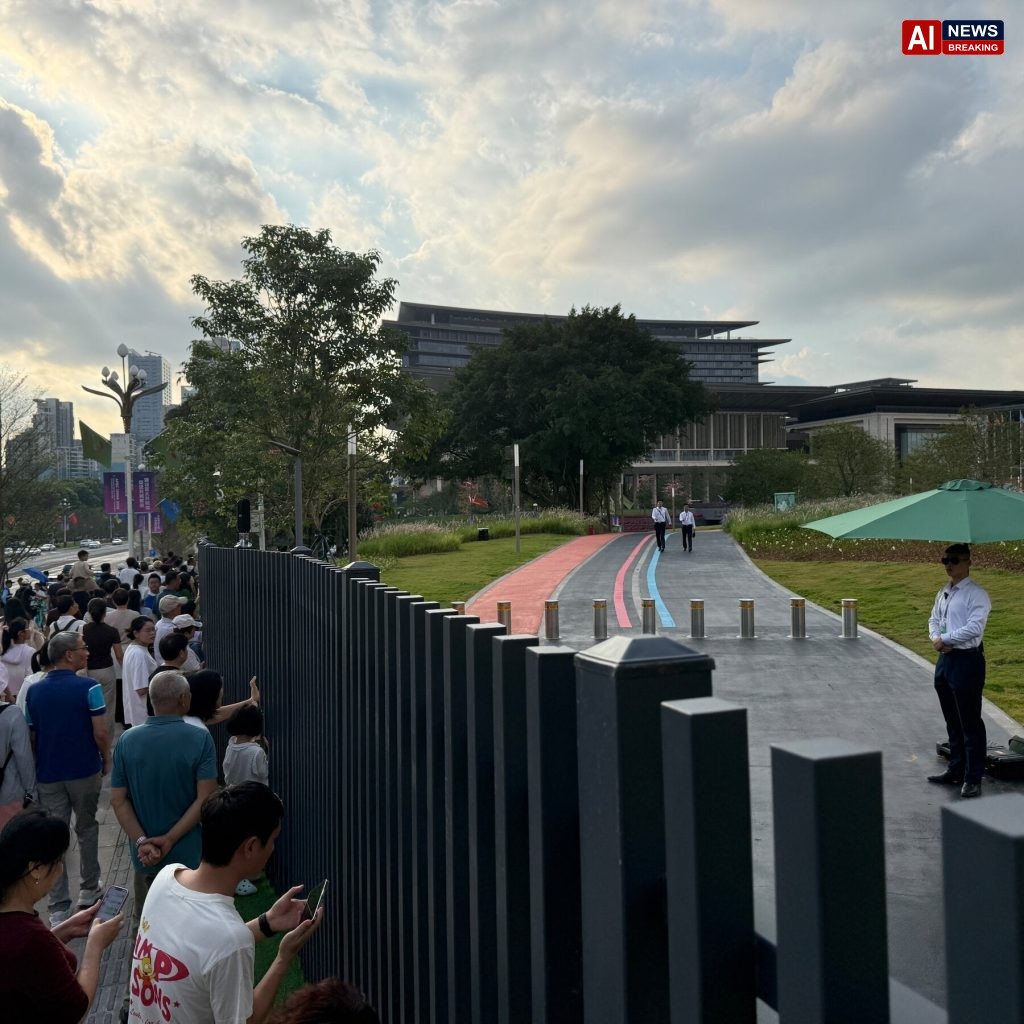
A tropical Chinese city is half-empty and ready for the summit. - AI News Breaking
shenzhen prepares city apec:
Shenzhen, the southern Chinese metropolis that has become synonymous with rapid development and high‑tech ambition, is now presenting a markedly quieter face as it prepares to host the upcoming Asia‑Pacific Economic Cooperation (APEC) summit. Streets that usually pulse with the clamor of scooters, delivery trucks and market vendors have been cleared, with many shops and restaurants shuttered for the duration of the event. The city’s authorities have taken the unusual step of temporarily relocating residents from selected neighbourhoods to reduce congestion and to create a more orderly environment for the delegation of leaders and business figures expected to arrive later this week.The transformation is evident from the moment one steps off the high‑speed train at Shenzhen’s newly expanded station..
Lush landscaping, previously confined to scattered parks, now lines the main avenues leading to the convention centre. Mature trees have been pruned and new greenery installed along the boulevards, a move that officials say is intended to improve air quality and offer a more pleasant visual backdrop for the summit. In addition, temporary pavilions adorned with flags of the member economies have been erected, while existing public spaces have been fitted with additional seating and shading structures to accommodate the influx of visitors.Security measures have been intensified across the city in a coordinated effort between municipal police, the Ministry of Public Security and private security firms..
Surveillance cameras have been installed on virtually every major thoroughfare, and facial‑recognition systems have been upgraded to monitor the movement of both residents and visitors. Checkpoints have been set up at key entry points, including the Shenzhen Bay Port and the Hong Kong‑Shenzhen boundary, where biometric scanners will verify identities before allowing access to designated summit zones. Authorities have also deployed a sizeable contingent of plain‑clothes officers to blend into crowds and respond quickly to any disturbances.Transport infrastructure has undergone a similarly rigorous overhaul..
The city’s extensive metro network, already one of the world’s busiest, has seen additional trains added to its schedule, with some lines operating at reduced intervals to accommodate the expected surge in passenger numbers. Dedicated shuttle buses now run between the airport, major hotels and the APEC venue, while traffic police have imposed temporary restrictions on private vehicles in the central business district. Ride‑hailing services have been instructed to limit pickups in certain zones, and a real‑time traffic monitoring app has been made publicly available to help commuters navigate the altered routes.Hotel capacity, a critical factor for any international gathering, has been expanded through a combination of new constructions and temporary accommodations..
Several luxury hotels have opened additional floors, while convention centres have been converted into makeshift lodging facilities for support staff and lower‑rank delegates. Prices for rooms in the city have risen sharply, prompting consumer‑rights groups to warn about potential exploitation. In response, the municipal government has pledged to monitor rates and to enforce price caps on certain categories of accommodation to protect domestic travelers.The summit itself, slated to begin on Thursday, will convene leaders from 21 economies spanning the Pacific Rim..
Topics on the agenda include supply‑chain resilience, digital trade standards, and climate‑related economic policies. Shenzhen’s selection as the host city marks the first time a Chinese city in the southern coastal region will hold the summit, a decision that underscores the country’s desire to showcase its economic model and technological prowess. Observers note that the city’s reputation as a hub for innovation, particularly in sectors such as telecommunications, fintech and green technology, aligns with the summit’s forward‑looking themes.Local businesses are anticipating a mixed impact from the event..
While some retailers and restaurants in the immediate vicinity of the conference centre expect a surge in patronage, many others have reported a downturn due to the temporary restrictions on movement and the relocation of residents. The Shenzhen Chamber of Commerce has issued a statement urging the government to provide clear timelines for the lifting of restrictions, so that businesses can plan their operations accordingly. In contrast, companies involved in the high‑tech supply chain are optimistic, citing the summit as an opportunity to attract foreign investment and to announce new partnerships.Public sentiment among Shenzhen’s 17 million residents appears cautiously optimistic, though not uniformly positive..
Social media platforms have been abuzz with a blend of pride in the city’s international spotlight and frustration over the inconvenience caused by road closures and the heightened surveillance. A recent poll conducted by a local university indicated that roughly 58 percent of respondents felt the preparations were justified, while 22 percent expressed concerns about privacy and the potential for long‑term restrictions beyond the summit’s conclusion. Authorities have repeatedly assured citizens that all extraordinary measures are temporary and will be rolled back once the event ends.The environmental dimension of the summit has also attracted attention..
Organisers have pledged to make the gathering “carbon‑neutral,” a claim that has prompted scrutiny from environmental NGOs. Critics point out that the massive influx of air‑conditioned venues, increased flights and the extensive use of disposable materials could undermine the city’s sustainability goals. In response, the municipal government has highlighted initiatives such as the use of electric buses for official transport, the installation of solar panels on temporary structures and the provision of reusable water bottles to delegates..
An independent audit of the summit’s carbon footprint is scheduled for release in the weeks following the event.As the clock ticks down to the opening ceremony, Shenzhen’s transformation from a bustling commercial hub to a meticulously orchestrated venue underscores both the logistical challenges and the political symbolism attached to hosting an APEC summit. The city’s blend of cutting‑edge technology, stringent security protocols and concerted efforts to project a polished image reflects China’s broader strategy of leveraging high‑profile international gatherings to bolster its standing on the global stage. Whether the summit will achieve its economic and diplomatic objectives, and what legacy it will leave for Shenzhen’s residents, remains to be seen..
The coming days will reveal how the city balances the demands of international diplomacy with the everyday realities of its populace..
Updated: November 18, 2026
Shenzhen has emptied streets, bolstered security and revamped transport and public spaces to present a pristine backdrop for the upcoming APEC summit, even relocating residents and tightening surveillance. While the city hopes the high‑profile event will showcase its tech‑driven economy and attract investment, local businesses and citizens grapple with disruptions, rising hotel costs and privacy concerns.