
 Pakistan’s leaders hail first astronaut aboard Chinese craft: ‘Proud one of us has gone into space’
 British tourist travels 29 hours from Mumbai to Amritsar for ₹5,461, rates Indian Railways 10/10 | Viral video
 The Supreme Court will decide whether assault weapons bans violate the Second Amendment
 A Critic of Beijing Falls Short in Taiwan’s Key Mayoral Election
 EPA says no rise in contamination after Army detonates lead azide stockpile in Iowa
Supreme Court reviews petition over Mustafabad voter roll discrepancies
**
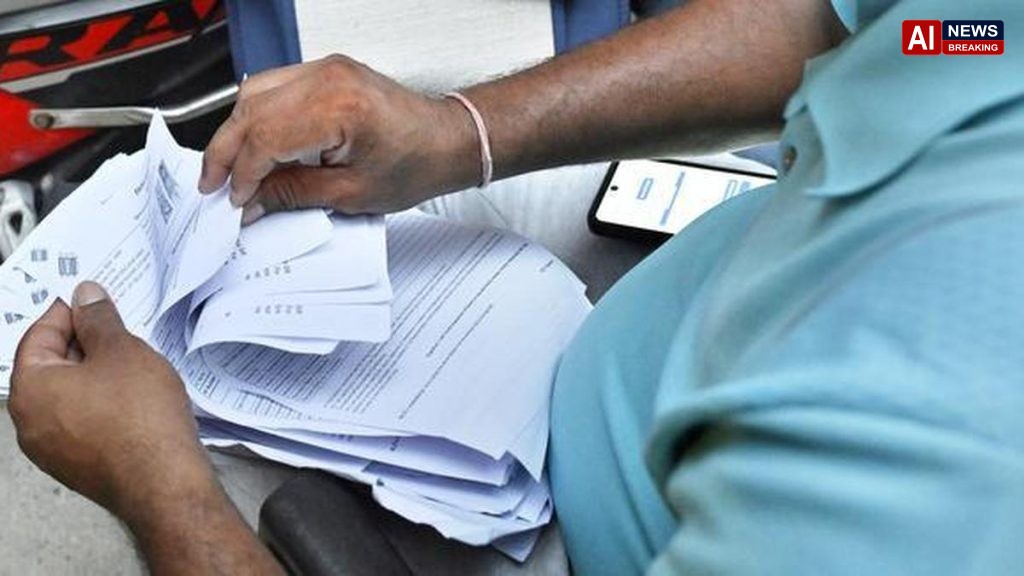
Supreme Court reviews petition over Mustafabad voter roll discrepancies - AI News Breaking
Plea in SC says ghost Form 7s haunt Mustafabad constituency during Delhi SIR The Supreme Court on Tuesday heard a petition filed by a senior Delhi lawyer alleging that the election roll for the Mustafabad assembly constituency contains a large number of “ghost” entries. According to the petitioner, many individuals listed as deceased in the roll are in fact alive, while several names marked as having shifted to other areas have been found residing at their original addresses. The claim, if proven, could call into question the integrity of the voter list compiled for the upcoming Delhi State Installation Roll (SIR) exercise..
The petitioner’s counsel cited a series of field investigations carried out by volunteers and local NGOs, which reportedly uncovered discrepancies in the roll. In one instance, a family was shown a Form 7 – the document that records a voter’s details – indicating that the head of the household had died in 2018. Yet the same person was observed attending a community meeting later that year..
Similar anomalies were documented across a range of households, prompting the lawyer to seek a court‑ordered audit of the roll. The Delhi Chief Electoral Officer (CEO) responded that the electoral roll undergoes regular verification and that any errors are corrected through a well‑established process. He emphasized that the roll is compiled using data from the municipal corporation, the Delhi Police, and the National Population Register, all of which are cross‑checked before publication..
The CEO also noted that the roll for the SIR is a preliminary draft, subject to public scrutiny and objections before the final version is frozen. In defence of the process, the Election Commission of India (ECI) highlighted that the 2024 SIR is the first to incorporate biometric verification at the polling station level. The commission claims that this technology will significantly reduce the likelihood of ghost entries and duplicate records..
Nevertheless, critics argue that biometric checks cannot fully address inaccuracies that stem from outdated civil‑registration data, which may not reflect recent deaths or migrations. The petition also referenced a report submitted to the Delhi High Court earlier this year, which examined thirty‑seven applications filed by residents seeking corrections to the electoral roll. The report concluded that all thirty‑seven applications were either false or fabricated, suggesting a pattern of misuse of the grievance mechanism..
The petitioner contended that the report itself may be flawed, pointing out that the investigations were conducted without independent oversight. Legal experts noted that the Supreme Court’s intervention could set a precedent for how electoral rolls are vetted across the country. Professor Arvind Kumar of Delhi University’s Department of Law observed that “if the Court finds systemic lapses, it may compel the Election Commission to overhaul the data‑integration process and introduce stricter penalties for false claims.” He added that the balance between ensuring an accurate roll and preventing frivolous challenges is delicate and must be handled with procedural rigor..
Meanwhile, local political parties have seized on the issue to mobilise their bases. The Aam Aadmi Party (AAP), which currently governs Delhi, warned that the petition could be a “political stunt” aimed at undermining confidence in the electoral apparatus ahead of the next assembly election. In contrast, the Bharatiya Janata Party (BJP) urged the Court to order a comprehensive audit, arguing that any taint on the roll could affect the legitimacy of future results..
Both parties called for transparency, though their narratives diverge on the perceived motives behind the allegations. The Election Commission has offered to share the raw data underlying the Mustafabad roll with independent auditors, a move it says will bolster public trust. It has also invited civil‑society organisations to submit observations during the public hearing period scheduled for the next two weeks..
However, the petition’s counsel warned that without a court order, such voluntary measures may be insufficient to rectify the alleged discrepancies. Observers point out that the issue of ghost voters is not new to India. Past elections have seen similar claims in states such as Uttar Pradesh and Karnataka, where post‑election audits revealed inflated voter numbers due to outdated death registers and migration data..
In many cases, the Election Commission responded by updating its verification protocols, but critics argue that the reforms have been incremental rather than systemic. The Supreme Court, after hearing arguments from both sides, reserved its judgment, indicating that it will consider the merits of the petition alongside broader concerns about electoral integrity. The bench, comprising Justice R. Mohan and Justice S. Bhandari, emphasized the need for a “balanced approach” that safeguards both the rights of legitimate voters and the sanctity of the electoral roll..
Their decision is expected to be delivered within the next month. If the Court orders a fresh verification of the Mustafabad roll, the process could delay the finalisation of the Delhi SIR, potentially impacting the timeline for the upcoming assembly elections. Election officials have warned that any postponement may compress the window for political parties to campaign, a factor that could influence voter turnout and overall election dynamics..
The case underscores the growing scrutiny of electoral data in India’s democratic machinery, reflecting heightened public expectations for transparency in the digital age. As the legal battle unfolds, stakeholders from political parties, civil‑society groups, and election administrators will be watching closely, aware that the outcome may reshape how voter rolls are maintained and contested across the nation..
Updated: November 16, 2026
Summary: Supreme Court is weighing a Delhi lawyer’s petition that the Mustafabad electoral roll contains “ghost” entries, potentially undermining the upcoming Delhi State Installation Roll. A court‑ordered audit could delay the roll’s finalisation, prompting parties and election officials to stress the need for a balanced verification process that protects voter integrity while preventing frivolous challenges.
If the Supreme Court mandates a fresh audit, Delhi’s SIR could be delayed—forcing parties to cram their campaigns into a tighter window and potentially lowering turnout.
This move would send a nationwide signal that voter‑roll integrity is now a court‑verified, not merely administrative, priority.






