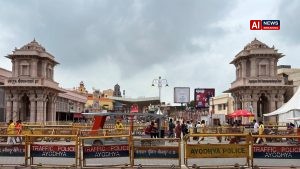
The Supreme Court will decide whether assault weapons bans violate the Second Amendment
 A Critic of Beijing Falls Short in Taiwan’s Key Mayoral Election
 EPA says no rise in contamination after Army detonates lead azide stockpile in Iowa
 Israeli Strike Kills 2 Workers at Gaza Clinic, Doctors Without Borders Says
 McQueen Pre-Fall 2027
Karthigai Deepam Row: Supreme Court Ruling Sparks Fresh Clash Between Tamil Nadu Government and Temple Authorities
**
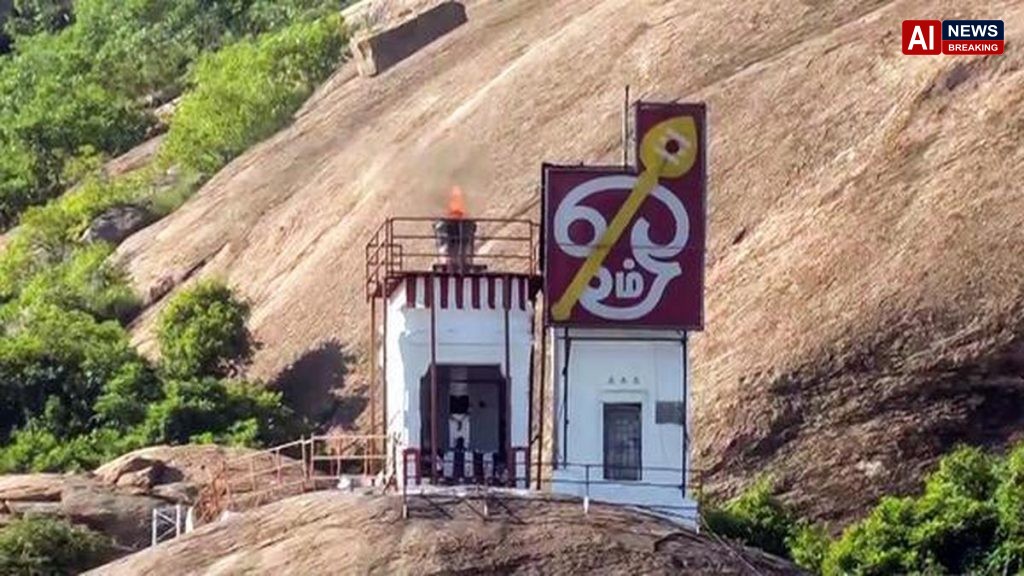
Supreme Court orders Karthigai Deepam to be lit on ‘deepathoon’ on November 28; issues contempt notice - AI News Breaking
karthigai deepam supreme court:
The Supreme Court’s most recent decision on the Karthigai Deepam festival in Tamil Nadu has drawn a sharp reaction from both state officials and temple trustees. In a 3‑2 split judgment delivered on Tuesday, the bench ordered that the grand flame, traditionally lit on the evening of 28 November, be illuminated on a date it called “deepathoon.” The ruling came after a petition filed by the Hindu Religious and Charitable Endowments Department, which had sought a postponement of the festival to allow for safety checks following a series of incidents at similar events last year. The court’s directive is expected to take effect in the weeks leading up to the festival, although the precise timing of the lighting ceremony will remain subject to a subsequent hearing scheduled for 15 December.The bench’s decision was grounded in an inquiry that the Supreme Court had undertaken into allegations of a “pre‑meditated conspiracy” between state authorities and the trustees of the Kumbakonam Periyakoil, the main temple that hosts the festival..
The petitioners claimed that the government had been complicit in staging the event at a time that would be most visible to the media, thereby generating political capital at the expense of public safety. In a statement released after the judgment, the Court noted that the state’s Chief ary and the Director General of Police had been implicated in “advising the trustees on the timing and logistics of the festival.” The Court called for a detailed report from the State Election Commission on how the festival’s dates have been set over the past decade.In the wake of the ruling, the Court issued a contempt notice to the Tamil Nadu Chief ary and the Director General of Police, accusing them of defying a prior order that had directed the government to provide a safety audit before the festival. The notice also extended to the Madurai District Collector, who is responsible for the area where the main temple is situated..
In his reply, the Collector expressed that the notice was “unfounded” and that the state had already completed the required safety inspections, citing a report filed in early November. The Court, however, insisted that the inspections “did not meet the minimum standards required for an event of such scale,” and reiterated that any further delays would be seen as an attempt to obstruct justice.The temple authorities, represented by a delegation of senior trustees, have publicly denied the allegations of a conspiracy. They said that the decision to light the Deepam on the eve of 28 November had been taken solely to preserve the “spiritual integrity” of the festival, and that the state had merely offered to support the event with logistical arrangements..
One trustee, speaking on condition of anonymity, told reporters that “the temple’s decision has always been guided by religious rites and not by any political agenda.” He added that the trustees had complied with all safety protocols recommended by the police, including crowd control measures and fire‑extinguishing equipment.The decision also touched on the role of local volunteers, who had been coordinating with the police and temple authorities to manage the large crowds that gather on the nights of Karthigai Deepam. The Supreme Court’s bench observed that the volunteers “were effectively co‑ordinated by the state and temple officials,” and that “any negligence on their part would have reflected on the state’s responsibility.” The Court therefore directed that the volunteers’ training and safety briefing be documented in a report due to the Court by 10 December. The volunteers’ union, however, said that they had been “excessively burdened” by the demands of the state, and called on the government to provide better support.The controversy has already begun to ripple across Tamil Nadu’s political landscape..
The Chief Minister’s office released a statement saying that the government had “always acted in the best interest of the people” and that it was “committed to ensuring a safe and dignified celebration.” The statement also mentioned that the government would “continue to work closely with the Supreme Court” to resolve the matter. The state’s opposition parties, meanwhile, seized on the contempt notice as evidence of a “government that is more interested in politics than public safety.” A senior opposition leader said that the ruling “was an unprecedented interference in a religious festival” and called for a judicial review of the order.The Supreme Court’s ruling was seen by legal experts as a rare instance of the high court taking a firm stance on a cultural event that had previously been largely left to local authorities. A senior counsel who argued the case said that the Court had “corrected a long‑standing abuse of power.” The counsel added that the order “sent a clear message that public safety cannot be compromised in the name of religious observance.” He cautioned, however, that the “immediate implementation of the order” could cause logistical problems for the temple, given the extensive preparations that the trustees have already made.The next hearing, scheduled for 15 December, is expected to address the state’s compliance with the court’s directives..
The bench will review the safety audit report, the volunteers’ training documentation, and the correspondence between the state and temple authorities. The state has promised to submit a comprehensive plan that includes crowd‑management strategies, emergency response protocols, and contingency measures for extreme weather conditions. The temple trustees, for their part, have pledged to cooperate fully with the Court, stating that they “will not allow any interference with the sanctity of the festival.” They have also requested that the Court allow them to retain the traditional timing of the Deepam if it can be demonstrated that it would not pose a risk to public safety.The final outcome of the hearing may well determine whether Karthigai Deepam will be lit on the eve of 28 November or whether the festival will be postponed or rescheduled..
In the meantime, residents of Kumbakonam and the surrounding districts are being advised to remain vigilant, as the police have warned of “potential crowds that could exceed the capacity of the temple premises.” The Supreme Court’s involvement has brought national attention to a local tradition, underscoring the complex interplay between cultural heritage, public safety, and the rule of law in India..
Updated: November 27, 2026
The Court’s ruling is less about liturgy and more about a judiciary‑state clash: it signals that the state can’t use a festival to chase political visibility without first proving it’s not risking lives. In effect, the Supreme Court has turned a spiritual ritual into a litmus test for public‑s