Europe warns of Russia’s hybrid attacks but struggles to counter them
  Former chief election commissioner calls SIR scheme illegal.
  A Corruption Scandal Is Reshaping Brazil’s Presidential Election
  US citizen injured in Illinois after ICE agents mistook him for fugitive, tried to arrest him
  At 10 years old, Smithsonian’s Black museum is undaunted amid pressure from Trump administration
 Taiwan’s 1.4 Billion PAVE PAWS Radar Tracks China’s Surprise Ballistic Missile Launch, Highlighting Growing Cross-Strait Tensions
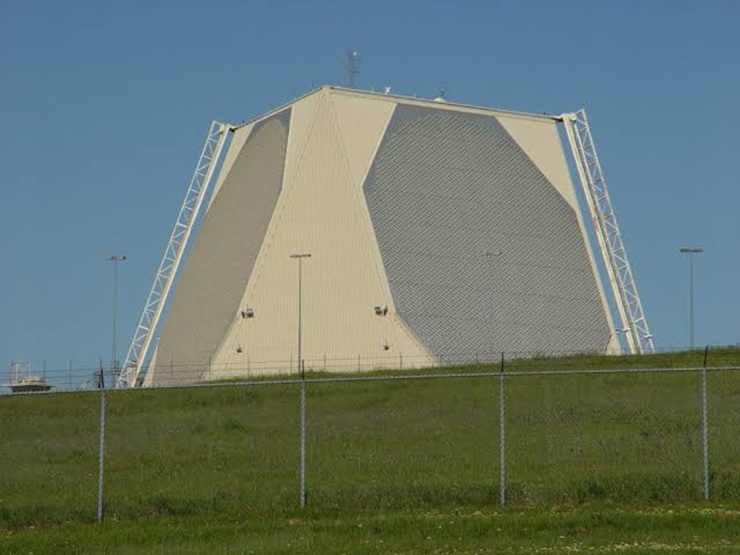
Taiwan’s $1.4 billion PAVE PAWS radar system has successfully tracked a surprise ballistic missile launch by China, demonstrating the island’s expanding ability to monitor strategic military activity across the Taiwan Strait and highlighting the growing importance of advanced radar networks in the region.
taiwans billion pave paws:
Taiwan’s military has disclosed that its sophisticated PAVE PAWS (Phased Array Warning System) radar successfully tracked a surprise ballistic missile launch conducted by China’s People’s Liberation Army (PLA), demonstrating the island’s expanding ability to monitor strategic military activity across the Taiwan Strait.
The revelation comes amid heightened military competition between Beijing and Taipei, with both sides investing heavily in surveillance, missile defence, and early-warning capabilities. Taiwanese defence officials said the radar system continuously monitored the missile throughout its flight, providing valuable tracking data despite the launch taking place without prior public notice.
The episode has once again highlighted the growing importance of advanced radar networks in an increasingly contested Indo-Pacific security environment, where early detection can significantly influence military preparedness and strategic decision-making.
What Is the PAVE PAWS Radar System?
The PAVE PAWS (Phased Array Warning System) is among the world’s most advanced long-range early-warning radar systems.
Originally developed in the United States to detect incoming ballistic missiles, the radar employs powerful phased-array technology capable of monitoring vast areas of airspace and near-Earth space without requiring mechanical movement.
Taiwan’s radar installation reportedly cost around US$1.4 billion, making it one of the country’s largest defence infrastructure investments.
The system is designed to provide:
- Early warning of ballistic missile launches.
- Tracking of long-range missile trajectories.
- Monitoring of satellite and space objects.
- Detection of hypersonic and high-speed aerial threats.
- Enhanced situational awareness for military commanders.
Tracking China’s Surprise Missile Launch
According to Taiwanese officials, the radar successfully detected the ballistic missile shortly after launch and continuously tracked its trajectory throughout the flight.
Military analysts note that accurately following a ballistic missile involves several complex stages:
- Detecting the missile during boost phase.
- Tracking ascent into space.
- Calculating projected trajectory.
- Monitoring mid-course flight.
- Predicting potential impact zones.
The ability to accomplish these tasks rapidly is critical for missile defence planning and civil warning systems.
Although Taiwan has not publicly released detailed technical information about the missile’s flight path, officials described the radar’s performance as highly successful.
Why the Launch Matters
China regularly conducts military exercises around Taiwan, including naval patrols, air force sorties, missile drills, and joint operations involving multiple branches of the People’s Liberation Army.
However, ballistic missile launches attract particular attention because they demonstrate strategic strike capabilities.
Such launches allow military planners to evaluate:
- Missile accuracy.
- Range performance.
- Guidance systems.
- Command-and-control procedures.
- Operational readiness.
For neighbouring countries, they also provide valuable opportunities to test surveillance and early-warning systems.
Taiwan’s Growing Missile Warning Network
Taiwan has significantly strengthened its air and missile surveillance capabilities over the past decade.
Its defence architecture now combines:
- Long-range early-warning radars.
- Coastal surveillance systems.
- Air defence radars.
- Satellite-supported monitoring.
- Electronic intelligence networks.
- Integrated command centres.
Together, these systems provide military leaders with a comprehensive picture of regional aerial activity.
Officials believe early detection increases decision-making time during potential crises.
Strategic Importance of Early Warning
Modern missile defence depends heavily on time.
Even a few additional minutes of warning can allow governments to:
- Assess incoming threats.
- Activate air-defence systems.
- Protect military assets.
- Alert civilian authorities.
- Coordinate allied responses.
Early-warning radars therefore serve not only as intelligence platforms but also as key components of national deterrence strategies.
China’s Expanding Missile Capabilities
The People’s Liberation Army Rocket Force has become one of the world’s largest missile forces.
Its arsenal includes:
- Short-range ballistic missiles.
- Medium-range ballistic missiles.
- Intermediate-range ballistic missiles.
- Anti-ship ballistic missiles.
- Cruise missiles.
- Hypersonic glide vehicles.
China continues to modernize these capabilities as part of broader military reforms intended to enhance precision strike capacity across the Indo-Pacific.
The development of advanced missile systems has become a central element of Beijing’s military modernization programme.
Cross-Strait Military Competition Intensifies
Relations between China and Taiwan remain among the most sensitive security issues in Asia.
Beijing considers Taiwan part of its territory and has stated that reunification remains a long-term objective. It has not ruled out the use of force under certain circumstances.
Taiwan, meanwhile, maintains its own government, military, and democratic institutions. It continues to strengthen its defence capabilities while emphasizing the importance of maintaining peace and stability across the Taiwan Strait.
Military activity around the island has increased in recent years, including:
- Larger naval deployments.
- Frequent military aircraft sorties.
- Joint combat exercises.
- Maritime patrols.
- Missile demonstrations.
Role of the United States
The United States remains Taiwan’s principal security partner under the Taiwan Relations Act, providing defensive equipment and supporting the island’s ability to maintain a credible self-defence capability.
Although Washington follows its longstanding “One China” policy, it opposes unilateral changes to the status quo through force and regularly conducts naval operations in international waters of the region.
Advanced surveillance systems such as PAVE PAWS also strengthen information sharing and regional situational awareness among security partners.
The Technology Behind Phased Array Radar
Unlike conventional rotating radars, phased-array systems steer their beams electronically.
This allows them to:
- Scan multiple targets simultaneously.
- Track hundreds of objects at once.
- Switch targets within milliseconds.
- Operate continuously without mechanical rotation.
- Detect high-speed threats at long range.
Such capabilities make phased-array radars particularly valuable against ballistic missiles traveling at several kilometers per second.
Implications for Indo-Pacific Security
The successful tracking of China’s missile launch demonstrates how surveillance technology is becoming increasingly important in regional security.
Countries across the Indo-Pacific—including Japan, South Korea, Australia, and the United States—continue expanding missile detection networks in response to evolving threats.
Greater surveillance capability contributes to deterrence by reducing uncertainty during periods of military tension.
However, it also reflects the broader strategic competition shaping security dynamics throughout the region.
Conclusion
Taiwan’s disclosure that its US$1.4 billion PAVE PAWS radar successfully tracked a surprise Chinese ballistic missile launch highlights the growing significance of advanced early-warning systems in today’s security environment. As military competition across the Taiwan Strait continues to intensify, accurate missile detection has become a cornerstone of strategic deterrence and crisis management. While the successful tracking demonstrates Taiwan’s improving surveillance capabilities, it also underscores the broader regional trend toward greater investment in missile defence, intelligence, and technological preparedness amid evolving geopolitical challenges.
AI Insight
Modern military competition increasingly revolves around information superiority as much as firepower. Early-warning systems such as PAVE PAWS provide valuable decision-making time, strengthen deterrence, and reduce strategic uncertainty during crises. As missile technology becomes faster and more sophisticated—including the emergence of hypersonic weapons—the ability to detect, track, and assess launches in real time will remain one of the most critical components of national security across the Indo-Pacific.