
 Pakistan’s leaders hail first astronaut aboard Chinese craft: ‘Proud one of us has gone into space’
 British tourist travels 29 hours from Mumbai to Amritsar for ₹5,461, rates Indian Railways 10/10 | Viral video
 The Supreme Court will decide whether assault weapons bans violate the Second Amendment
 A Critic of Beijing Falls Short in Taiwan’s Key Mayoral Election
 EPA says no rise in contamination after Army detonates lead azide stockpile in Iowa
Trump meets Xi in Beijing for summit on trade, technology and climate.
**
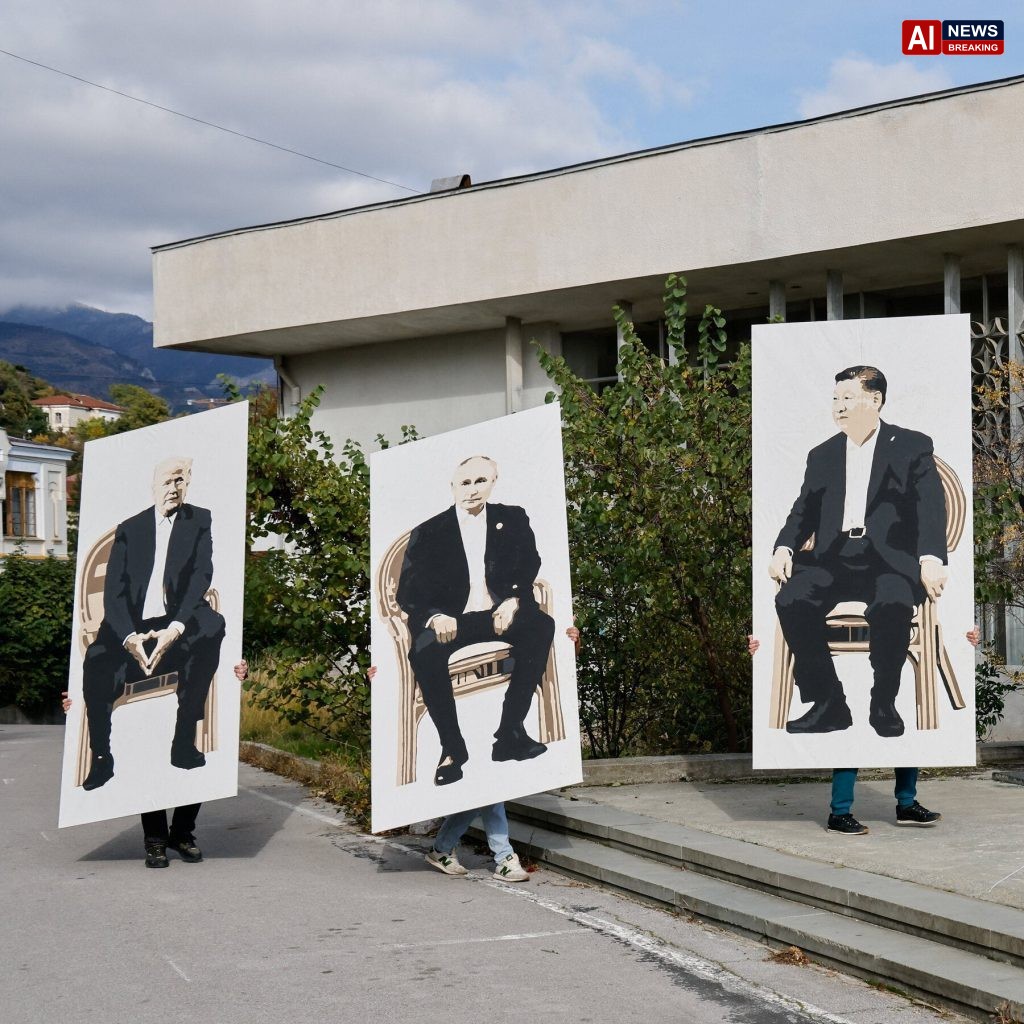
The Shadow of Yalta Hangs Over Trump’s Summit in China - AI News Breaking
trump meets beijing summit:
The Shadow of Yalta Hangs Over Trump’s Summit in China The 1945 Yalta Conference, where Winston Churchill, Joseph Stalin and Franklin Roosevelt met, reshaped the map of Europe and set the tone for the Cold War. Their agreements on the division of Germany, the future of Poland and the creation of the United Nations created a geopolitical framework that has lingered for eight decades. Today, as former US president Donald Trump prepares for a high‑profile summit in Beijing, analysts draw unsettling parallels between the ive, power‑balancing machinations of Yalta and the opaque diplomacy surrounding Trump’s China visit..
The historical echo about the balance of power, the role of personal ambition and the potential for long‑term strategic shifts. Trump’s itinerary in China includes meetings with President Xi Jinping, senior officials from the Communist Party, and leaders of key state‑owned enterprises. While the official agenda focuses on trade, technology and climate cooperation, critics warn that the summit could become a platform for renegotiating global norms established after World War II..
The Yalta legacy reminds observers that great powers have often used informal gatherings to redraw borders and influence internal politics of smaller states. In the current context, the United States and China, both nuclear‑armed superpowers, may be attempting to redefine spheres of influence without the transparent multilateral mechanisms that have governed post‑war diplomacy. The historical context is crucial..
At Yalta, the Allies agreed to a provisional government in Poland that was largely a concession to Soviet interests, a decision that sowed distrust and contributed to the Iron Curtain’s descent. Similarly, Trump’s approach to China has been marked by a willingness to bypass traditional diplomatic channels, relying instead on personal rapport and behind‑the‑scenes negotiations. Observers note that such a style can produce rapid agreements, but also risks undermining the predictability that allies and partners depend upon..
The summit’s outcomes could therefore reverberate far beyond bilateral trade figures, influencing the broader architecture of international relations. China’s rise as an economic powerhouse and its assertive foreign policy have already challenged the post‑Yalta order. The Belt and Road Initiative, expansive military modernization and an increasingly vocal stance in the United Nations echo the Soviet Union’s post‑war expansionist policies..
Trump’s visit, therefore, is not merely a commercial venture; it is a test of whether the United States can reassert its influence in a world where Beijing seeks a seat at the table equal to that once held by Moscow. The meeting’s tone may hint at a new balance of power reminiscent of the uneasy equilibrium that emerged from Yalta’s compromises. Domestic politics in the United States add another layer of complexity..
Trump’s political capital hinges on delivering tangible benefits to American voters, particularly in manufacturing and technology sectors that feel squeezed by Chinese competition. The pressure to secure favorable trade terms echoes the urgency that drove Allied leaders in 1945 to reach swift, albeit imperfect, agreements to avoid a power vacuum in Europe. Yet, unlike the wartime exigencies that justified the Yalta concessions, today’s stakes involve a peacetime economy where the costs of miscalculation could manifest as supply‑chain disruptions or heightened geopolitical tension..
Chinese officials, for their part, are keen to present the summit as a milestone of “win‑win” cooperation, a narrative that aligns with Xi’s vision of a harmonious international environment under Chinese leadership. This rhetoric mirrors Soviet claims at Yalta that the alliance was built on mutual respect and shared security interests, despite underlying rivalries. By framing the talks as mutually beneficial, Beijing aims to legitimize its expanding global role while softening criticism over human‑rights concerns and territorial disputes in the South China Sea..
The summit also revives debate over the relevance of the United Nations, an institution born out of the Yalta agreements and subsequent San Francisco conference. Both the United States and China have expressed frustration with perceived inefficiencies and bias within the UN system. Trump’s history of questioning multilateral bodies suggests that any joint statement emerging from Beijing could signal a willingness to reshape or sidestep the UN framework, much as Yalta’s back‑room deals set precedents that later strained the organization’s credibility during the early Cold War..
Security analysts warn that the personal chemistry between Trump and Xi could mask deeper strategic divergences. While both leaders share an interest in curbing the influence of rival powers—Russia for the United States, and the United States for China—their underlying objectives differ markedly. Yalta’s legacy shows that alliances formed on convenience can quickly dissolve when national interests clash, leading to prolonged periods of tension..
If the summit produces only superficial agreements without addressing core issues such as technology transfer, intellectual‑property protection and regional security, the risk of a renewed rivalry looms large. Economic experts stress that the timing of the summit coincides with fragile global recovery from the pandemic and the looming threat of a recession. Trade policies forged in this environment could have lasting impacts on supply chains, labor markets and inflation rates worldwide..
The Yalta Conference demonstrated how economic decisions made under pressure can lock nations into patterns of dependence and competition for decades. A mis‑aligned trade pact between Washington and Beijing could cement a bifurcated global economy, forcing other nations to choose sides and potentially sparking a new form of economic bloc competition. Public opinion in both countries remains divided..
In the United States, polls show a mixture of optimism about potential deals and skepticism over China’s commitment to fair play. In China, state media touts the summit as a diplomatic triumph, yet subtle dissent emerges in online forums questioning whether the United States.
Trump’s China summit feels less like a trade talk and more like a modern‑day Yalta—an informal power‑balancing act that could redraw economic spheres while sidelining the multilateral rules that have kept the post‑war order stable. If the personal chemistry between Trump and Xi masks deeper strategic r





