
 Pakistan’s leaders hail first astronaut aboard Chinese craft: ‘Proud one of us has gone into space’
 British tourist travels 29 hours from Mumbai to Amritsar for ₹5,461, rates Indian Railways 10/10 | Viral video
 The Supreme Court will decide whether assault weapons bans violate the Second Amendment
 A Critic of Beijing Falls Short in Taiwan’s Key Mayoral Election
 EPA says no rise in contamination after Army detonates lead azide stockpile in Iowa
Trump receives Jollib
**
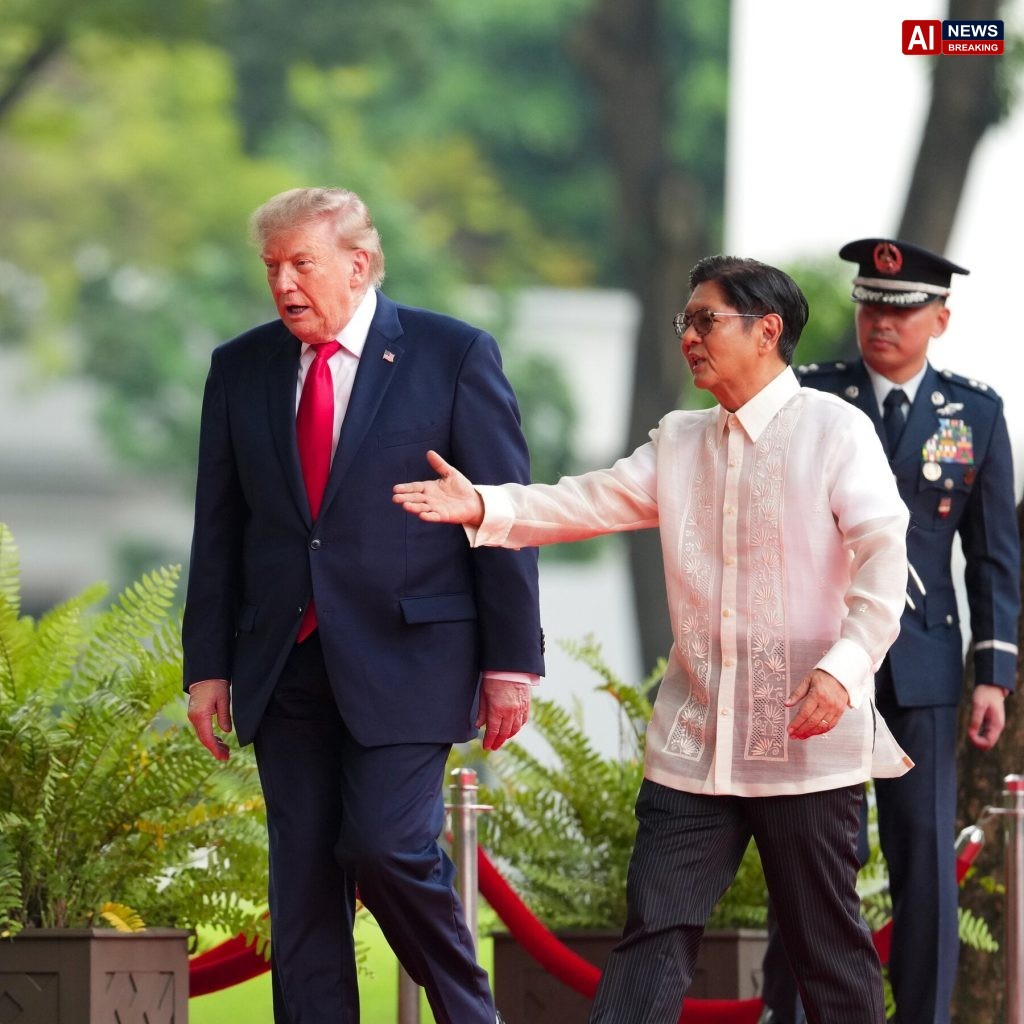
Trump and Marcos Share a Moment Over Jollibee Fried Chicken - AI News Breaking
President Donald Trump’s visit to Manila concluded with an unexpected cultural exchange that quickly became a talking point on both sides of the Pacific. After a day of diplomatic engagements, the former U.S. president was escorted to a modest hotel where his Filipino host, former senator and current senior adviser to the administration, placed a late‑night order for Jollibee, the country’s most iconic fast‑food chain..
The order, consisting of the chain’s famed Chickenjoy fried chicken, was delivered to Trump’s room just before midnight, sparking a wave of social‑media commentary and a flurry of diplomatic chatter about the symbolic weight of the seemingly simple meal.The decision to serve Jollibee was not an afterthought. According to sources close to the White House, the team in Manila had been briefed on the cultural significance of the brand, which boasts more than 1,600 outlets nationwide and a loyal following that spans generations. “When you think of Filipino comfort food, Jollibee is at the top of the list,” said a senior member of the U.S..
“Offering the president a taste of home, albeit a Filipino version of fried chicken, was a deliberate gesture to underline the warmth of the bilateral relationship.”Trump, who has long been known for his affinity for fast‑food staples, reportedly welcomed the surprise with a smile. In a brief, private video that later leaked to the press, the former president can be heard saying, “I love this chicken. Very good.” Observers noted that his reaction was more than a simple culinary endorsement; it echoed a pattern of personal rapport building that has characterized many of his overseas trips..
By partaking in a local favorite, Trump appeared to embrace a softer side of diplomatic protocol, one that leans on shared experiences rather than formalities alone.The moment was quickly amplified by Filipino and international media outlets, many of which framed the episode as a micro‑cosm of the evolving U.S.–Philippines partnership. Analysts pointed out that the visit took place against a backdrop of heightened strategic cooperation, particularly in the realm of maritime security and counter‑terrorism. “Food can be a powerful diplomatic tool,” said Dr..
Maria Santos, a professor of Southeast Asian studies at the University of the Philippines. “When a leader engages with a locally beloved brand, it sends a subtle message of respect and willingness to understand everyday Filipino life.”Jollibee itself seized the opportunity, releasing a statement that highlighted the brand’s pride in serving “a global audience while staying true to our Filipino roots.” The company’s spokesperson added that the order was placed through the chain’s 24‑hour delivery service, a feature that has grown in popularity since the pandemic. “We’re delighted that our Chicken‑joy could be part of a memorable moment for President Trump,” the statement read, noting that the brand has previously served high‑profile guests, including former U.S..
presidents and other world leaders.Social media reaction was swift and varied. In the Philippines, hashtags such as #TrumpJollibee and #ChickenjoyMoment trended on Twitter, drawing both amusement and criticism. Supporters praised the gesture as a sign of goodwill, while detractors questioned the optics of a former leader indulging in fast food amid ongoing discussions about health and nutrition in the country..
commentators highlighted the incident as a reminder of Trump’s enduring brand of populist appeal, noting that the former president’s penchant for recognizable, mass‑market food items has long been a hallmark of his public persona.The episode also revived debates about the role of informal diplomacy in statecraft. Critics argue that such gestures, while endearing, risk trivializing serious policy discussions. “A chicken dinner does not replace substantive dialogue on trade, climate change, or regional security,” warned a senior official at the U.S..
State Department, speaking on condition of anonymity. Proponents, however, contend that cultural moments can break down barriers and create a more relaxed environment for negotiations. “When leaders share a meal, it humanizes the process,” said an adviser to the Philippine president, emphasizing that the event was part of a broader strategy to cement personal ties.Beyond the immediate diplomatic sphere, the Jollibee order sparked a brief surge in sales across the chain’s international locations, as curiosity-driven customers ordered the same Chickenjoy to replicate the experience..
In Manila, queues formed outside several outlets the following morning, with many patrons eager to taste the piece of history that had briefly entered the Trump orbit. Some vendors reported that sales of the fried chicken rose by as much as 15 percent compared to the previous week, a modest but noticeable uptick attributed directly to the media buzz.While the chicken feast will likely be remembered as a quirky footnote in the larger narrative of U.S.–Philippines relations, it underscores an enduring truth about diplomacy: that symbols, however small, can resonate powerfully. Whether it is a shared meal, a handshake, or a mutually appreciated cultural reference, such gestures help to bridge gaps that official statements alone cannot..
As the two nations continue to navigate a complex geopolitical landscape, moments like the late‑night Jollibee delivery may serve as informal yet impactful reminders of the personal connections that underpin state‑to‑state interactions.In the days that followed, both administrations returned to the substantive agenda—discussing joint naval exercises, trade agreements, and cooperation on climate resilience. Yet the image of Trump, seated in a modest Manila hotel room, savoring a piece of crispy Chickenjoy, lingered in the public imagination. It became a visual shorthand for a broader attempt at rapprochement, a reminder that even in the high‑stakes world of international politics, a simple act of sharing food can convey respect, curiosity, and a willingness to engage on a human level..
Updated: November 18, 2026
Insight: Trump’s late‑night Jollibee bite transforms a brand‑centric pop‑culture moment into a diplomatic soft‑power cue, signaling Manila’s push for personal rapport over rigid protocol.
If the chicken’s sizzle can spark hashtags, it also hints that future U.S.–Philippines deals may hinge





