Pakistan’s leaders hail first astronaut aboard Chinese craft: ‘Proud one of us has gone into space’
 British tourist travels 29 hours from Mumbai to Amritsar for ₹5,461, rates Indian Railways 10/10 | Viral video
 The Supreme Court will decide whether assault weapons bans violate the Second Amendment
 A Critic of Beijing Falls Short in Taiwan’s Key Mayoral Election
 EPA says no rise in contamination after Army detonates lead azide stockpile in Iowa
Uncontacted Awá of Brazil Emerge From Rainforest Seeking Food
**
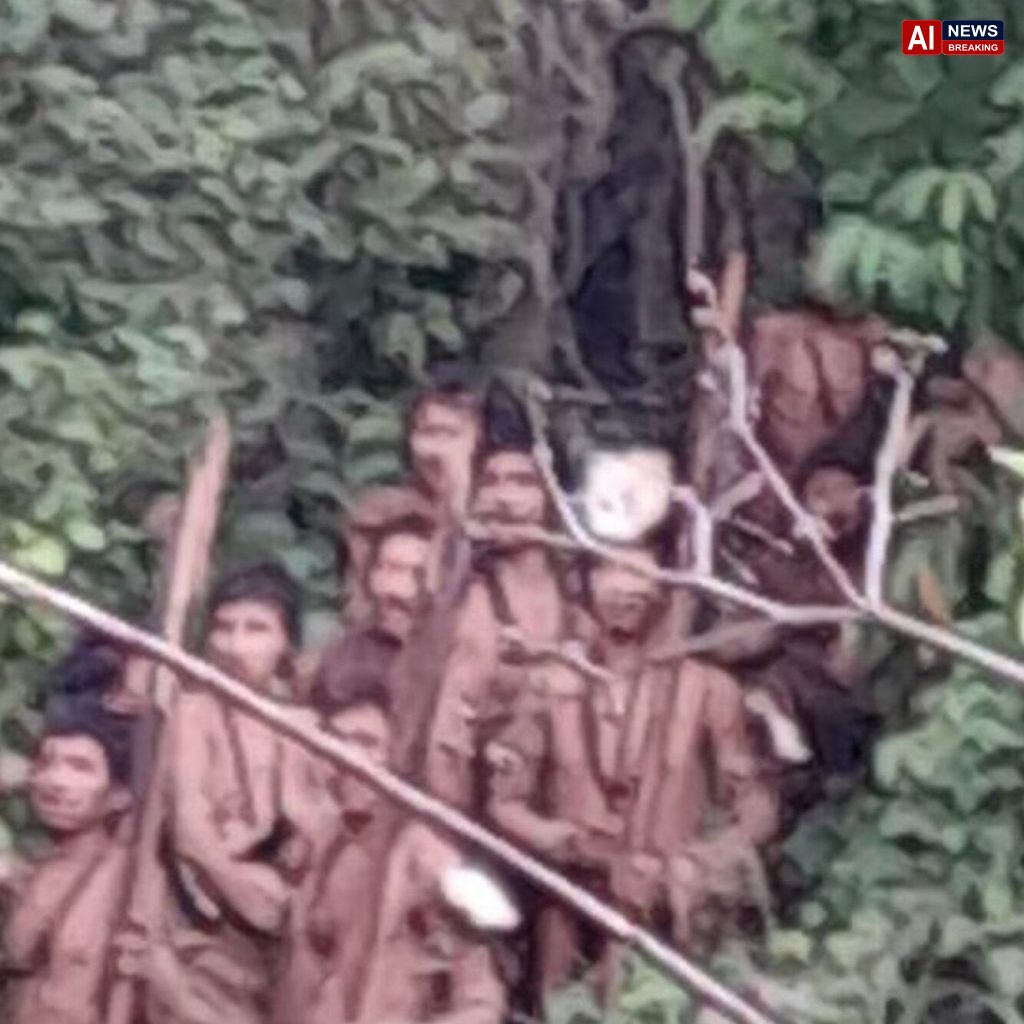
Uncontacted Awá of Brazil Emerge From Rainforest Seeking Food - AI News Breaking
uncontacted brazil emerge rainforest:
A small band of around twenty members of the Awá, one of Brazil’s most isolated Indigenous peoples, emerged from the dense rainforest of the state of Maranhão in early June, walking along a dirt road towards the nearest settlement and asking for food, an Indigenous rights organisation said on Thursday. The unprecedented appearance of the group, who have lived without sustained contact with the outside world for generations, has ignited a wave of concern among human‑rights advocates, environmentalists and government officials, who fear that the rapid loss of forest cover and the encroachment of illegal logging and mining may have pushed the community to the brink of starvation.The Awá, numbering roughly 350 individuals in total, have been described by anthropologists as “the most threatened Indigenous group in the world”. Their traditional territories, covering an area of about 4,500 square kilometres of Amazonian forest, have been steadily eroded over the past two decades by a combination of illegal timber extraction, cattle ranching and the expansion of soy plantations..
Satellite imagery released by the non‑governmental watchdog Instituto Socioambiental (ISA) shows that between 2000 and 2023 more than a third of the forest that the Awá consider their ancestral land has been cleared, often without any official permits or consultation.The contact was first reported by the Associação dos Povos Indígenas da Amazônia (APIA), a coalition that represents several Indigenous groups in the region. According to APIA, the Awá approached a small community near the town of Carutapera, holding a handmade wooden sign that read “Food, please”. They were met by local volunteers who offered water, fruit and a modest amount of rice before escorting the group to a nearby health post..
The volunteers, who wish to remain anonymous for safety reasons, said the Awá appeared thin, with visible signs of malnutrition, and that some members were carrying children on their backs.The incident has revived a long‑standing debate over Brazil’s policy of “isolated” or “uncontacted” Indigenous peoples, a stance that officially dates back to the 1970s when the Brazilian government, under military rule, adopted a policy of minimal interference to protect vulnerable groups from the spread of disease. In recent years, however, the policy has been increasingly challenged by the reality of expanding frontiers and the growing demand for natural resources. Critics argue that a hands‑off approach leaves groups like the Awá to the indirect effects of deforestation, climate change and the influx of illegal actors, while supporters claim that any contact, even well‑intentioned, risks introducing pathogens that could decimate entire communities.Federal authorities have dispatched a team from the National Indian Foundation (FUNAI) to assess the situation, but officials have been cautious about the next steps..
In a statement released on Friday, FUNDAÇÃO’s director, Maria de Lourdes Ribeiro, said the agency was “committed to respecting the autonomy and wishes of the Awá, while also ensuring their immediate health and safety.” She added that the decision to initiate any further contact would be made in consultation with the community’s elders, should they express a desire for assistance. The agency has also announced that it will launch an urgent aerial survey of the region to verify the extent of forest loss and to identify any illegal activities that may be threatening the tribe’s survival.Local NGOs have warned that the emergence of the Awá may be a symptom of a broader humanitarian crisis affecting isolated peoples across the Amazon basin. “What we are witnessing is not an isolated incident,” said Dr..
Luiz Carvalho, a sociologist at the Federal University of Maranhão who has spent the last fifteen years studying the Awá. “The loss of habitat, combined with the scarcity of wild game and traditional plant resources, creates a perfect storm. When a community that has relied on the forest for millennia suddenly finds its food base eroded, the only recourse left is to seek help from the outside world, despite the risks.”The health post where the Awá were taken reported that three individuals exhibited symptoms of severe dehydration and low blood pressure, conditions that were promptly treated with oral rehydration solutions and basic medical care..
No cases of infectious disease have been identified so far, a fact that the medical team hopes will allay some of the fears surrounding uncontacted groups. Nevertheless, experts caution that even common ailments can prove fatal in communities lacking immunity to external pathogens, a reality underscored by previous tragic encounters with isolated tribes elsewhere in the Amazon.The Brazilian government, currently under pressure from both domestic and international bodies to curb deforestation, has pledged to strengthen enforcement against illegal logging in the Maranhão region. In a press conference held earlier this week, the Minister of Environment, Silas Monteiro, announced the deployment of additional Federal Police units and a joint task force with the Brazilian Institute of Environment and Renewable Natural Resources (IBAMA) to dismantle illegal sawmills operating near Awá territories..
He also promised increased funding for FUNAI’s surveillance programmes, which rely heavily on satellite data and ground patrols.International reactions have been swift. The United Nations’ Permanent Forum on Indigenous Issues issued a statement urging Brazil to “prioritise the protection of uncontacted peoples and to address the root causes of their vulnerability, namely illegal land grabs and environmental degradation.” Human Rights Watch, in a separate release, called for an independent investigation into the alleged involvement of organized crime groups in the illegal exploitation of Awá lands, citing a recent increase in reports of armed confrontations between loggers and Indigenous defenders.As the Awá remain in the care of local volunteers, their future remains uncertain. The community’s elders, who have not yet spoken publicly, are reportedly deliberating whether to return to the forest or to stay near the settlement while awaiting further assistance..
For many observers, the episode serves as a stark reminder that the protection of the Amazon cannot be measured solely in terms of carbon credits or biodiversity indices; it is equally about safeguarding the cultural and physical survival of its oldest inhabitants. The coming weeks will test Brazil’s ability to balance development pressures with the moral imperative to protect those who have, until now, chosen to live apart from the world that increasingly encroaches upon them..
Updated: November 19, 2026
The Awá’s desperate march for food signals that Brazil’s “hands‑off” policy has become a death sentence, turning the forest’s edge into a humanitarian front line rather than a protective shield.
If the state fails to curb illegal land grabs now, the Amazon will lose not only trees but the