
 Pakistan’s leaders hail first astronaut aboard Chinese craft: ‘Proud one of us has gone into space’
 British tourist travels 29 hours from Mumbai to Amritsar for ₹5,461, rates Indian Railways 10/10 | Viral video
 The Supreme Court will decide whether assault weapons bans violate the Second Amendment
 A Critic of Beijing Falls Short in Taiwan’s Key Mayoral Election
 EPA says no rise in contamination after Army detonates lead azide stockpile in Iowa
Why petrol and diesel prices stayed stable in India despite global oil shock amid Iran war, Hardeep Puri explains
**
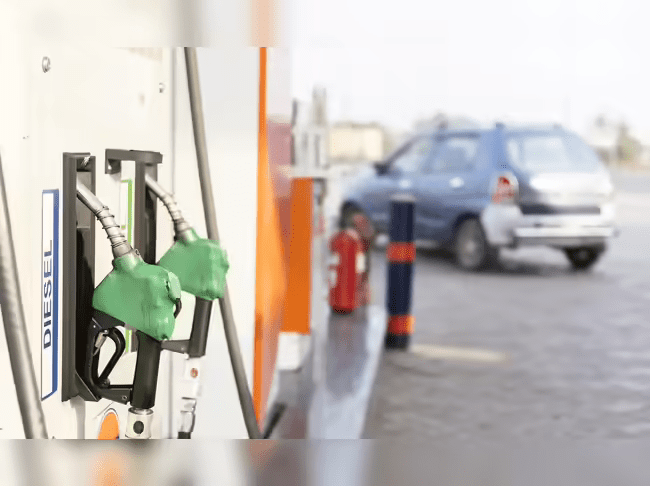
Why petrol and diesel prices stayed stable in India despite global oil shock amid Iran war, Hardeep Puri explains - AI News Breaking
petrol diesel prices stayed:
India’s retail pump prices for petrol and diesel have remained largely unchanged in recent weeks, even as crude oil markets have been roiled by a sharp 50‑60 percent surge in global benchmarks following the outbreak of hostilities between Iran and its regional adversaries. The anomaly has prompted analysts and consumers alike to question how a country that imports more than 80 percent of its oil requirements could insulate its market from such a dramatic external shock. Petroleum Minister Hardeev Singh Puri, addressing the Parliament on Tuesday, offered a detailed explanation centred on a series of fiscal adjustments, strategic stock‑pile management and the timing of price revisions under India’s existing pricing formula.At the heart of the explanation are three consecutive cuts to the central excise duty on petroleum products that have been announced over the past twelve months..
The most recent of these, implemented on 1 March 2026, reduced the excise levy by ₹10 per litre for both petrol and diesel. Earlier, in October 2025 and January 2026, the government trimmed the duty by ₹5 and ₹7 per litre respectively. By lowering the tax component, the administration effectively offset a large part of the increase in the wholesale price that stems from higher crude costs, allowing the final retail price to stay within the narrow band set by the government’s price‑linkage mechanism.The price‑linkage mechanism, introduced in 2014, ties the retail price of fuel to the price of imported crude oil, adjusted for exchange rates and a predefined margin for refiners and distributors..
However, the formula also incorporates a “floor” and a “ceiling” that give the government leeway to intervene when wholesale price movements become too volatile. In practice, when the base price – the sum of the imported crude cost, freight, insurance and the refinery margin – rises sharply, the Ministry of Finance can step in with a temporary excise duty reduction to keep the retail price from breaching the ceiling. Puri stressed that the recent duty cuts were pre‑planned, part of a broader fiscal strategy to smooth out price volatility, and not a reactionary measure to the latest geopolitical developments.Another factor cited by the minister is the timing of the price revision cycle..
India revises its fuel taxes on a monthly basis, with the excise duty for a given month announced at the end of the preceding month. The latest global price shock, triggered by the escalation of conflict in the Persian Gulf, became fully apparent only after the March‑2026 excise rates had been set. Consequently, the ₹10‑per‑litre cut that came into effect on 1 March was already locked in before the full impact of the oil price surge was felt, providing a buffer that has kept retail prices stable for the current month.Strategic petroleum reserves also play a role in cushioning the domestic market..
India maintains a network of underground crude storage facilities with a combined capacity of roughly 5.5 million tonnes, equivalent to about two weeks of national consumption. By drawing down these reserves during periods of price stress, the government can reduce the need for fresh imports at peak world market rates, thereby tempering the upward pressure on the base price. Puri noted that a modest drawdown of around 0.3 million tonnes was authorised in February, a move that helped to moderate the cost of imported crude for the March pricing cycle.The influence of the exchange rate is another variable that can either amplify or dampen the effect of global oil price movements on Indian consumers..
The rupee has appreciated modestly against the US dollar over the past quarter, narrowing the gap that typically widens when oil prices climb. A stronger rupee means that each dollar spent on imported crude translates into fewer rupees, partially offsetting the raw price increase. While currency fluctuations are not under direct policy control, the Ministry of Finance monitors forex trends closely and can adjust other components of the pricing formula, such as the margin allowed to refiners, to maintain overall price stability.Refiner margins, a component of the pricing formula that reflects the profit and operating costs of domestic oil processing companies, have also been calibrated to ease the burden on end‑users..
In the latest revision, the Ministry permitted a modest reduction in the allowed margin for diesel, acknowledging that higher crude input costs would otherwise have been passed through to consumers. This discretionary adjustment, while limited in scope, adds another layer of protection against sudden retail price spikes.Puri also highlighted the importance of competitive dynamics among the major Indian oil marketing companies. The government’s policy of mandating a uniform retail price across all licensed stations, irrespective of the brand, ensures that the benefit of any duty cut or margin adjustment is passed on uniformly, preventing price discrimination..
This “price parity” rule, enforced through regular audits and penalties for non‑compliance, means that the impact of fiscal relief measures is felt across the board, from metropolitan pump stations to rural outlets.Critics, however, caution that the reliance on excise duty cuts may have fiscal repercussions. The reduction in tax revenue, estimated at around ₹8 billion per month, adds to the fiscal deficit at a time when the central government is already navigating post‑pandemic recovery challenges. Some economists argue that a more sustainable approach would involve diversifying the energy mix and accelerating the transition to electric mobility, thereby reducing the overall exposure to oil price volatility..
The minister acknowledged these concerns, stating that while short‑term measures are essential to protect consumers, long‑term energy security remains a priority for the administration.In sum, the stability of India’s petrol and diesel prices amidst a global oil price surge can be attributed to a confluence of policy tools: a series of pre‑emptive excise duty reductions, the timing of the monthly price‑revision cycle, strategic use of crude reserves, favourable exchange‑rate movements, calibrated refiner margins and a strict price‑parity framework. By employing these mechanisms in concert, the government has managed to shield consumers from the full brunt of an international price shock, at least for the short term. Whether this approach remains viable as geopolitical tensions persist and global oil markets continue to fluctuate will depend on the government’s ability to balance fiscal prudence with consumer protection, a challenge that will shape India’s energy policy in the months ahead..
Updated: November 20, 2026
India’s deft juggling of duty cuts, reserve draws and currency headwinds shows a short‑term buffer, but the monthly fiscal drag it creates could erode long‑term fiscal health. Whether the state can keep consumers shielded without sacrificing economic stability will hinge on a broader shift toward cleaner, less imported energy.






