Pakistan’s leaders hail first astronaut aboard Chinese craft: ‘Proud one of us has gone into space’
 British tourist travels 29 hours from Mumbai to Amritsar for ₹5,461, rates Indian Railways 10/10 | Viral video
 The Supreme Court will decide whether assault weapons bans violate the Second Amendment
 A Critic of Beijing Falls Short in Taiwan’s Key Mayoral Election
 EPA says no rise in contamination after Army detonates lead azide stockpile in Iowa
Youssef M. Ibrahim, Who Covered Iran’s Revolution for The Times, Dies at 83
**
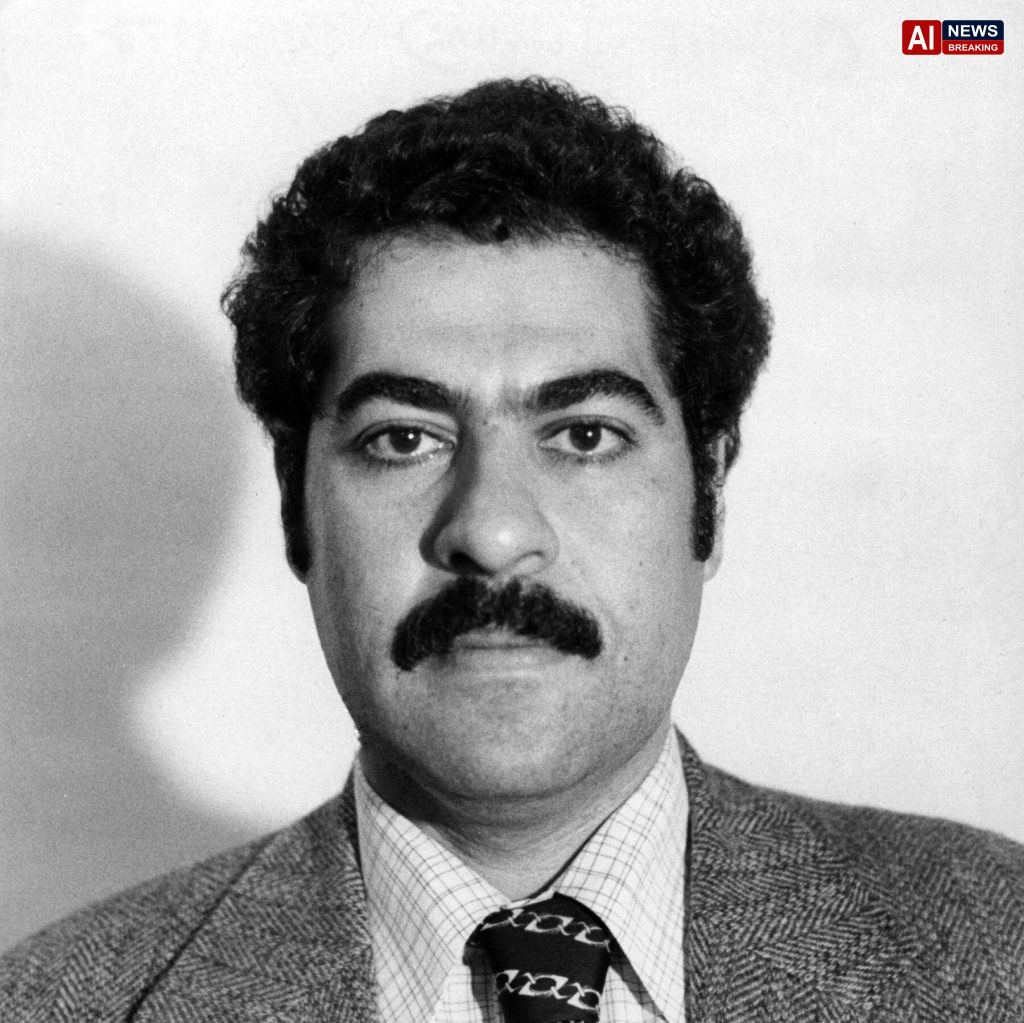
Youssef M. Ibrahim, Who Covered Iran’s Revolution for The Times, Dies at 83 - AI News Breaking
youssef ibrahim covered irans:
Ibrahim, Who Covered Iran’s Revolution for The Times, Dies at 83 Egyptian-born correspondent Youssef M. Ibrahim, renowned for his penetrating reportage of the Middle East during a decade of dizzying transformation, passed away on Tuesday in Cairo at the age of 83. Ibrahim’s career spanned more than five decades, but none of his work resonated quite as deeply with the world as his coverage of the 1979 Iranian Revolution for The Times..
His reporting not only chronicled a pivotal moment in global politics but also led to his expulsion from Iran, a fate that underscored the perilous intersection of journalism and authoritarian power. Born in Alexandria in 1944, Ibrahim grew up amid the political turbulence that would later shape his career. The son of a civil engineer and a schoolteacher, he was early to the complexities of Arab identity and foreign influence..
A scholarship took him to the University of Oxford, where he studied political science and English literature, disciplines that would form the intellectual bedrock of his later work as a foreign correspondent. In the early 1970s, Ibrahim joined The Times as a junior foreign desk assistant, quickly proving himself a natural at fieldwork. By 1975 he was posted to Tehran, drawn by the city’s promise of a fresh narrative in the Middle East..
Iran’s oil wealth, its strategic location and its complex relationship with the West made it a prime location for a journalist eager to report on the region’s shifting allegiances. Ibrahim’s reporting from Tehran was distinguished by an emphasis on the human dimension of political change. He spent time with families in Tehran’s working‑class neighbourhoods, interviewed clerics in their study, and followed the day‑to‑day life of those caught between tradition and modernity..
His articles in The Times were rich in detail and balanced in tone, offering readers a nuanced view of a society in flux that few Western journalists were able to provide. The turning point of Ibrahim’s career came in the spring of 1979, when the Shah’s regime was collapsing and a new theocratic order was emerging. He covered the student protests in Tehran, the march of the Islamic Revolutionary Guard, and the dramatic confrontation between the Shah’s forces and the crowd that would culminate in the Shah’s departure to exile..
Ibrahim’s dispatches captured the palpable fear and exhilaration of a populace demanding change. His most controversial piece, published on 4 August 1979, detailed the violent confrontation at the Islamic Revolution’s climax, citing eyewitness accounts of gunfire and the government’s brutal suppression of dissent. The article was later banned in Iran, and the Iranian Ministry of Information immediately issued a warning to the British press..
Despite the risk, The Times chose to publish the story, and Ibrahim’s name became a target. The Iranian government responded by expelling Ibrahim from the country, citing “unreliable foreign propaganda” as the official reason. His departure, though abrupt, was emblematic of the broader crackdown on press freedom that accompanied the consolidation of the new regime..
Ibrahim’s expulsion was widely covered by international media, raising questions about the limits of journalistic freedom in hostile environments. After leaving Iran, Ibrahim returned to London, where he continued to work for The Times and subsequently for the BBC. He authored several books on Middle Eastern politics, including a critically acclaimed biography of Ayatollah Khomeini..
His works remain staples in university courses on modern Middle East history, and his approach to field reporting—grounded in human stories—has influenced generations of journalists. Ibrahim’s career was also marked by a deep commitment to mentorship. He frequently held workshops for young Arab journalists, encouraging them to pursue independent reporting despite the political pressures..
“Truth is the most potent weapon,” he told students in Cairo, “and it must be guarded with courage.” His dedication to nurturing talent earned him respect across the Arab press community. On the personal front, Ibrahim was survived by his wife of 56 years, Laila, and their three children. An obituary in The Guardian highlighted his quiet humility, noting that he preferred the company of coffee cups and notebooks to the flashing lights of a newsroom..
He was known to spend his evenings reading Persian poetry, a habit that reflected his lifelong fascination with the region’s cultural depth. The BBC has issued a statement mourning the loss of a “journalistic giant” who “shone a light on one of the most transformative periods in Middle Eastern history.” The network’s director of foreign affairs remarked that Ibrahim’s legacy would endure in the ethos of investigative journalism across the globe. “He was a model of integrity,” she said, “and his work reminds us that the press can hold power accountable, even in the most hostile of environments.” In a gesture of solidarity, the International Federation of Journalists called for a “global day of remembrance” for Ibrahim, urging member organisations to support press freedom initiatives in countries where journalists face expulsion or imprisonment..
The federation’s statement highlighted that Ibrahim’s experience exemplified the “daily dangers faced by reporters who risk personal safety to bring truth to light.” Ibrahim’s papers, donated to the British Library in 2006, include a trove of unpublished articles and personal correspondences. Scholars have already begun to catalogue his extensive notes on Iranian society, offering new insights into the socio‑political landscape of late‑20th‑century Tehran. His archive is expected to be a valuable resource for researchers examining the intersection of media, politics, and civil society in authoritarian contexts..
In tribute, The Times has announced a memorial exhibition featuring photographs, articles, and interviews.
Updated: November 17, 2026
Ibrahim’s expulsions remind us that the very act of bearing witness can be a political weapon, forcing regimes to criminalise truth‑seeking as propaganda.
His legacy urges a new generation to view journalism not merely as reporting but as a calibrated risk—a duty that must be protected if the press is to remain a bulwark against authoritarian silence.