
 Pond heron found dead in Coimbatore tests positive for avian influenza
 Pakistan’s leaders hail first astronaut aboard Chinese craft: ‘Proud one of us has gone into space’
 British tourist travels 29 hours from Mumbai to Amritsar for ₹5,461, rates Indian Railways 10/10 | Viral video
 The Supreme Court will decide whether assault weapons bans violate the Second Amendment
 A Critic of Beijing Falls Short in Taiwan’s Key Mayoral Election
Tamil Nadu Speaker begins another round of inquiry into disqualification pleas against four ex-AIADMK MLAs
The Tamil Nadu Legislative Assembly speaker has initiated a new round of inquiry into petitions to disqualify four ex‑AIADMK MLAs who resigned shortly after the 2026 elections and joined the ruling Tamil Vannam Katchi. The probe will assess the authenticity of their resignations, compliance with the Representation of the People Act, and the application of the anti‑defection law, with implications for the fragile coalition government.
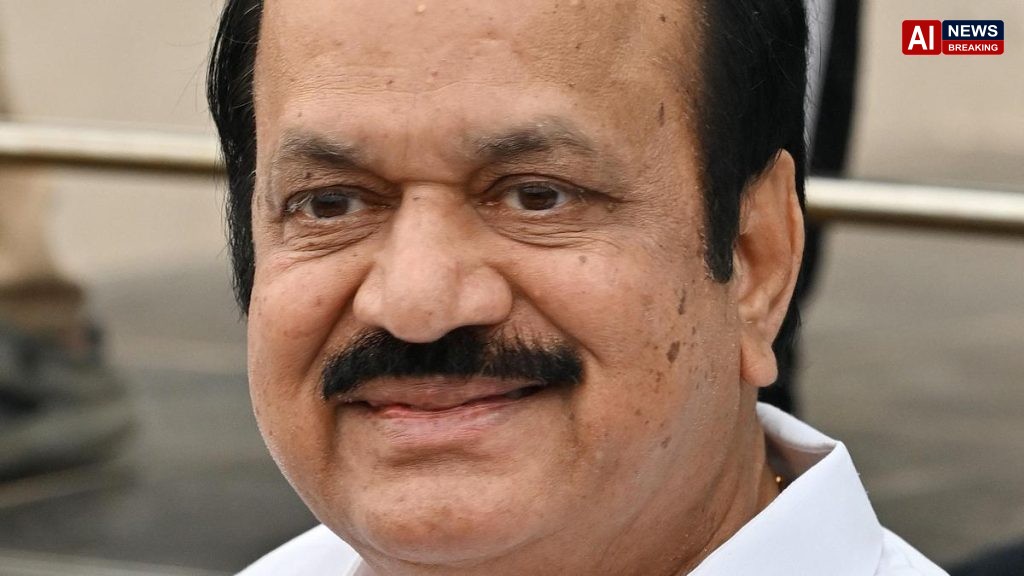
Tamil Nadu Speaker begins another round of inquiry into disqualification pleas against four ex-AIADMK MLAs - AI News Breaking
The Tamil Nadu Legislative Assembly’s Speaker has launched a fresh round of inquiry into the disqualification petitions filed against four former members of the All India Anna Dravida Munnetra Kazhagam (AIADMK) who defected to the ruling Tamil Vannam Katchi (TVK) shortly after being elected in the 2026 state elections. The move, announced on Monday, marks the latest escalation in a political saga that has seen the state’s two biggest parties clash over the legality of the resignations, the procedural propriety of the anti-defection law and the broader implications for the stability of the coalition government that took office in May.The four legislators – Esakki Subaya, S. Sathyabama and Maragatham Kumaravel – were elected on AIADMK tickets from constituencies in the northern districts of the state..
Within weeks of the assembly’s first sitting, they tendered their resignations, citing personal reasons and an alleged lack of alignment with the party’s leadership. Within days of stepping down, the quartet announced that they had joined the TVK, a relatively new regional force that secured a modest but decisive share of the vote in the election and now forms part of the ruling coalition under Chief Minister R. Their rapid shift has prompted AIADMK to move the Speaker, K..
Raghavan, to initiate proceedings under the Tenth Schedule of the Constitution, commonly known as the anti‑defection law, seeking their disqualification from the Assembly.In a statement released by the Speaker’s office, Raghavan said the inquiry would examine “the authenticity of the resignation letters, the compliance with procedural requirements under the Representation of the People Act, 1951 and the provisions of the anti‑defection law.” He added that the Speaker would invite written submissions from the four legislators, their former party and the TVK, before hearing oral arguments. The timeline for the inquiry was not disclosed, but the Speaker indicated that a report would be submitted to the Assembly within a reasonable period, in line with precedents set in earlier defection cases in the state.AIADMK’s chief, J. Meenakshi, has described the resignations as “a betrayal of the electorate’s mandate” and urged the Speaker to act swiftly..
“The voters in Kanyakumari, Salem, Tiruppur and Vellore placed their trust in AIADMK candidates. To abandon that trust for political expediency undermines democratic norms,” Meenakshi said in a press conference. She also warned that any delay could embolden other legislators to switch allegiances, potentially destabilising the fragile coalition that commands a slim majority of 112 seats in the 234‑member house.The TVK, for its part, has defended the moves as “a legitimate exercise of democratic freedom.” Its leader, V..
Radhakrishnan, argued that the four MLAs had “genuinely reconsidered their ideological stance” and that their resignations were submitted in accordance with the rules. “The anti‑defection law should not be weaponised to stifle dissent or to punish politicians who act in good conscience,” Radhakrishnan said. He also hinted that the TVK might consider legal recourse if the Speaker’s decision appears to be biased, noting that the party has already retained counsel from a senior constitutional lawyer to monitor the proceedings.Legal experts have pointed out that the case hinges on two critical questions: whether the resignations were voluntary and whether the legislators had effectively switched parties while still holding office..
Under the anti‑defection law, a member can be disqualified if they voluntarily give up the membership of the party on whose ticket they were elected, or if they vote or abstain from voting contrary to the party’s directive. However, the Supreme Court’s 2020 judgment in Karnataka v. Nagesh clarified that the mere expression of dissent does not amount to disqualification unless accompanied by a clear act of defection, such as joining another party or voting against the original party’s whip.“The crux will be establishing whether the resignations were genuine or a procedural façade to facilitate a party switch,” said Dr..
Arvind Menon, a professor of constitutional law at Madras University. “If the resignations were tendered under duress, or if they were submitted after the MLAs had already aligned with the TVK, the Speaker may have grounds to disqualify them.” He added that the Speaker’s discretion under the Tenth Schedule is wide but not unfettered, and that any decision can be challenged in the High Court, and subsequently the Supreme Court, if parties feel aggrieved.Political analysts note that the incident could have far‑reaching consequences for the state’s legislative dynamics. The ruling coalition, composed of the TVK, the Dravida Munnetra Kazhagam (DMK) and a handful of independents, relies on a razor‑thin margin to pass its budget and key reforms..
Any disqualification of the four ex‑AIADMK members would trigger by‑elections in their constituencies, potentially altering the balance of power. Conversely, if the Speaker rules that the resignations are valid and the MLAs retain their seats as members of the TVK, the coalition would gain a modest boost, reinforcing its ability to push through its agenda.The opposition, meanwhile, has seized on the controversy to question the credibility of the new government. In a session of the Assembly, AIADMK leader Meenakshi raised a point of order, demanding that the Speaker disclose the details of the resignation letters and the exact timeline of the party switch..
The Speaker declined to provide the documents publicly, citing confidentiality and procedural propriety, prompting protests from opposition members who staged a walkout in solidarity with the former AIADMK legislators.Public reaction appears divided. In the constituencies concerned, local media reports indicate that a segment of voters feels betrayed, especially in rural areas where party loyalty remains strong. In Kanyakumari, a farmer’s association released a statement expressing disappointment, noting that the MLA’s departure would leave development projects in limbo..
In contrast, youth groups in urban centers have praised the move as a sign of “political fluidity” and a break from entrenched party hierarchies. Social media platforms are awash with hashtags both condemning and supporting the defection, reflecting a broader debate about the role of anti‑defection statutes in a vibrant democracy.As the Speaker prepares to hear the submissions, observers will be watching for any procedural anomalies that could set a precedent. The last major anti‑defection.
The speaker’s probe could become the de‑facto test of how far anti‑defection law can stretch to curb opportunistic party‑hopping without silencing genuine ideological shifts—an outcome that will either shore up the coalition’s slim majority or expose its fragility. If the resignations are






