
 Pond heron found dead in Coimbatore tests positive for avian influenza
 Pakistan’s leaders hail first astronaut aboard Chinese craft: ‘Proud one of us has gone into space’
 British tourist travels 29 hours from Mumbai to Amritsar for ₹5,461, rates Indian Railways 10/10 | Viral video
 The Supreme Court will decide whether assault weapons bans violate the Second Amendment
 A Critic of Beijing Falls Short in Taiwan’s Key Mayoral Election
DMK MP files petition to recover assets seized by Enforcement Directorate.
**
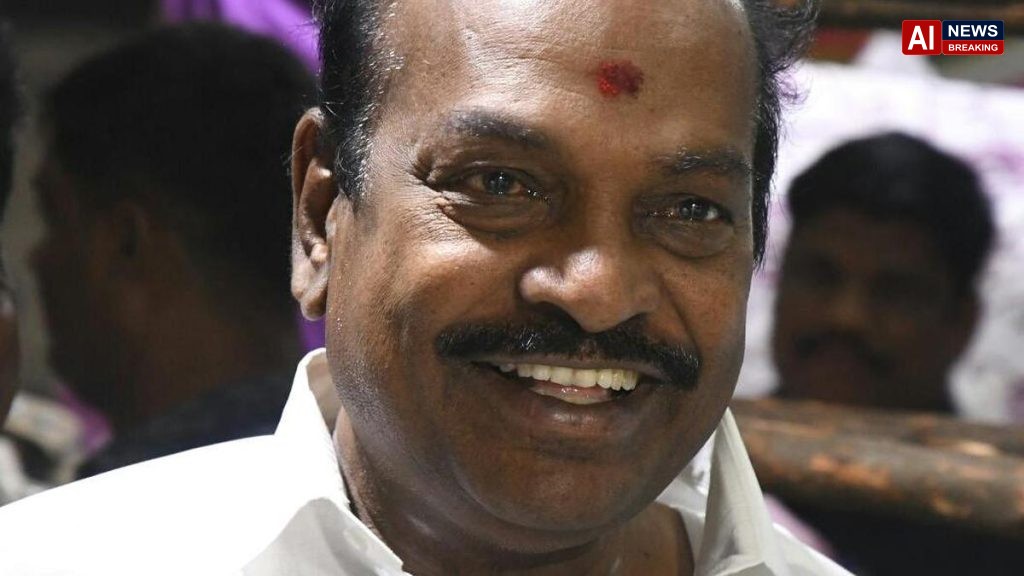
DMK MP Jagathrakshakan, son Sundeep Anand of TVK move Madras High Court over ₹161.12-crore FEMA case - AI News Breaking
files petition recover assets:
DMK MP Jagathrakshakan and his son Sundeep Anand of TVK have filed a petition in the Madras High Court seeking relief from the seizure of assets valued at approximately ₹45.34 crore. The properties, located across Tamil Nadu and other Indian states, were attached by the Enforcement Directorate (ED) as part of an ongoing investigation into alleged violations of the Foreign Exchange Management Act (FEMA). The petition argues that the seizure was premature and lacks sufficient evidential basis, contending that the assets are unrelated to the alleged financial irregularities tied to a Singapore‑incorporated company..
The case centres on a purported financial transaction involving a Singapore‑based entity that the ED claims was used to funnel foreign currency into Indian accounts in contravention of FEMA provisions. According to the enforcement agency, the transaction, which allegedly took place between 2015 and 2018, involved the transfer of funds amounting to roughly ₹161.12 crore. The ED asserts that the money was routed through a complex network of shell companies, with the ultimate beneficiary being the business interests of Jagathrakshakan’s family..
In their court filing, Jagathrakshakan and Anand maintain that the Singapore company in question operates independently of their personal or business affairs. They contend that any financial dealings with the foreign entity were fully compliant with Indian law and were disclosed to the appropriate authorities at the time. The petition further alleges that the ED’s actions have caused irreparable damage to their reputation and have disrupted ongoing business operations, including real estate projects and manufacturing units..
Legal experts note that the High Court will have to examine whether the ED’s attachment order satisfied the procedural safeguards prescribed under the Prevention of Money Laundering Act (PMLA) and FEMA. The court’s scrutiny will likely focus on the chain of transactions, the ownership structure of the Singapore firm, and the evidentiary material presented by the enforcement agency. A ruling in favour of the petitioners could set a precedent for how cross‑border financial investigations are conducted in India..
The ED’s investigation began after a routine audit of foreign exchange transactions flagged irregularities in the accounts of several Indian firms linked to the DMK politician. The agency’s director, Praveen Kumar, stated that the seizure was a necessary step to prevent the dissipation of assets that could be crucial to the recovery of the alleged misappropriated funds. He emphasized that the attachment does not imply guilt, but rather serves as a precautionary measure pending a full trial..
Critics of the enforcement action argue that the move reflects a broader trend of political targeting in high‑profile financial cases. They point to similar instances where opposition leaders have faced stringent investigations, suggesting that the process may be influenced by partisan considerations. However, the ED has repeatedly asserted its independence, citing statutory mandates that require impartial action irrespective of political affiliation..
The petition also raises concerns about the impact of asset seizure on the livelihoods of employees and contractors associated with the affected businesses. According to a statement from the family’s corporate office, over 1,200 workers could face wage disruptions if the properties remain under ED control. The court will therefore need to balance the State’s interest in safeguarding public funds against the potential socioeconomic fallout from prolonged asset freezing..
Observers note that the case unfolds against a backdrop of heightened scrutiny of foreign investment channels in India. Recent amendments to FEMA have tightened reporting requirements for overseas entities, aiming to curb illicit capital flows while encouraging legitimate foreign participation. The outcome of the High Court hearing may influence how future cross‑border transactions are structured, particularly for Indian entrepreneurs with ties to overseas firms..
If the Madras High Court grants relief, the seized assets could be released pending further investigation, allowing the MP and his son to resume normal business activities. Conversely, a refusal could compel them to defend the attachment in subsequent criminal proceedings, potentially extending the legal battle for several years. The decision is expected to be delivered within the next few weeks, given the court’s expedited docket for financial crime cases..
Political analysts suggest that the case could have ramifications for the DMK’s standing ahead of upcoming state elections. While the party has traditionally leveraged its welfare agenda to garner support, allegations of financial impropriety could erode public trust. The leadership, however, has framed the legal challenge as an example of bureaucratic overreach, urging supporters to view it as a test of the party’s resilience..
In the meantime, the Enforcement Directorate has indicated that it will continue its probe, seeking to trace the flow of the alleged ₹161.12 crore through a series of offshore accounts and domestic subsidiaries. The agency has also signalled its readiness to present additional documentation to the court, including bank statements, transaction logs, and corporate filings, to substantiate its claims. The thoroughness of this evidentiary record will likely be pivotal in the court’s assessment..
The case remains a focal point for discussions on financial governance, political accountability, and the interplay between domestic law and international finance. As the Madras High Court deliberates, stakeholders from the legal fraternity, business community, and civil society watch closely, recognising that the verdict may shape the contours of future enforcement actions under FEMA and related statutes..
If the court sides with Jagathrakshakan, it could signal a shift toward more lenient thresholds for pre‑trial asset freezes, potentially encouraging politicians and businessmen to seek judicial review before enforcement steps. Conversely, a denial would reinforce the ED’s current stance that swift attachment is essential to curb illicit capital flows, tightening






