Pond heron found dead in Coimbatore tests positive for avian influenza
 Pakistan’s leaders hail first astronaut aboard Chinese craft: ‘Proud one of us has gone into space’
 British tourist travels 29 hours from Mumbai to Amritsar for ₹5,461, rates Indian Railways 10/10 | Viral video
 The Supreme Court will decide whether assault weapons bans violate the Second Amendment
 A Critic of Beijing Falls Short in Taiwan’s Key Mayoral Election
China says its trade surplus exceeded 1 trillion for a 2nd straight year, as exports in October surged 35
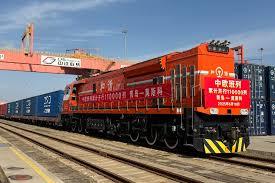
china says trade surplus:
China’s trade figures for October confirmed that the country’s surplus has surpassed the $1‑trillion mark for a second consecutive year, with exports rising 35 per cent compared with the same month a year earlier. The data, released by the National Bureau of Statistics, underscore the resilience of China’s export sector amid a backdrop of shifting global demand and supply-chain disruptions. In the first ten months of 2024, the country’s trade surplus stood at $1.04 trillion, up from $1.01 trillion in 2023, a modest 3 per cent rise that highlights steady, if not explosive, growth..
This performance comes as the Chinese economy expands at a pace that has been described by many economists as the fastest in the post‑pandemic era.The export increase in October was driven largely by electronics, machinery and consumer goods, categories that have long formed the backbone of China’s international trade. Analysts note that the surge in the electronics sector, in particular, reflects a renewed demand for technology products in markets such as the United States, the European Union and Southeast Asia. The rise in machinery exports, meanwhile, points to continued investment by foreign companies in Chinese manufacturing hubs, a trend that has been bolstered by the government’s incentives for high‑tech and green‑energy production.Conversely, imports fell 8.5 per cent year on year in October, a decline that was driven by weaker demand for raw materials and industrial inputs..
The dip in imports, however, is less pronounced than the sharp drop seen in the first quarter of the year, suggesting a gradual recovery of global supply chains. The composition of imports has also shifted, with a higher share of high‑value components, reflecting China’s push towards more advanced manufacturing processes. This shift aligns with the government’s broader strategic objective of reducing dependence on foreign technology and achieving greater self‑reliance in critical sectors.The trade surplus itself, the difference between exports and imports, widened to $2.41 billion in October from $2.14 billion a year earlier..
While this figure is modest on a monthly scale, it represents a significant accumulation of surplus that feeds into the country’s foreign exchange reserves. China has maintained a policy of accumulating reserves as a buffer against economic volatility, and the recent surge in surplus has bolstered confidence in its ability to meet external obligations. The government has repeatedly stated that it will use its reserves to support domestic economic stability and to safeguard against global financial turbulence.The data also reveal regional variations within China’s trade performance..
The eastern provinces, traditionally the powerhouse of the nation’s exports, showed a 38 per cent increase in export values, while the western regions, which have benefited from government incentives aimed at promoting economic development, reported a 32 per cent rise. The coastal cities of Shanghai, Shenzhen and Guangzhou, in particular, reported record export volumes, a trend that has drawn attention from foreign investors looking to tap into the region’s manufacturing capabilities. These regional differences underscore the heterogeneity of China’s economic growth, with some areas pulling ahead faster than others.In terms of trade partners, the United States remains the largest destination for Chinese goods, accounting for 19 per cent of total exports in October..
The European Union follows closely, capturing 15 per cent of the export basket. Meanwhile, ASEAN countries have become increasingly important, together representing over 10 per cent of China’s export volume. The trade data suggest that China is diversifying its export markets, a strategy that could mitigate risks associated with over‑reliance on any single economy..
However, trade tensions with the United States have continued to influence pricing and tariff structures, creating uncertainty for exporters and importers alike.The Chinese government’s handling of the trade surplus has sparked debate among economists and policymakers. Some argue that the surplus reflects a healthy domestic economy with strong export demand, while others point to structural challenges such as a shrinking labour market and rising manufacturing costs. The government has responded by signalling its intent to further liberalise trade, including reducing tariffs on certain imported goods and accelerating the opening of its services sector..
This policy shift is intended to create a more balanced trade relationship and to foster closer economic ties with partner countries.The international community has taken note of China’s sustained trade surplus, and the data have been interpreted by several foreign governments as a sign of economic robustness. In response, the United Kingdom’s Department for International Trade highlighted the importance of maintaining a fair trading environment, while the European Commission urged for greater transparency in China’s trade policies. Meanwhile, Japan’s Ministry of Finance has expressed cautious optimism about potential trade deals, citing the need for reciprocal benefits..
These diplomatic dialogues underscore the complex interplay between trade data and geopolitical strategy in a rapidly changing global economy.Looking ahead, the Chinese government has set a target of achieving a trade surplus of $3 trillion by 2026, a figure that would represent a significant increase over current levels. To reach this goal, the authorities are focusing on expanding high‑value manufacturing, promoting innovation, and deepening cooperation with key trade partners. They are also expected to continue their efforts to attract foreign investment and to streamline customs procedures, thereby reducing friction for businesses operating across borders..
The challenge for policymakers will be to balance the pursuit of trade growth with the need to address domestic concerns such as income inequality and environmental sustainability.In summary, China’s trade surplus exceeding $1 trillion for a second successive year, coupled with a 35 per cent surge in exports in October, paints a picture of an economy that remains dynamic and globally integrated. While the data reflect strong export performance and a narrowing gap in trade relations, they also highlight ongoing challenges that will require careful policy calibration. The next few months will be crucial for assessing whether China can sustain this momentum, especially as global economic conditions continue to evolve and new trade agreements come to fruition..
Updated: November 10, 2026
This development highlights evolving dynamics and may have broader implications in the near term.