
 Pond heron found dead in Coimbatore tests positive for avian influenza
 Pakistan’s leaders hail first astronaut aboard Chinese craft: ‘Proud one of us has gone into space’
 British tourist travels 29 hours from Mumbai to Amritsar for ₹5,461, rates Indian Railways 10/10 | Viral video
 The Supreme Court will decide whether assault weapons bans violate the Second Amendment
 A Critic of Beijing Falls Short in Taiwan’s Key Mayoral Election
How neutrinos are beginning to reveal the secrets of our galaxy
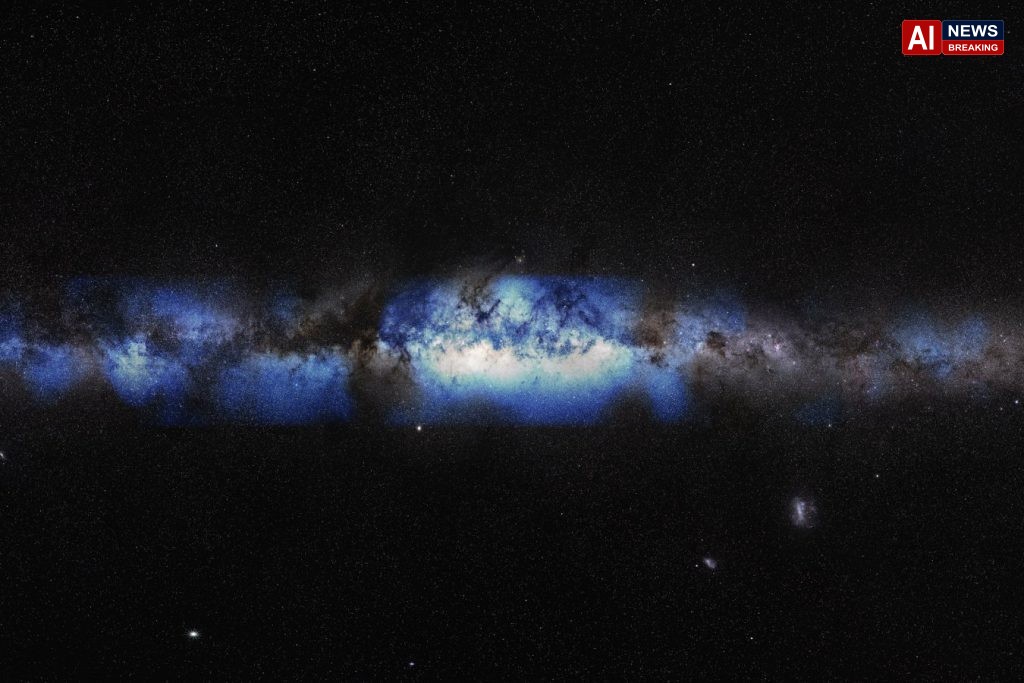
How neutrinos are beginning to reveal the secrets of our galaxy - AI News Breaking
neutrinos beginning reveal secrets:
Neutrinos, the elusive sub‑atomic particles that barely interact with ordinary matter, are moving from the periphery of particle physics into the centre of galactic astronomy. Over the past decade a series of groundbreaking experiments have begun to map the faint neutrino flux that permeates the Milky Way, and the results are reshaping long‑standing ideas about the galaxy’s most energetic processes. The latest data, gathered by deep‑ice detectors at the South Pole, underwater telescopes in the Mediterranean and sophisticated underground laboratories, are revealing patterns that point to previously hidden sources of high‑energy particles near the Galactic Centre..
As physicist Chanda Prescod‑Weinstein argues, unlocking the neutrino signal is now one of the most pressing scientific challenges, with the potential to illuminate the dynamics of our own cosmic neighbourhood.The IceCube Neutrino Observatory, embedded in a cubic kilometre of Antarctic ice, first announced the detection of a diffuse flux of astrophysical neutrinos in 2013. Since then the facility has refined its sensitivity to energies beyond a peta‑electronvolt, allowing researchers to pinpoint the arrival directions of dozens of events with unprecedented precision. A subset of these high‑energy neutrinos appears to cluster along the plane of the Milky Way, and a particularly striking excess aligns with the region surrounding Sagittarius A, the supermassive black hole at the galaxy’s core..
While the statistical significance of this clustering remains modest, the spatial correlation suggests that processes near the black hole are capable of accelerating protons to extreme energies, which then decay into neutrinos through pion production.Complementary observations come from the KM3NeT detector, whose array of photomultiplier modules is suspended deep within the Mediterranean Sea. Its location in the Northern Hemisphere offers a clear view of the Galactic Centre, a region that is partially obscured for IceCube by the Earth’s bulk. Early results from KM3NeT’s prototype lines have already identified several neutrino candidates with energies in the tens of tera‑electronvolt range that point back toward the inner spiral arms..
When combined with IceCube data, these detections reinforce the hypothesis that the central molecular zone—rich in dense gas clouds and star‑forming regions—acts as a prolific neutrino factory.A further piece of the puzzle comes from the Super‑Kamiokande and the forthcoming Hyper‑Kamiokande detectors in Japan. Although primarily designed to study solar and atmospheric neutrinos, their enormous water volumes provide a complementary low‑energy window on the galactic neutrino background. Recent analyses have revealed a subtle excess of neutrinos with energies around a few giga‑electronvolts that cannot be fully accounted for by known supernova remnants or the diffuse supernova neutrino background..
The excess may hint at a population of yet‑unidentified accelerators, possibly linked to past outbursts from the central black hole or to exotic phenomena such as dark matter annihilation in the halo surrounding the galaxy.The theoretical implications of these observations are profound. Models that once placed the majority of galactic cosmic‑ray production in supernova remnants must now accommodate additional sources capable of reaching PeV energies, the so‑called “PeVatrons.” Simulations that incorporate magnetic reconnection near the event horizon of Sagittarius A produce neutrino spectra compatible with the IceCube and KM3NeT measurements, suggesting that the black hole’s accretion flow can act as a natural particle accelerator. Alternatively, interactions between high‑energy protons and the dense molecular clouds in the central region could generate neutrinos via hadronic collisions, a scenario supported by recent gamma‑ray maps from the Fermi Large Area Telescope that show bright emission coincident with the neutrino hotspots.The possibility that dark matter particles might be contributing to the neutrino signal adds another layer of intrigue..
Certain weakly interacting massive particle (WIMP) models predict that annihilation or decay in the galactic halo would produce a steady stream of high‑energy neutrinos, with a spatial distribution that peaks toward the centre of the Milky Way. While current limits from IceCube place stringent constraints on the simplest WIMP scenarios, more complex models involving heavier or multi‑component dark matter remain viable. Ongoing joint analyses that combine neutrino data with gamma‑ray and radio observations aim to either confirm or rule out these exotic contributions.In parallel with the observational advances, the field has seen rapid progress in data‑analysis techniques..
Machine‑learning algorithms are now being deployed to discriminate genuine astrophysical neutrino events from the overwhelming background of atmospheric muons and neutrinos. These tools improve angular resolution and energy reconstruction, allowing scientists to map the neutrino sky with finer granularity than ever before. The improved precision is crucial for correlating neutrino detections with known astrophysical objects, such as pulsar wind nebulae, microquasars and massive star clusters that populate the inner galaxy.The broader astrophysical community is responding to the neutrino findings with coordinated multi‑messenger campaigns..
When IceCube reports a high‑energy neutrino alert, optical, X‑ray and radio observatories are prompted to search for transient counterparts within minutes to hours. Although only a handful of coincidences have been recorded to date, each event provides a valuable test of theoretical models and helps to calibrate the expectations for future detections. The upcoming Cherenkov Telescope Array, with its superior sensitivity to very‑high‑energy gamma rays, will play a pivotal role in confirming whether the same sites that emit neutrinos also produce the accompanying gamma‑ray signatures predicted by hadronic processes.Looking ahead, the next generation of neutrino telescopes promises to deepen our insight into the Milky Way’s hidden engines..
IceCube‑Gen2 aims to increase the instrumented volume by an order of magnitude, enhancing both the detection rate of high‑energy neutrinos and the accuracy of source localisation. Meanwhile, the expansion of KM3NeT’s ARCA and ORCA detectors will provide complementary coverage of the Southern and Northern skies, respectively. Together with the planned Hyper‑Kamiokande upgrade, which will boost low‑energy sensitivity, the global neutrino network will be poised to deliver a full‑spectrum portrait of galactic particle acceleration.The convergence of experimental breakthroughs, theoretical innovation and collaborative observation marks a turning point in our understanding of the Milky Way..
Neutrinos, once regarded as almost impossible to detect, are now emerging as a vital messenger that can pierce the dense clouds and magnetic fields that obscure traditional wavelengths. As Chanda Prescod‑Weinstein notes, the urgency to decode these ghostly particles lies not only in solving the puzzle of cosmic‑ray origins, but also in probing the fundamental physics that governs the most extreme environments in our galaxy.
Updated: November 10, 2026
This development highlights evolving dynamics and may have broader implications in the near term.






