
 Pond heron found dead in Coimbatore tests positive for avian influenza
 Pakistan’s leaders hail first astronaut aboard Chinese craft: ‘Proud one of us has gone into space’
 British tourist travels 29 hours from Mumbai to Amritsar for ₹5,461, rates Indian Railways 10/10 | Viral video
 The Supreme Court will decide whether assault weapons bans violate the Second Amendment
 A Critic of Beijing Falls Short in Taiwan’s Key Mayoral Election
‘Sensationalism over governance’: Union Minister Pralhad Joshi over Karnataka’s ethanol blending claims
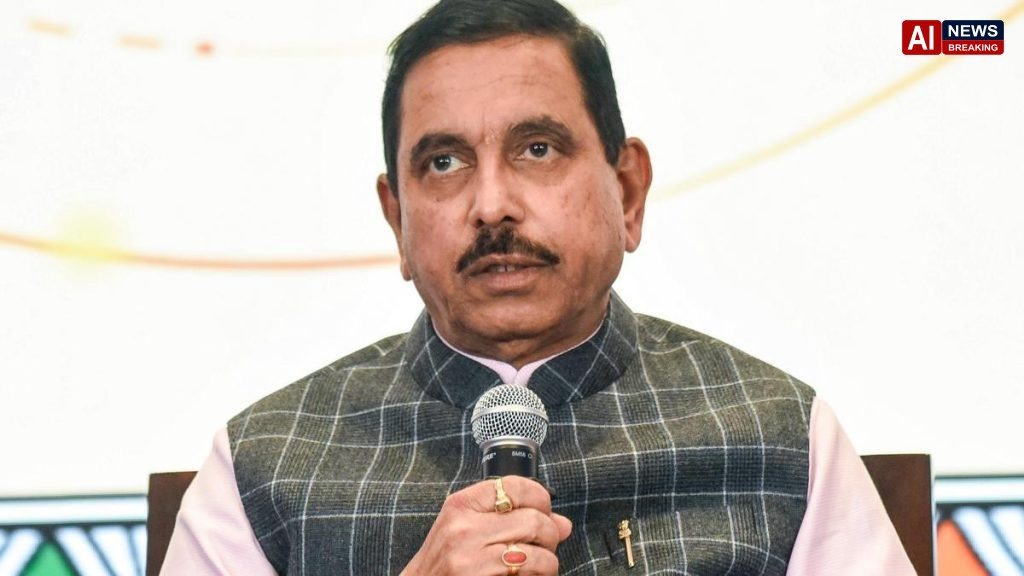
‘Sensationalism over governance’: Union Minister Pralhad Joshi over Karnataka’s ethanol blending claims - AI News Breaking
sensationalism governance union minister:
Sensationalism over governance Union Minister Pralhad Joshi over Karnataka’s ethanol blending claims Karnataka’s ethanol blending saga, which has taken centre stage in national media, has once again hit the headlines, this time with Union Minister Pralhad Joshi asserting that all 56 samples tested by the state’s Office of the Motor Vehicle Commissioner (OMC) complied with the mandated 19–20 % blend. The minister posted the figures on X, sparking fresh debate among policymakers, fuel‑industry analysts and environmental advocates. Joshi’s statement, however, has been met with scepticism, as several stakeholders question the methodology, transparency and broader implications of the blend‑testing exercise..
The minister’s post quoted average ethanol percentages: “All 56 samples tested in Karnataka by the OMCs were compliant, recording 19–20 % of ethanol blend in petrol, with an average of 19.30%,” Joshi wrote. His comments came after a series of televised hearings where state officials defended their testing procedures against accusations of data manipulation. Joshi’s intervention, ostensibly aimed at clarifying the state’s compliance, was interpreted by some as an attempt to deflect criticism of the government’s handling of the fuel‑ethanol programme..
The ethanol blend programme, launched in 2022 to reduce dependence on fossil fuels, mandates that petrol sold across India contains 20 % ethanol by volume. Karnataka, like several other southern states, has struggled to meet this target consistently, citing supply constraints and logistical bottlenecks. Critics argue that the state’s reporting mechanisms are opaque, making it difficult for independent observers to verify compliance..
The latest data, therefore, has been scrutinised by both industry bodies and civil‑society groups who fear that the reported figures may mask underlying non‑compliance. According to the Karnataka OMC’s publicly available dashboard, the 56 samples were collected from a range of petrol stations across the state’s major cities—Bangalore, Mysuru, Mangalore, and Hubli—over a period of two months. The samples were analysed for ethanol concentration using gas chromatography, a standard technique endorsed by the Central Drugs Standard Control Organisation (CDSCO)..
While the methodology is technically sound, opponents point out that the sampling strategy may have favoured compliant stations, thereby skewing results. “The claim that all 56 samples met the 19–20 % range is problematic,” said Ranjit Kumar, spokesperson for the Karnataka Fuel Association. “A more representative sampling frame, including rural and small‑scale petrol pumps, would provide a truer picture of the blend distribution..
Moreover, the sample size is too small to draw national conclusions.” Kumar’s comments came in a statement released on the association’s website, which also cited a recent audit report from the Central Energy Agency that highlighted inconsistencies in Karnataka’s fuel‑ethanol data. Opposition legislators have seized the opportunity to question the federal government’s oversight of state‑level compliance. In a debate on the Lok Sabha floor, MP Sunita Chatterjee demanded “substantial evidence” from the Ministry of Petroleum and Natural Gas to support Joshi’s claims..
“We are being asked to accept data that could be fabricated or misrepresented,” Chatterjee said. “The public’s trust in our energy policies is at stake.” The debate intensified after a whistleblower from the OMC leaked a memorandum suggesting that certain stations had been exempted from testing due to “logistical constraints.” In response, the Ministry issued a press release confirming that it had reviewed the Karnataka samples in consultation with the Central Board of Excise and Customs (CBEC). The release stated that the data “aligns with the statutory requirements and is consistent with the state’s compliance records.” However, it stopped short of providing the raw data or the sampling methodology, a move that left many observers unimpressed..
Some analysts argue that the ministry’s lack of transparency is symptomatic of a wider governance challenge, where statistical accuracy is sometimes sacrificed for political expediency. Environmental groups have also weighed in, arguing that the ethanol blend programme should be evaluated not only on compliance percentages but also on its ecological impact. “An average of 19.30 % ethanol in petrol is a modest improvement,” said Maya Sinha, director of the Green Energy Initiative..
“But the real question is whether the ethanol production process is sustainable, whether the supply chain is resilient, and whether the programme delivers a net reduction in carbon emissions.” Sinha added that a comprehensive environmental impact assessment was still pending, and that the current focus on statistical compliance risks obscuring deeper issues. The debate extends beyond Karnataka, as several northern states have reported higher blend percentages but also face criticism for unverified data. A recent report by the National Institute of Technology, Patna, highlighted that states such as Uttar Pradesh and Rajasthan have adopted more rigorous sampling protocols, including randomised station selection and third‑party verification..
The report praised these states for “maintaining higher integrity in reporting” but warned that “without nationwide standardisation, any single state’s compliance cannot be considered representative.” The Union Minister’s post on X, which amassed over 3,000 likes and 500 comments in a few hours, exemplifies the media’s growing role in shaping public discourse on technical policy matters. Critics argue that social‑media platforms amplify sensationalism, especially when complex data is reduced to a single statistic. “One number, 19.30 % – it sounds impressive, but it hides the nuances of supply chain volatility, regional disparities and the underlying science of ethanol blending,” said Dr..
Anil Verma, a professor of petroleum engineering at IIT Mad.
Updated: November 10, 2026
Insight: This development highlights evolving dynamics and may have broader implications in the near term.






