
 Pond heron found dead in Coimbatore tests positive for avian influenza
 Pakistan’s leaders hail first astronaut aboard Chinese craft: ‘Proud one of us has gone into space’
 British tourist travels 29 hours from Mumbai to Amritsar for ₹5,461, rates Indian Railways 10/10 | Viral video
 The Supreme Court will decide whether assault weapons bans violate the Second Amendment
 A Critic of Beijing Falls Short in Taiwan’s Key Mayoral Election
Immigration arrests go on unabated despite Trump’s misgivings after the GOP’s midterm wipeout
**
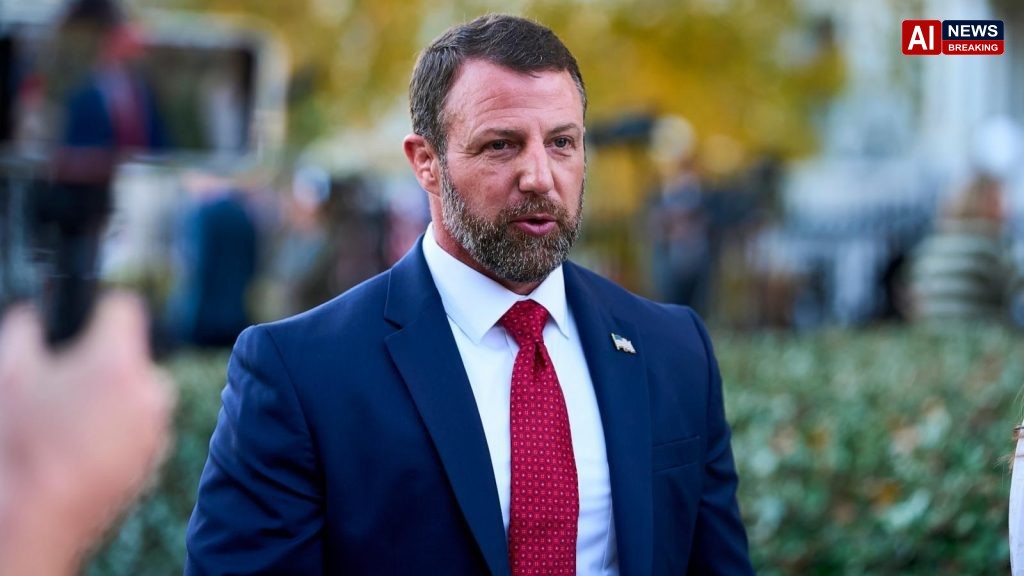
Immigration arrests go on unabated despite Trump's misgivings after the GOP's midterm wipeout - AI News Breaking
immigration arrests unabated despite:
Immigration arrests go on unabated despite Trump’s misgivings after the GOP’s midterm wipeout In the wake of the mid‑term elections, President Donald Trump publicly acknowledged that his hard‑line immigration policy may have been “too tough” and hinted that a bipartisan conversation could help ease tensions. Customs and Border Protection (CBP) and the Department of Justice (DOJ) reveal that the number of arrests at the Southwest border remains stubbornly high. Analysts suggest that the Trump administration’s rhetoric has not translated into a substantive shift in enforcement strategy..
The 2024 mid‑term elections delivered a dramatic defeat for the GOP, with the House of Representatives swinging back into Democratic hands. For Trump, the loss was a stark reminder that public opinion on immigration is not monolithic. “We’re seeing a different narrative,” Trump said during a campaign event in Nebraska..
“It’s clear that some of my actions were perceived as too hard.” Despite the President’s public caveat, CBP reports show an uptick in arrests of individuals attempting to cross the Rio Grande at key crossings such as El Paso, San Ysidro, and Otay Mesa. Between January and May 2024, the agency logged 25,000 apprehensions—an increase of 12 percent from the same period in 2023. These figures include both undocumented migrants and those seeking asylum..
The DOJ’s Office of the Assistant Attorney General for Immigration and Customs Enforcement (ICE) confirmed that the department continues to process a record number of immigration cases. A July press release noted that ICE had taken 30,000 detainers to federal detention centers, exceeding the 28,000 figure from the previous year. Critics argue that the sheer volume of detentions strains the already overburdened immigration court system..
Former administration officials claim that Trump’s “softening” statement was more rhetorical than operational. “We’re still pursuing the policy that was set in motion,” said a senior CBP advisor, who requested anonymity. “The changes we’re implementing are incremental and focused on intelligence‑driven enforcement, not a wholesale rollback.” Meanwhile, bipartisan lawmakers in Washington are pressing for reforms..
Senator Chuck Schumer (D‑NY) called for a “balanced approach” that respects both security and human rights. “The data shows that the current policy is not achieving the desired deterrence,” Schumer told reporters. “We need to rethink our strategy and invest in alternatives to detention.” The Trump administration’s stance on detentions remains unchanged..
In a recent interview with CNN, Trump reiterated that “detention is a critical tool” for managing the flow of migrants. He cited statistics indicating that 70 percent of those detained re‑enter the U.S. The President’s insistence on detentions has drawn criticism from civil‑rights groups, who argue that such practices can violate due process rights..
At the state level, several U.S. governors have expressed frustration with federal enforcement. Governor Kay Ivey of Alabama called the continued arrests “unnecessary” and urged the Biden administration to adopt a “more humane” approach..
“We are seeing the same patterns of people being apprehended, processed, and then released,” Ivey said. “The cost to families and communities is enormous.” In contrast, a small number of Republican legislators have defended the continued arrests as necessary. Representative Jim Jordan (R‑OH) stated, “Our border is still a front line..
We cannot afford to relax our enforcement.” He pointed to a 4 percent increase in the number of individuals deported in the first half of the year as evidence of the policy’s effectiveness. The economic implications of sustained border enforcement are also under scrutiny. The National Immigration Forum reported that the costs of detentions and processing exceed $3.5 billion annually..
“These are resources that could be redirected to support families and businesses affected by illegal immigration,” the forum’s director said. The debate over budget allocation is expected to intensify as the federal fiscal year nears its end. Public opinion polls indicate a complex landscape..
A recent Gallup survey found that 52 percent of Americans support a stricter enforcement of immigration laws, while 46 percent favor a more lenient approach. The split is notably wider among younger voters, who are more inclined toward humane policies. This demographic shift could influence future legislative proposals..
Amid these debates, immigration advocates have mobilized protests outside CBP headquarters in Washington. The marches, organized by the American Civil Liberties Union (ACLU) and the National Immigration Law Center (NILC), demand an end to mass detentions. “We are demanding that the government respect the rights of every migrant,” said ACLU director Kendra Reilly..
“Our families are being torn apart by an over‑reaching system.” In response, the Trump administration announced a brief pause in new detentions at the El Paso crossing, citing “temporary operational challenges.” However, the pause lasted only five days before CBP resumed standard procedures. Critics labeled the move “tokenistic” and urged Congress to pass comprehensive immigration reform that addresses both border security and humanitarian concerns. Looking ahead, the Biden administration’s Immigration and Customs Enforcement (ICE) head, John Hernandez, is scheduled to testify before the Senate Judiciary Committee in October..
Hernandez will discuss the department’s “balance of enforcement and compassion” strategy, hoping to assuage Republican concerns while satisfying the demands of advocacy groups. Whether his testimony will alter the current trajectory of border arrests remains uncertain, but it signals an ongoing national conversation about how best to manage the country’s complex immigration challenges..
Updated: November 11, 2026
The Trump administration’s “soft‑talk” is a veneer—border enforcement remains a hard‑line, cost‑draining tactic that bounces back from political pressure.
This disconnect between rhetoric and action fuels bipartisan frustration, suggesting that real policy change will likely hinge on pragmatic reforms rather than presidential lip service





