
 Pond heron found dead in Coimbatore tests positive for avian influenza
 Pakistan’s leaders hail first astronaut aboard Chinese craft: ‘Proud one of us has gone into space’
 British tourist travels 29 hours from Mumbai to Amritsar for ₹5,461, rates Indian Railways 10/10 | Viral video
 The Supreme Court will decide whether assault weapons bans violate the Second Amendment
 A Critic of Beijing Falls Short in Taiwan’s Key Mayoral Election
Lots of Competition to Catholicism in Peru as Pope Returns for Visit
Pope Leo III’s six‑day visit to Peru underscores the Catholic Church’s attempt to reaffirm its relevance amid a surge in evangelical growth, declining Catholic numbers, and heated debate over the intersection of faith and politics in the Andean nation.
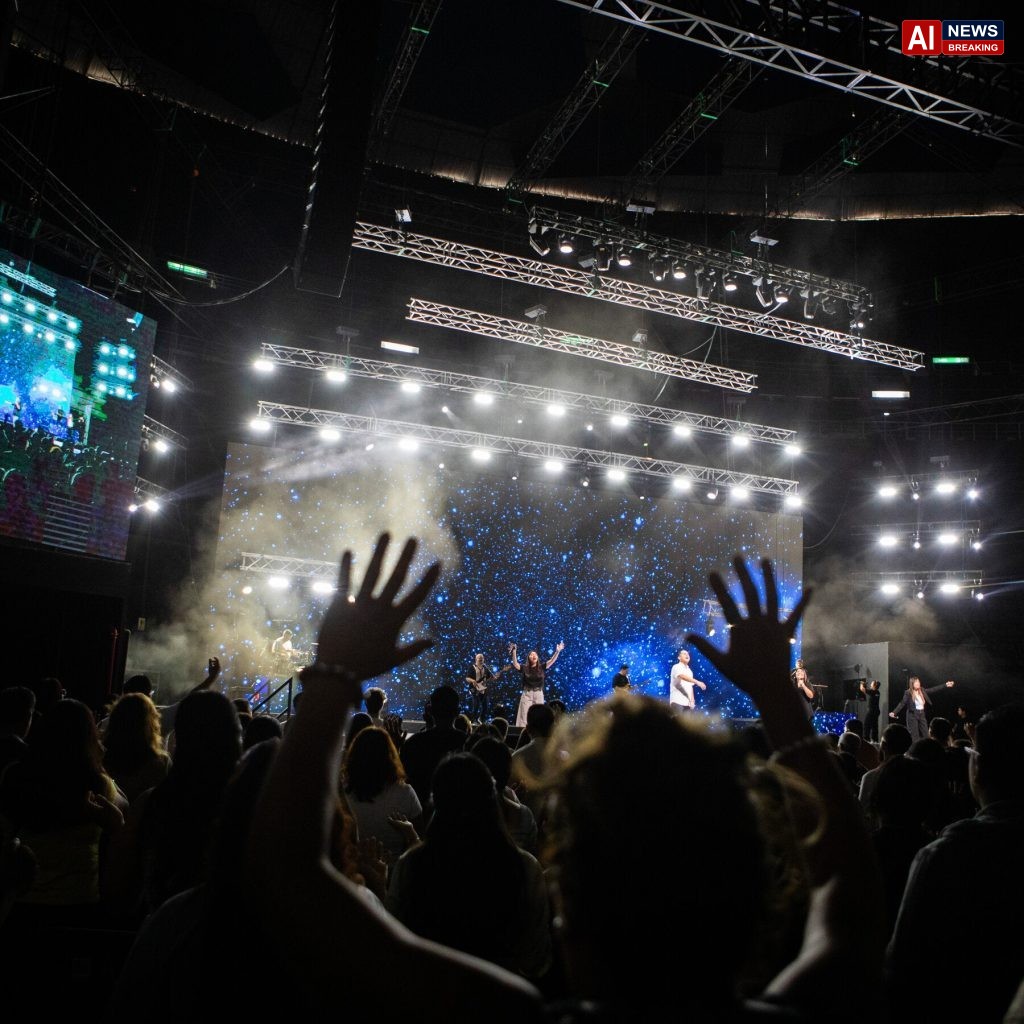
Lots of Competition to Catholicism in Peru as Pope Returns for Visit - AI News Breaking
lots competition catholicism peru:
The Vatican’s decision to send Pope Leo III back to Peru for a six‑day pastoral visit has sparked a flurry of commentary across the nation, reflecting both the enduring influence of the Catholic Church and the growing appeal of evangelical movements. Leo, who first arrived in the Andean country in 2004 as a young auxiliary bishop, spent nearly two decades climbing the clerical ladder, eventually becoming the first Peruvian‑born pontiff of the modern era. His return, timed to coincide with the anniversary of the historic 1979 Concordat that re‑established formal ties between the state and the Catholic Church, has been billed as a “homecoming” and an opportunity to reaffirm the Church’s relevance in a society where religious affiliation is increasingly fluid.In the capital, Lima, the streets surrounding the historic Plaza San Martín have been transformed into a makeshift pilgrimage route, with banners bearing the papal coat of arms fluttering alongside traditional Peruvian textiles..
Crowds gathered early on Saturday morning, many clutching rosaries, while others carried portable speakers broadcasting the Pope’s latest homilies in Quechua and Aymara. The atmosphere, though festive, was marked by a palpable tension; journalists noted a conspicuous presence of protest signs from secular groups warning against the politicisation of religion, as well as placards from evangelical congregations urging “a true encounter with Christ, not just symbols”.The Pope’s itinerary is deliberately inclusive, spanning visits to the impoverished district of San Juan de Lurigancho, a meeting with Indigenous leaders at the high‑altitude town of Puno, and a final mass at the sprawling San Juan Bautista Cathedral, a landmark that has long served as the epicentre of Catholic worship in the country. Each stop is designed to address specific social concerns – from poverty alleviation and education to environmental stewardship in the fragile Amazon basin..
In a recent interview, Leo emphasised that “the Church must be a servant of the poor, a voice for the voiceless, and a guardian of creation”, echoing the themes of his earlier encyclical on ecological justice.Yet the Pope’s message arrives at a time when statistical data from the National Institute of Statistics and Informatics (INEI) indicate a steady decline in Catholic affiliation. The 2023 survey recorded that 68 percent of Peruvians still identified as Catholic, down from 81 percent a decade earlier, while evangelical Protestantism rose to 22 percent, and those claiming no religion grew to 5 percent. Analysts attribute this shift to several factors: the dynamic worship styles of evangelical churches, the perceived responsiveness of their pastors to community needs, and a broader generational desire for a more personal, emotive relationship with the divine..
The growth of “megachurches” in suburban Lima, often equipped with modern sound systems and charismatic preaching, has drawn large numbers of young adults who feel alienated by what they describe as the ritualistic rigidity of Catholic liturgy.Religious scholars suggest that the competition is not merely about worship style but also about social capital. Evangelical groups have increasingly positioned themselves as providers of social services, operating schools, health clinics and micro‑finance programmes in remote Andean villages where state presence is minimal. In return, congregants often cite a sense of belonging and empowerment that they claim is lacking in the hierarchical structure of the Catholic Church..
María Torres, a professor of sociology at the Pontifical Catholic University of Peru, warned that “the Church must adapt without compromising its core doctrines if it wishes to retain its moral authority in communities that are being courted by alternative faith expressions”.The papal visit also underscores the political dimensions of religion in Peru. President Alejandro Mendoza, who welcomed Leo at the airport, reiterated his administration’s commitment to a “faith‑informed” approach to policy, particularly in the areas of education reform and anti‑corruption measures. Critics, however, have raised concerns about the blurring of church‑state boundaries, pointing to past instances where Catholic leaders have exerted influence over legislative agendas..
A coalition of lawmakers from the opposition parties submitted a petition to the Constitutional Tribunal, seeking clarification on whether the Pope’s public statements on social justice could be interpreted as governmental endorsement of a particular religious viewpoint.Amid these debates, the Vatican’s diplomatic corps has taken a cautious stance. Archbishop Giovanni Carli, the Apostolic Nuncio to Peru, issued a statement affirming that “the Holy See respects the religious freedom of all citizens and encourages dialogue among faith traditions”. He added that the Pope’s presence is intended to “strengthen the bonds of charity and solidarity that transcend doctrinal differences”..
The Vatican’s message appears calibrated to avoid inflaming inter‑religious tensions while still highlighting the Catholic Church’s historical role as a moral compass in Peruvian society.Local media coverage has been mixed, with major newspapers such as El Comercio and La República offering extensive front‑page features on the Pope’s planned speeches, while independent outlets have devoted space to reporting on the burgeoning evangelical congregations that have sprung up in the outskirts of major cities. Social media platforms are awash with hashtags ranging from #PopeInPeru to #FaithForAll, reflecting a digital conversation that mirrors the country’s pluralistic religious landscape. Notably, a viral video of a young evangelical worshipper performing a contemporary worship song in the Quechua language garnered millions of views, prompting a lively online debate about the authenticity of indigenous expressions within modern Christianity.As the Pope’s visit draws to a close, early assessments suggest that the trip has succeeded in reigniting public discourse on the role of faith in Peru’s national identity..
While attendance figures at the final mass indicated a robust turnout—estimates place the crowd at around 150,000—the longer‑term impact on religious affiliation remains uncertain. Vatican officials have pledged to continue supporting local Catholic initiatives, particularly in education and health, while also encouraging ecumenical dialogue with Protestant leaders. Whether this outreach will stem the tide of evangelical growth or simply coexist alongside it will likely depend on the Church’s ability to balance tradition with the evolving spiritual needs of a diverse and dynamic populace..
Updated: November 11, 2026
Pope Leo III’s Peruvian “homecoming” forces the Catholic hierarchy into a strategic crossroads: to remain a moral authority it must translate high‑level rhetoric on poverty and ecology into tangible grassroots services, or risk ceding social capital to agile evangelical networks. The papal visit also spotlights a fragile church‑state pact, prompting legislators to test constitutional limits on religious influence—a litmus test for Peru’s democratic maturity as religious affiliation fragments.






