
 Pond heron found dead in Coimbatore tests positive for avian influenza
 Pakistan’s leaders hail first astronaut aboard Chinese craft: ‘Proud one of us has gone into space’
 British tourist travels 29 hours from Mumbai to Amritsar for ₹5,461, rates Indian Railways 10/10 | Viral video
 The Supreme Court will decide whether assault weapons bans violate the Second Amendment
 A Critic of Beijing Falls Short in Taiwan’s Key Mayoral Election
U.S. pushes for tighter land blockade of Iran, faces neighbor resistance
**
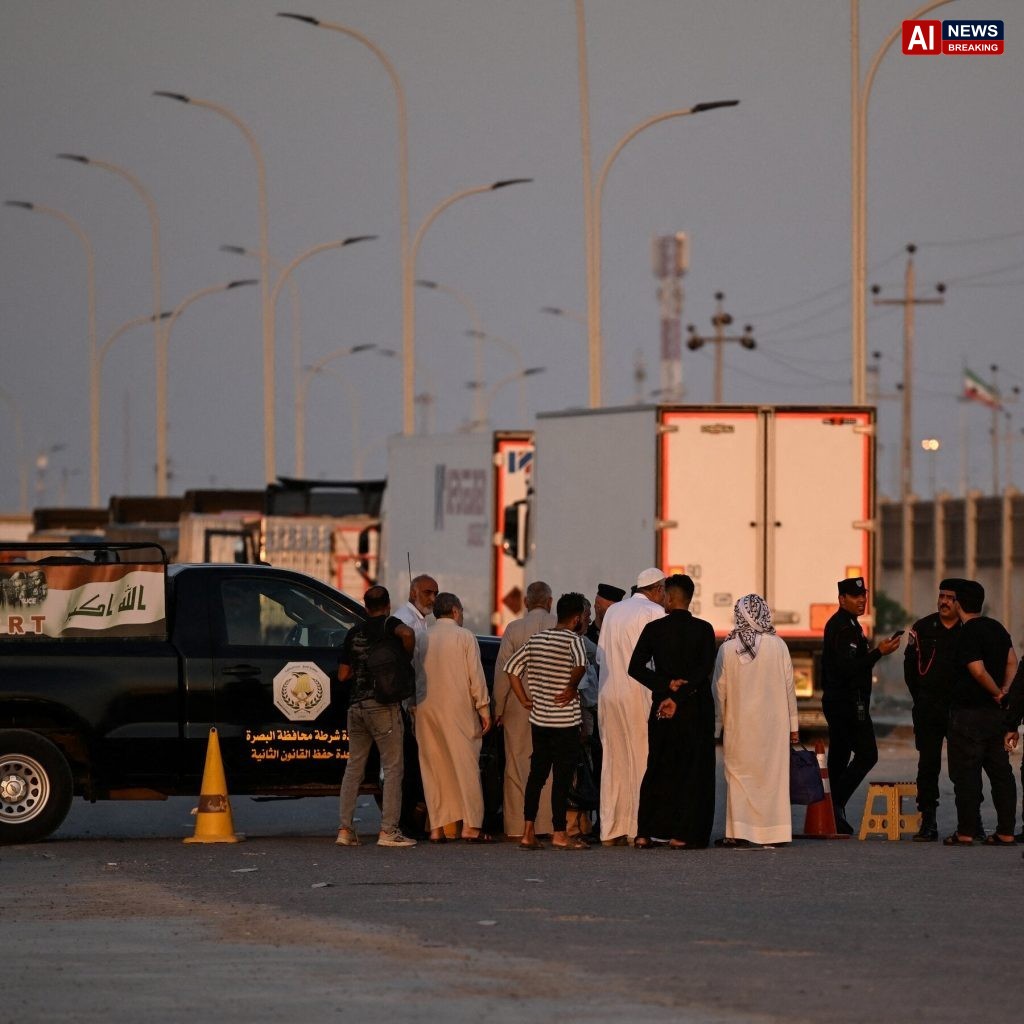
U.S. Efforts to Tighten Blockade of Iran Rely on Reluctant Neighbors - AI News Breaking
pushes tighter land blockade:
Efforts to Tighten Blockade of Iran Rely on Reluctant Neighbors Washington’s senior officials have announced a fresh push to seal Iran’s land routes, hoping to amplify the economic pressure already being applied through sanctions on oil and banking. The plan, unveiled at a State Department briefing in Washington, calls for coordinated border closures with Iraq, Afghanistan, Turkmenistan and Azerbaijan, all of which share porous frontiers with Tehran. diplomats argue that cutting off overland trade will deprive Iran of critical supplies of food, medicine and industrial inputs, accelerating the impact of the sanctions regime already crippling its economy..
The proposal, however, has met swift resistance from the neighbouring states, which fear the ripple effects of a sudden trade shutdown on their own fragile economies. Iraq, whose border with Iran handles an estimated $3 billion of daily commerce, warned that a hard line would exacerbate inflation and threaten food security for millions of its citizens. In Tehran’s own words, the move could “push the region into a humanitarian crisis,” a sentiment echoed by officials in Afghanistan who rely heavily on cross‑border markets to sustain rural livelihoods..
In a series of private meetings in Baghdad last week, U.S. envoys pressed Iraq’s foreign ministry to adopt “a coordinated, calibrated approach” that would allow limited humanitarian corridors while denying Iran access to strategic goods. Iraqi Prime Minister Mohammed Shia al‑Sudani replied that any agreement must be “mutually beneficial” and not jeopardise the nation’s reconstruction efforts funded by international donors..
He underscored that Iraq’s own budget is already strained by the cost of hosting millions of displaced Iranians fleeing the country’s economic downturn. Afghanistan’s foreign ministry, still navigating the complex politics of the Taliban‑led government, issued a cautious statement saying it would “review any proposals that could destabilise its fragile market dynamics.” Analysts note that Kabul’s economy depends heavily on the flow of Iranian gasoline and agricultural products, and that a sudden blockade could trigger shortages that would inflame already volatile internal tensions. The Taliban’s spokesperson, Abdul Ghani Baradar, warned that “any external pressure that harms the Afghan people will be met with firm resistance.” Turkmenistan, a key conduit for natural gas pipelines that traverse Iranian territory, has taken a more measured stance..
Its ambassador to the United Nations, Gurbanmyrat Annayev, remarked that while Turkmenistan supports “the goal of a peaceful resolution to Iran’s nuclear ambitions,” it cannot ignore the economic interdependence forged over decades. He pointed out that Turkmen exports to Iran account for roughly 15 percent of the nation’s total foreign‑exchange earnings, a figure that could plunge if border controls are tightened without a clear, multilateral framework. Azerbaijan, sharing a short but strategically important border with Iran’s north‑west, has also signalled its reservations..
President Ilham Aliyev’s office released a communiqué stating that “regional stability must not be compromised by unilateral actions.” The Azerbaijani government highlighted its own concerns about the impact on the Caspian Sea trade routes, where Iranian ports serve as transit hubs for Azerbaijani oil and grain shipments. The statement warned that any abrupt closure could trigger a “chain reaction of logistical bottlenecks” affecting the broader Eurasian market. Within the United States, the push for a tighter land blockade reflects a broader shift in strategy under the Biden administration, which has sought to combine diplomatic pressure with economic levers to curb Tehran’s regional ambitions..
National Security Adviser Jake Sullivan told reporters that “closing the land avenues is the next logical step after we have already strangled Iran’s oil revenues.” He added that the U.S. is prepared to offer “targeted incentives” to neighbouring states that agree to enforce the restrictions, though the details of such incentives remain undisclosed. Critics in Washington argue that the policy could backfire, creating a black‑market network that bypasses official channels and empowers criminal syndicates..
A senior official at the Treasury Department warned that “the more we push Iran underground, the more we lose oversight.” They cite past experiences in Syria and Venezuela, where sanctions inadvertently boosted smuggling routes, enriching militias and warlords. The Treasury official called for a “balanced approach” that couples enforcement with robust monitoring mechanisms, including satellite surveillance and on‑the‑ground customs cooperation. Human‑rights groups have raised alarms about the humanitarian impact of a full‑scale land embargo..
Amnesty International issued a briefing highlighting that Iran’s already strained health system depends on imported medicines that often travel by road from neighbouring countries. A sudden cut‑off could exacerbate shortages of life‑saving drugs for patients with chronic illnesses, including cancer and diabetes. The organization urged the U.S..
to embed explicit exemptions for essential goods, arguing that “targeted sanctions must not become collective punishment.” In response, the State Department has pledged to negotiate “humanitarian corridors” that would allow the flow of food, medicine and other critical supplies under United Nations supervision. Deputy ary of State Wendy Sherman said that the U.S. is “committed to a humane implementation of any new restrictions.” She emphasized that the corridors would be monitored by a joint task force comprising U.S., UN and regional experts, and that any violations would trigger swift punitive measures against the offending parties..
The geopolitical calculus is further complicated by Russia’s growing influence in the region. Moscow has quietly expanded its trade ties with Tehran, offering alternative routes for oil and grain that circumvent Western‑controlled checkpoints..
Updated: November 11, 2026
Insight: Washington’s new land‑blockade gambit shows that the U.S. is betting its diplomatic credibility on neighbor‑state compliance—yet the very fact that Iraq, Afghanistan, Turkmenistan, and Azerbaijan are pulling back signals a regional backlash that could erode the sanctions’ leverage and spawn a humanitarian‑





