
 Pond heron found dead in Coimbatore tests positive for avian influenza
 Pakistan’s leaders hail first astronaut aboard Chinese craft: ‘Proud one of us has gone into space’
 British tourist travels 29 hours from Mumbai to Amritsar for ₹5,461, rates Indian Railways 10/10 | Viral video
 The Supreme Court will decide whether assault weapons bans violate the Second Amendment
 A Critic of Beijing Falls Short in Taiwan’s Key Mayoral Election
Assam CM Himanta Sarma backs woman’s paternity case against ex-Uttarakhand Minister
**
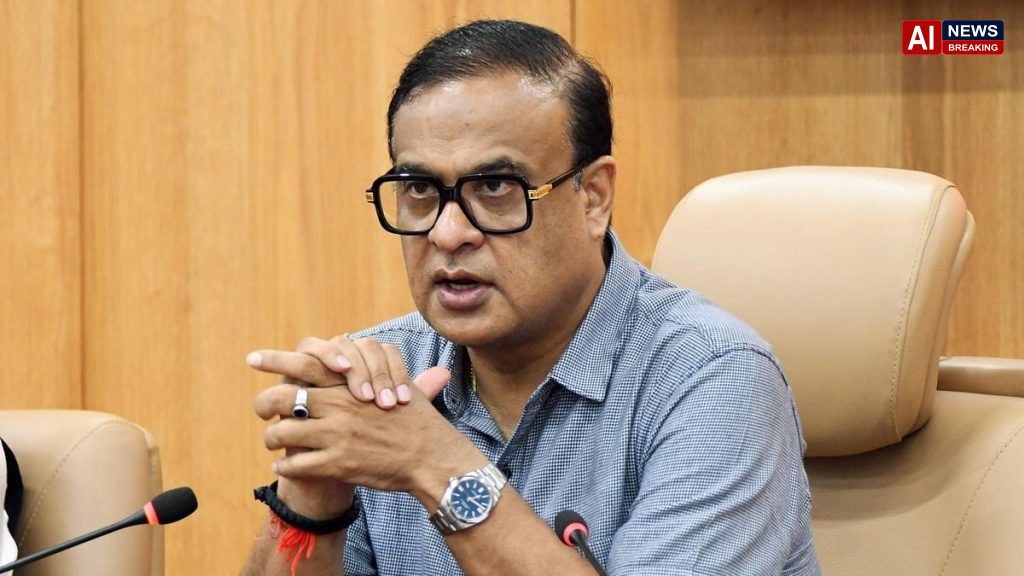
Assam CM Himanta Sarma backs woman’s paternity case against ex-Uttarakhand Minister - AI News Breaking
assam himanta sarma backs:
Assam’s chief minister, Himanta Biswa Sarma, has publicly endorsed the plea of Indira Dewri, a 48‑year‑old woman from Dehradun who is seeking a fresh Central Bureau of Investigation probe and a DNA test to establish the paternity of her 23‑year‑old son. Dewri, who once served as a senior officer in the Indian Administrative Service, alleges that her former partner, former Uttarakhand minister Yashpal Singh Rawat, fathered the child out of wedlock and subsequently denied responsibility. The case, which first entered the public domain in 2015, has resurfaced after Dewri filed a petition in the Supreme Court earlier this year, prompting a wave of media scrutiny and political commentary across the northern states.In a statement released from the Raj Bhavan on Thursday, Sarma said that “justice must be served irrespective of the social or political standing of the individuals involved.” He added that the state government would cooperate fully with any central agency tasked with investigating the matter, and urged the CBI to act swiftly, citing the “prolonged anguish” endured by Dewri and her son..
The chief minister’s remarks came after a flurry of social media posts and letters from civil‑rights groups urging the authorities to treat the case with the same rigor accorded to high‑profile criminal investigations.Dewri’s demand for a DNA test stems from the fact that the original paternity claim, lodged in 2015, was dismissed by a local magistrate who deemed the evidence insufficient. At that time, Dewri alleged that Rawat had visited her residence in Dehradun on several occasions and that a private doctor had conducted an informal blood test, the results of which were never submitted to the court. She maintains that the lack of a formal forensic examination has left her and her son in a state of legal limbo, preventing her from receiving any form of maintenance or legal recognition as a single mother.The former minister, Yashpal Singh Rawrawat, denied the allegations when first approached by reporters in early 2024, stating that “the claims are baseless and intended to tarnish my reputation.” He has not, however, been formally served with a notice in the current proceedings..
Legal experts note that, under Indian law, a DNA test ordered by a court carries the weight of decisive proof, and the Supreme Court’s recent pronouncements on privacy and scientific evidence have strengthened the procedural framework for such tests. Nevertheless, they caution that the political sensitivities surrounding a senior figure from a neighboring state could complicate the investigative process.Political analysts see Sarma’s intervention as part of a broader strategy to position the Assam government as a champion of women’s rights and legal transparency, especially as the state prepares for the upcoming assembly elections. “By aligning himself with a high‑profile case that underscores gender‑based injustice, the chief minister is attempting to broaden his appeal beyond the traditional Assamese electorate,” says Dr..
Ananya Banerjee, a professor of political science at Gauhati University. “It also allows him to project a narrative of inter‑state cooperation, given that the alleged father hails from Uttarakhand.”Human‑rights organisations, including the National Commission for Women and the Centre for Legal Aid to Women, have welcomed Sarma’s remarks, urging the central government to expedite the CBI’s involvement. In a joint communiqué, they highlighted the “systemic obstacles faced by women who seek legal redress against powerful men,” calling for “fast‑track mechanisms and protective measures for victims of such disputes.” The commission also requested that the court grant interim relief to Dewri, including a protective order against any intimidation or harassment by Rawrawat’s associates.The case has ignited a broader debate about the efficacy of India’s paternity laws, which many observers argue are outdated and insufficiently enforced..
While the Indian Penal Code criminalises the act of concealing the identity of a father, the legal provisions for compulsory DNA testing were only codified in 2015, and implementation remains patchy across states. Critics argue that the lack of a uniform protocol often leaves women dependent on protracted court battles, draining both financial resources and emotional resilience.In the courtroom, Dewri’s counsel, senior advocate Rohan Mehta, has filed an affidavit requesting that the Supreme Court issue a direction for the CBI to collect and preserve blood samples from both Rawrawat and the son, under the supervision of a certified forensic laboratory. Mehta contends that the delay in obtaining a DNA report has “inflicted irreversible damage” on his client’s reputation and that “the moral and financial toll is immeasurable.” He further warned that any attempt to obstruct the testing process would constitute contempt of court, potentially leading to punitive action against the accused.The response from Uttarakhand’s administration has been cautious..
Chief Minister Pushkar Singh Dhami, speaking at a press conference in Dehradun, stated that his government respects the jurisdiction of the Supreme Court and will “extend full cooperation to any central agency that is tasked with investigating the matter.” He added that the state’s law‑and‑order department would monitor the situation to prevent any law‑breaking incidents, while also urging the media to refrain from “speculative reporting” that could inflame communal sentiments.As the case proceeds, the legal and political ramifications could extend well beyond the personal grievance of Ms Dewri. The outcome may set a precedent for how inter‑state paternity disputes are handled, particularly when they involve high‑profile political figures. Moreover, the involvement of a chief minister from a different state underscores the increasing willingness of regional leaders to engage in issues that transcend traditional jurisdictional boundaries, potentially reshaping the dynamics of collaborative governance in India’s federal structure..
The forthcoming weeks will reveal whether the CBI’s investigation, if ordered, can navigate the delicate balance of legal propriety and political pressure, and whether justice will finally be rendered in a case that has lingered for over a decade..
Updated: November 11, 2026
Assam chief minister Himanta Biswa Sarma has urged the CBI to launch a fresh probe and DNA test in the paternity dispute involving former Uttarakhand minister Yashpal Singh Rawat, saying justice must be served regardless of status. The move follows a Supreme Court petition and reflects a growing trend of inter‑state political leaders intervening in high‑profile legal cases to bolster their image as champions of women’s rights.
Sarma’s backing signals a strategic gamble: by championing a high‑profile paternity fight, he positions Assam as a defender of women’s rights while courting voters disillusioned with entrenched power‑politics. If the CBI’s DNA probe succeeds, it could re‑ignite debate over uniform






