Pond heron found dead in Coimbatore tests positive for avian influenza
 Pakistan’s leaders hail first astronaut aboard Chinese craft: ‘Proud one of us has gone into space’
 British tourist travels 29 hours from Mumbai to Amritsar for ₹5,461, rates Indian Railways 10/10 | Viral video
 The Supreme Court will decide whether assault weapons bans violate the Second Amendment
 A Critic of Beijing Falls Short in Taiwan’s Key Mayoral Election
Court in UK Decriminalizes Same-Sex Relations in Trinidad and Tobago
**
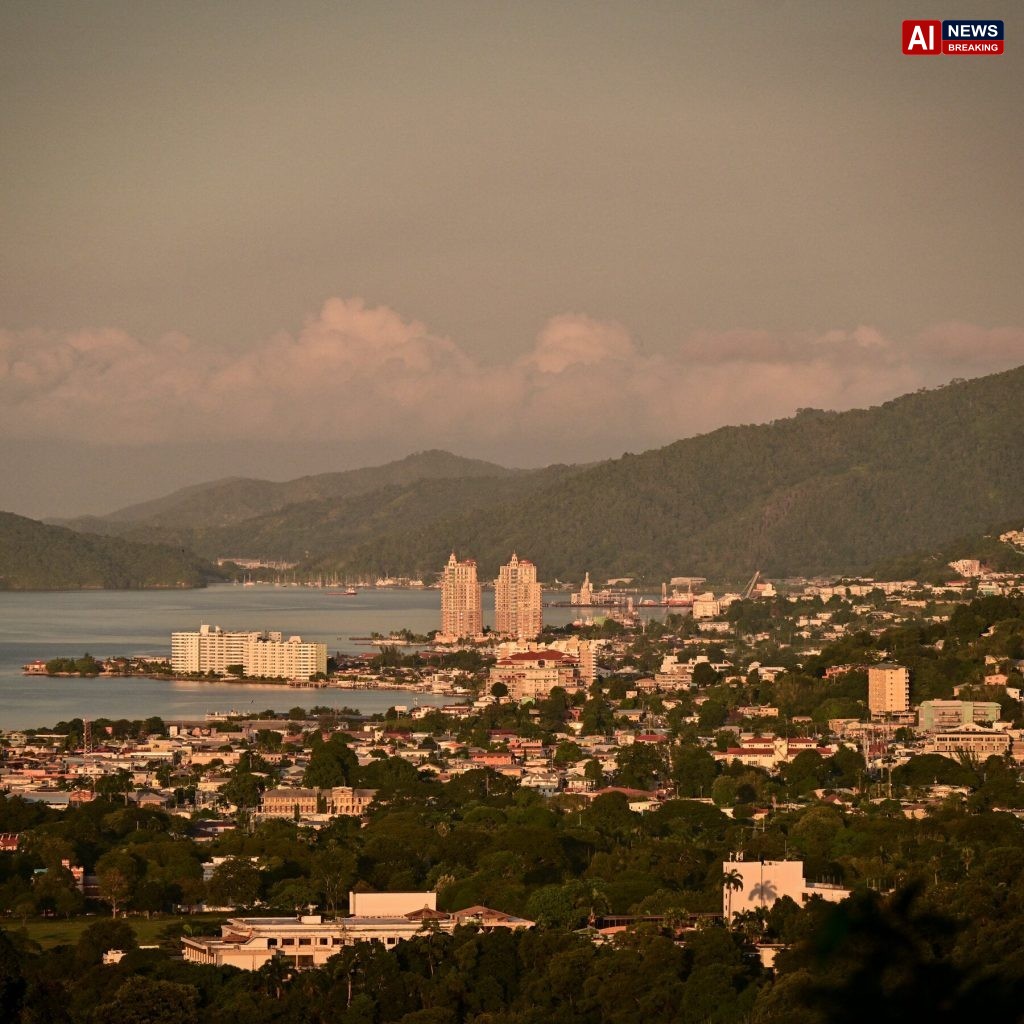
Court in UK Decriminalizes Same-Sex Relations in Trinidad and Tobago - AI News Breaking
court decriminalizes samesex relations:
A Caribbean court in the United Kingdom has ruled that the criminalisation of same‑sex sexual activity in Trinidad and Tobago is incompatible with the nation’s constitutional guarantees of privacy and freedom from discrimination. The decision, handed down by the Judicial Committee of the Privy Council in London, overturns a 1990 law inherited from the British Empire that criminalised “buggery” and “gross indecency” between men. While the judgment applies only to Trinidad and Tobago, legal scholars and human‑rights advocates say it could set a precedent for other former British colonies that retain similar statutes, many of which have remained on the books despite growing international pressure to repeal them.The case was brought before the Privy Council by a group of local activists and lawyers who argued that the antiquated provisions violated the twin pillars of the country’s 1976 Constitution: the right to respect for private and family life, and the guarantee of equality before the law..
Their claim was bolstered by a series of regional and international rulings, including the Caribbean Court of Justice’s 2018 decision in the case of Belize, which similarly struck down anti‑homosexuality legislation. In its written opinion, the Privy Council highlighted that the statutes in question were “archaic, discriminatory and no longer reflect contemporary societal values,” and that they had been used to justify harassment, blackmail and violence against gay and bisexual men for decades.The court’s ruling does not automatically erase the offending sections of the Sexual Offences Act; instead, it declares them unenforceable and orders the government to amend the legislation within a specified timeframe. The Privy Council gave the Trinidad and Tobago authorities twelve months to draft and enact new provisions that bring the law into line with constitutional standards..
In the interim, police are instructed to cease prosecutions under the disallowed clauses, and any convictions already secured on those grounds are to be reviewed and, where appropriate, quashed.Reaction in Port of Spain has been mixed. Human‑rights groups celebrated the verdict as a watershed moment for LGBT rights in the Caribbean, noting that the decision validates the lived experiences of thousands of gay, bisexual and transgender individuals who have long endured stigma and legal persecution. “This is a historic affirmation that love and consent between adults should not be criminalised,” said a spokesperson for the regional NGO Caribbean Equality Alliance..
The ruling also resonated with religious leaders who, while expressing reservations about the pace of social change, welcomed the court’s emphasis on privacy and the separation of moral judgments from state law.Conversely, several opposition politicians and faith‑based organisations condemned the judgment as an overreach by a foreign judicial body, arguing that the decision undermines local customs and the moral fabric of society. In a televised interview, a senior member of the ruling People’s National Movement warned that the court’s intervention could set a “dangerous precedent” for external interference in domestic affairs. The same official called for a parliamentary debate on the issue, pledging to “defend our cultural heritage” while also acknowledging the need for a “balanced and respectful” public discussion.Legal experts suggest that the Privy Council’s reasoning may influence pending challenges in other Commonwealth jurisdictions, such as Guyana, Jamaica and St..
Kitts and Nevis, where similar colonial‑era statutes remain in force. Professor Anita Singh of the University of the West Indies notes that the judgment “creates a persuasive authority” that lawyers in those nations can cite when arguing that anti‑homosexuality laws breach constitutional rights. However, she cautions that each case will still hinge on the specific wording of national constitutions and the willingness of local courts to confront entrenched societal attitudes.The broader implications extend beyond the courtroom..
International donors and development agencies, which have increasingly linked aid to human‑rights performance, are likely to view the ruling as evidence of progress, potentially unlocking additional funding for public‑health initiatives, education programmes and anti‑violence campaigns aimed at LGBT communities. The United Nations Human Rights Office has already issued a statement praising the decision and urging other Caribbean states to review their statutes in light of “evolving international norms.” Meanwhile, the World Health Organization highlighted that decriminalisation is a crucial step toward reducing HIV transmission rates, as fear of prosecution often deters men who have sex with men from seeking testing and treatment.In Trinidad and Tobago, the immediate practical impact will be felt by individuals who have lived under the threat of police raids, extortion and social ostracism. One activist, who requested anonymity for safety reasons, recounted an episode in which he was detained under the outdated law while traveling between islands, only to be released after a prolonged legal battle that left him financially ruined..
“Now, young people can walk down the street without looking over their shoulder,” he said, adding that the ruling also offers a sense of dignity that had been denied for generations.The government’s next steps will be closely watched. Keith Rowley’s office released a brief statement affirming its commitment to “uphold the rule of law and the Constitution,” while also indicating that a legislative review will be undertaken in consultation with civil society, religious groups and legal experts. The Ministry of Legal Affairs has appointed a special committee to draft amendments, though critics warn that delays or watered‑down reforms could erode the momentum generated by the court’s decision.As the Caribbean navigates the intersection of tradition, colonial legacy and modern human‑rights standards, the Privy Council’s verdict serves as a reminder that legal systems rooted in the British Empire are not static..
The ruling not only removes a punitive tool from the Trinidadian penal code but also signals a shift toward greater alignment with global expectations on equality. Whether this moment translates into lasting societal change will depend on the willingness of lawmakers, community leaders and ordinary citizens to engage in a constructive dialogue about inclusion, respect for privacy and the role of law in reflecting contemporary values..
Updated: November 11, 2026
The Privy Council in London ruled that Trinidad and Tobago’s colonial-era bans on same‑sex activity breach the nation’s constitution, declaring the offending provisions unenforceable and ordering legislative reform within a year. The landmark judgment, hailed by human‑rights groups as a breakthrough for LGBT equality, may inspire challenges to similar laws across other Caribbean nations.
Insight: The Privy Council’s decriminalisation not only dismantles a colonial relic but also pressures other Caribbean legislatures to confront entrenched homophobia lest they risk diplomatic isolation and aid cuts.
Its ripple effect may rewire the region’s legal‑cultural contract, forcing a reckoning between inherited moral codes and the global human‑rights agenda.