A Critic of Beijing Falls Short in Taiwan’s Key Mayoral Election
 EPA says no rise in contamination after Army detonates lead azide stockpile in Iowa
 Israeli Strike Kills 2 Workers at Gaza Clinic, Doctors Without Borders Says
 McQueen Pre-Fall 2027
 Mushfiqur Rahim to retire from Test cricket in February 2027
U.K. Releases Files on Peter Mandelson, Ambassador Tied to Jeffrey Epstein
**
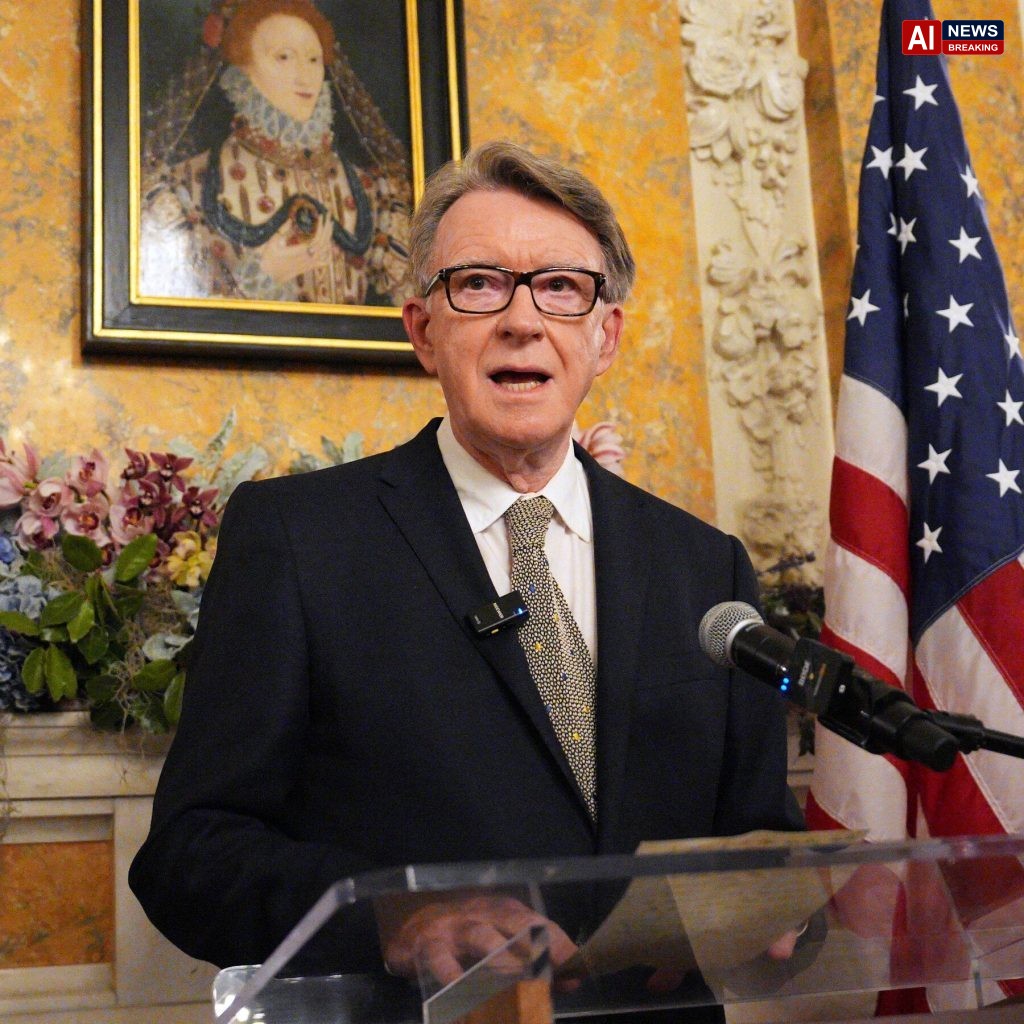
U.K. Releases Files on Peter Mandelson, Ambassador Tied to Jeffrey Epstein - AI News Breaking
releases files peter mandelson:
Releases Files on Peter Mandelson, Ambassador Tied to Jeffrey Epstein The National Archives published a trove of previously classified documents on Thursday, offering fresh insight into the hurried appointment of former Labour minister Peter Mandelson as the United Kingdom’s ambassador to the United Nations in 2006. The files, released under the Freedom of Information Act, reveal a series of internal memos, diplomatic cables and briefing notes that detail the political calculations behind Mandel’s selection, as well as the lingering connections he maintained with Global Counsel, a high‑profile lobbying firm that later came under scrutiny for its links to the late financier Jeffrey Epstein. The disclosure has reignited calls for a full parliamentary inquiry into the appointment process..
According to the newly released briefing papers, senior officials in the Foreign Office were initially uneasy about Mandel’s suitability for the UN post, citing his recent resignation from the Cabinet over a conflict‑of‑interest scandal involving the Al Yamamah arms deal. Nonetheless, a small group of senior Labour Party insiders, including then‑Prime Minister Tony Blair’s chief of staff, argued that Mandel’s extensive network of international contacts could prove invaluable in the diplomatic arena, especially as the UK prepared to push a controversial reform of the United Nations Security Council. The documents show that the decision to bypass the usual competitive vetting was taken in a series of emergency meetings held at Downing Street, where the urgency was framed as a matter of “national interest” and “strategic advantage”..
A memo dated 12 March 2006 notes that “the window for securing a credible candidate is closing; Peter Mandelson offers the requisite political capital and media savvy.” The memo also records a whispered concern that the rapid appointment might later be used by opposition parties as evidence of cronyism. What has drawn the most public attention, however, is the revelation that Mandel continued to receive advice from Global Counsel after his appointment. The lobbying firm, founded by former Conservative MP Sir James Miller, had previously represented a number of offshore financial interests linked to Epstein..
Internal correspondence between Mandel’s office and Global Counsel’s senior partners indicates that the ambassador sought guidance on how to navigate “sensitive diplomatic engagements” in the Middle East, a region where many of Epstein’s business partners were active. One of the declassified emails, dated 8 May 2006, shows Global Counsel’s head of government relations, Amelia Hart, offering to “provide a rapid response team” to help Mandel prepare for an upcoming UN debate on sanctions against Iran. The email references “leveraging existing relationships with key UN officials and private sector stakeholders” – language that mirrors the firm’s standard lobbying playbook..
While the correspondence stops short of confirming direct financial transactions, it about the extent to which a public servant relied on private counsel with opaque funding sources. The release also includes a report prepared by the Foreign Office’s Ethics Committee, which concluded that “no direct breach of the Ministerial Code” had occurred, but recommended that Mandel’s future interactions with lobbying entities be subject to “enhanced transparency measures”. The committee’s findings were signed off by Sir John Murray, the then‑Permanent Under‑ary, who later testified before the Commons Public Accounts Committee that the recommendations were “largely advisory” and not legally binding at the time..
Political analysts have seized on the timing of the disclosure, noting that it arrives amid a broader reckoning with the UK’s historical ties to Epstein’s network. Earlier this year, a parliamentary report detailed how several British aristocrats and financiers had facilitated Epstein’s access to elite circles, prompting renewed scrutiny of any British figure who had any professional overlap with his associates. The Mandelson files, therefore, have been framed by critics as part of a “pattern of institutional blindness” to the financier’s reach..
Labour’s shadow foreign ary, Emily Thompson, called the documents “a stark reminder of how political expediency can override rigorous vetting”. In a statement to the press, Thompson urged the government to establish an independent commission to examine all diplomatic appointments made between 2000 and 2010, arguing that “the public deserves confidence that our ambassadors are chosen on merit, not on back‑room deals.” The opposition’s demand for a broader inquiry has been echoed by several cross‑party MPs who have requested that the Intelligence and Security Committee review the files. The government, for its part, has responded cautiously..
A spokesperson for the Foreign, Commonwealth & Development Office said that “the release of these historic documents does not alter the legitimacy of Peter Mandelson’s service as ambassador, which was marked by significant contributions to climate‑change negotiations and the promotion of human rights.” The statement added that “any concerns about past interactions with lobbying firms are being taken seriously, and appropriate lessons have been incorporated into current appointment protocols.” Legal experts point out that while the files may expose questionable judgment, they do not necessarily constitute a breach of law. Professor David Klein of the University of London’s School of Law noted that “the Ministerial Code sets out standards of conduct, but enforcement relies largely on political accountability rather than criminal prosecution.” He warned that unless new evidence emerges showing illicit financial flows, the matter may remain confined to the realm of political censure rather than legal sanction. Meanwhile, Global Counsel has issued a brief response, stating that “the firm adheres to all UK lobbying regulations and has always acted within the bounds of the law.” In a letter to the BBC, the firm’s chief compliance officer, Richard Levy, insisted that.
Updated: November 26, 2026
The National Archives has released classified memos showing that Peter Mandelson’s 2006 UN ambassadorship was fast‑tracked by senior Labour officials despite doubts about his suitability, and that he continued to seek advice from Global Counsel, a lobbying firm later linked to Jeffrey Epstein. The revelations have reignited calls for a parliamentary probe into the appointment process and heightened scrutiny of the UK’s historic ties to Epstein‑associated networks.