
 Pond heron found dead in Coimbatore tests positive for avian influenza
 Pakistan’s leaders hail first astronaut aboard Chinese craft: ‘Proud one of us has gone into space’
 British tourist travels 29 hours from Mumbai to Amritsar for ₹5,461, rates Indian Railways 10/10 | Viral video
 The Supreme Court will decide whether assault weapons bans violate the Second Amendment
 A Critic of Beijing Falls Short in Taiwan’s Key Mayoral Election
Gorakhpur-bound train derails in Kanpur, no casualties
**
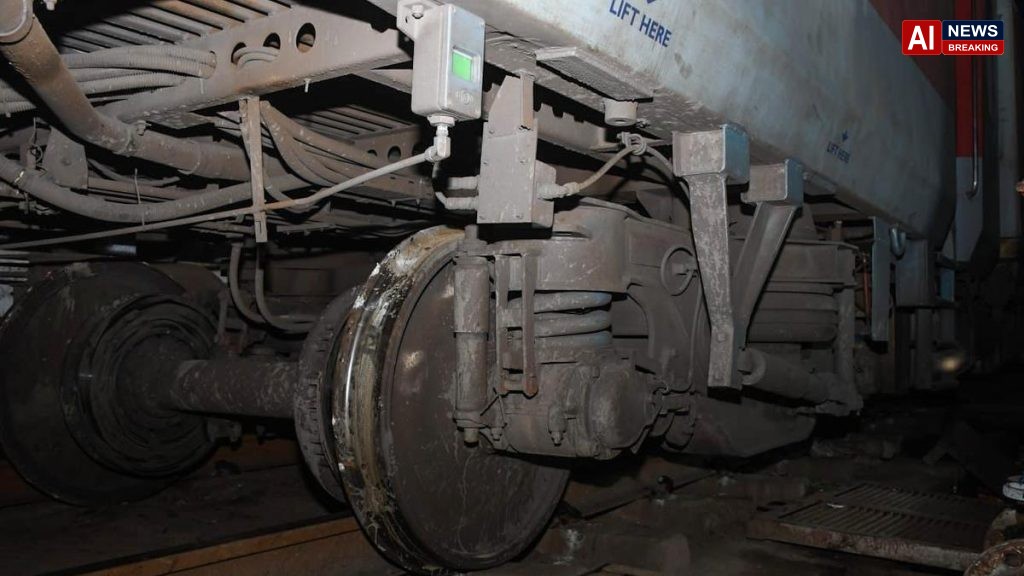
Gorakhpur-bound train derails in Kanpur, no casualties - AI News Breaking
gorakhpurbound train derails kanpur:
Gorakhpur‑bound train derails in Kanpur, no casualties A passenger train travelling from Lucknow to Gorakhpur derailed in the early hours of Tuesday near Kanpur, officials said. The incident occurred at approximately 02:45 a.m. local time, when the train was passing through the suburb of Ganga Nagar on the North Central Railway line..
Initial reports indicated that four of the train’s coaches came off the tracks, but there were no injuries among the roughly 300 passengers aboard those carriages. Railway authorities swiftly dispatched emergency crews and secured the site to prevent any further disruption. The train, identified as the 12428 Gorakhpur Express, was operating under normal schedule when the derailment took place..
According to the railway’s public relations office, the locomotive remained on the rails while the rear coaches detached and slid a short distance before coming to rest on the ballast. The driver applied the emergency brake immediately, bringing the train to a halt within a few minutes. No fire or hazardous material spill was reported, allowing emergency teams to focus on passenger safety and coach recovery..
Passengers described the event as a sudden jolt that caused the train to shudder violently. “It felt like a strong bump and then the lights flickered,” said Rajesh Kumar, a 45‑year‑old shopkeeper from Kanpur who was travelling to Gorakhpur for a family function. “The train stopped quickly, and the staff helped us get out of the coaches safely.” Such accounts align with the official statement that the train’s braking system functioned correctly, preventing a more serious outcome..
Railway officials confirmed that all passengers were evacuated from the derailed coaches without incident. Temporary shelters were set up on the platform, and provisions of water and food were distributed by the local railway police and nearby vendors. The Railway Protection Force (RPF) coordinated the orderly movement of passengers to adjacent, unaffected coaches, ensuring that those whose travel plans were disrupted could continue their journey once the line was cleared..
The North Central Railway zone has launched an investigation into the cause of the derailment. A team of engineers and safety inspectors arrived on site within an hour of the incident to examine the track, the derailed coaches, and the signalling equipment. Early speculation points to a possible track fault, but officials cautioned against premature conclusions, noting that a comprehensive forensic analysis would be required to determine whether factors such as rail fatigue, maintenance lapses, or external interference played a role..
The railway ministry released a statement emphasizing its commitment to passenger safety and its “zero‑tolerance” approach to incidents that could jeopardise lives. “We are closely monitoring the situation and will take all necessary corrective measures,” the statement read. It also announced that compensation would be offered to affected passengers in line with standard railway protocols, and that a detailed report would be made public once the investigation is completed..
Local authorities in Kanpur praised the swift response of railway staff and emergency services. The city’s Commissioner of Police, Anil Sharma, highlighted the coordinated effort between the RPF, fire brigade, and medical teams, which ensured that no casualties occurred despite the sudden nature of the derailment. “The prompt actions taken by the railway personnel saved lives and prevented panic among commuters,” Sharma said in a briefing to the press..
Railway unions, while acknowledging the fortunate outcome, called for a review of maintenance schedules across the network. The All India Railwaymen’s Federation (AIRF) issued a statement urging the railway administration to accelerate track inspection programs, especially on high‑traffic routes such as the Lucknow‑Gorakhpur corridor. The union’s president, Suresh Prasad, stressed that regular audits and timely replacement of worn rails are essential to avert future incidents..
The incident has raised broader concerns about the state of India’s railway infrastructure, which carries over 23 million passengers daily. Recent years have seen a series of derailments and accidents, prompting calls from civil society and political parties for increased investment in modern signalling systems, automated track monitoring, and faster adoption of high‑speed rail technology. Analysts note that while the rail network has expanded significantly, maintenance budgets have not always kept pace with the growth in traffic..
In response to these concerns, the Ministry of Railways announced plans to accelerate the rollout of its “Mission Zero Accident” program, which aims to reduce railway accidents to nil within the next five years. The program includes the deployment of advanced track‑monitoring drones, installation of anti‑collision devices, and enhanced training for locomotive crew. Officials indicated that the findings from the Kanpur derailment would feed directly into the program’s risk‑assessment models..
Meanwhile, passengers affected by the derailment are expected to resume their journeys by late afternoon, as crews work to re‑railing the coaches and conduct safety checks on the line. The railway has scheduled additional trains on the Lucknow‑Gorakhpur route to accommodate those who missed connections. Local vendors and transport operators have also mobilised to assist stranded travelers, offering shuttle services to nearby stations where alternative trains are available..
As the investigation proceeds, the incident serves as a reminder of the challenges faced by one of the world’s busiest rail networks. While the lack of casualties is a relief, the derailment underscores the necessity for rigorous maintenance regimes and swift emergency response mechanisms. The railway’s handling of the event, from rapid evacuation to transparent communication, will likely be scrutinised as a benchmark for future incident management across India’s extensive rail system..
The near‑miracle of no fatalities turns the Kanpur derailment into a litmus test for India’s “Mission Zero Accident”—its success will hinge on whether swift emergency drills can compensate for chronic under‑investment in track upkeep.
If the investigation confirms maintenance lapses, the episode could galvanize political pressure to reallocate funds toward automated monitoring, reshaping the railway’s growth model from expansion‑first to safety‑first.






