
 Pond heron found dead in Coimbatore tests positive for avian influenza
 Pakistan’s leaders hail first astronaut aboard Chinese craft: ‘Proud one of us has gone into space’
 British tourist travels 29 hours from Mumbai to Amritsar for ₹5,461, rates Indian Railways 10/10 | Viral video
 The Supreme Court will decide whether assault weapons bans violate the Second Amendment
 A Critic of Beijing Falls Short in Taiwan’s Key Mayoral Election
Pope Leo XIV visits Peru, meeting former homeland leaders.
**
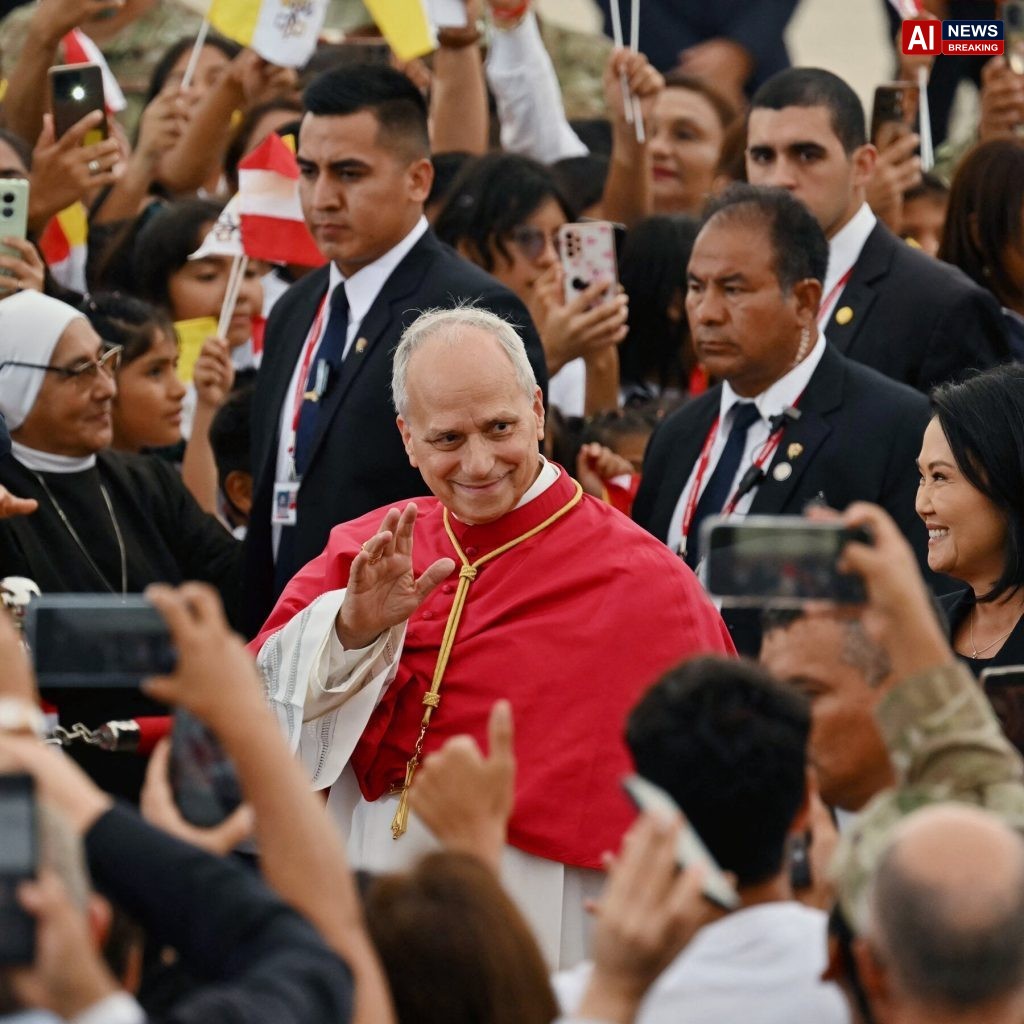
Pope Leo XIV Goes Home to Peru, Meeting Ghosts of His Past - AI News Breaking
pope leoxiv visits peru:
Pope Leo XIV Goes Home to Peru, Meeting Ghosts of His Past The world watched with a mixture of curiosity and reverence as Pope Leo XIV, the first pontiff of South American origin in centuries, stepped onto Peruvian soil for the first time since his ascension to the papacy. The ceremony, staged at the historic Plaza de Armas in Lima, was attended by dignitaries, clergy and thousands of faithful who lined the streets to catch a glimpse of the pontiff in his native land. While many saw the visit as a symbolic bridge between the Vatican and Latin America, others sensed an undercurrent of political tension, given the pope’s long‑standing criticism of Peru’s recent history..
Born José Ramiro Paredes in the Andean town of Huancayo, Leo XIV spent two decades as a parish priest and university lecturer before renouncing his Peruvian citizenship to accept the papal mantle. His early years in the country were marked by activism against the authoritarian policies of former President Alberto Fujimori, whose “hard‑line” economic reforms and human‑rights record Leo publicly condemned. Those protests earned him both admiration among the poor and enmity from the political establishment—a dichotomy that would resurface during his historic return..
President Keiko Fujimori, herself a controversial figure and the daughter of the former dictator, greeted the pope at the airport, flanked by a military honor guard and a delegation of ministers. In a carefully crafted joint statement, she praised Leo’s “spiritual leadership” while emphasizing Peru’s “commitment to reconciliation and justice.” Observers noted the delicate choreography of the encounter: a warm handshake followed by a brief, scripted exchange that avoided any direct reference to the past grievances that had once driven the pontiff into exile. The image was broadcast worldwide, underscoring the diplomatic tightrope both leaders walked..
The pope’s itinerary included a visit to the Sanctuary of the Virgin of Andahuaylazo, a shrine that had become a pilgrimage site during his early ministry. There, he knelt before a modest altar, offering prayers for the victims of the internal conflict that scarred the nation in the 1990s. In his homily, delivered in both Spanish and Quechua, he invoked the memory of those who “suffered in silence” and called for “a renewed commitment to truth, forgiveness, and the dignity of every human being.” The sermon, broadcast on Vatican Radio, resonated deeply with a populace still grappling with the legacy of state‑sanctioned violence..
While the religious aspects of the trip were widely praised, the political implications provoked heated debate in the Peruvian Congress. Opposition lawmakers accused President Fujimori of “whitewashing” her father’s legacy by sharing the stage with a pontiff who once denounced the regime’s abuses. In response, the president’s office released a transcript of a private meeting between the pope and former Truth and Reconciliation Commission members, suggesting that the Vatican’s involvement could lend weight to ongoing judicial inquiries into past crimes..
The move sparked speculation that the visit might accelerate pending prosecutions against former security officials. International reactions were equally varied. The United Nations ary‑General sent a congratulatory message, highlighting the pope’s “unwavering advocacy for the marginalized.” Meanwhile, the United States Department of State issued a statement noting the importance of “strengthening ties between the Holy See and Peru” and expressing hope that the visit would foster “regional stability.” Critics in Europe, however, warned that the Vatican’s renewed focus on Latin America risked politicising its spiritual mission, especially as Pope Leo continues to speak out on issues ranging from climate change to economic inequality..
Back in Lima, crowds gathered in the city’s main cathedral for a solemn Mass celebrated by Leo XIV himself. The liturgy incorporated traditional Andean instruments and indigenous chants, reflecting the pope’s long‑standing effort to integrate local culture into the universal Church. In his homily, he spoke of “a Church that walks hand‑in‑hand with the people, listening to the whispers of the mountains and the cries of the city’s poorest.” The message struck a chord with many attendees, who saw it as validation of their own struggles and aspirations..
The visit also featured a round‑table discussion with Peruvian religious leaders, scholars, and civil‑society representatives. Topics ranged from the role of the Church in post‑conflict healing to the challenges of migration and climate‑induced displacement in the Amazon basin. Leo XIV emphasized the need for “ethical stewardship of the Earth” and urged governments to adopt policies that protect indigenous territories..
The dialogue, streamed live, was hailed by environmental NGOs as a rare instance of high‑level religious endorsement for ecological justice. In a poignant moment, the pope visited the former detention centre of Villa El Alto, a site associated with political prisoners during the 1990s. He laid a white rose on the ground and whispered a prayer for the “souls still lingering in these walls.” Survivors of the regime’s brutality, some of whom attended the ceremony, reported feeling a sense of closure, while others cautioned that symbolic gestures must be matched by concrete legal actions..
Their mixed reactions underscored the complexity of reconciling memory with accountability. Throughout the trip, the Vatican’s press office released a series of photographs showing Leo XIV sharing meals with local families, attending a traditional Pachamama ceremony, and engaging in informal conversations with schoolchildren. These images were strategically dissemin.
Updated: November 12, 2026
Pope Leo XIV’s first visit to Peru since becoming pontiff turned into a tightly staged diplomatic showcase, as he paid tribute to victims of the 1990s conflict while navigating lingering tensions with the Fujimori family’s political legacy. His Andean‑flavoured liturgies, calls for justice and ecological stewardship, and symbolic gestures at historic sites sparked both heartfelt admiration and fierce debate over the Vatican’s role in Peru’s reconciliation process.
Insight: Pope Leo XIV’s return is less a pilgrimage than a diplomatic gamble, signaling Vatican ambition to use its moral cachet to pry open Peru’s dusty tribunal of past abuses. By walking the same streets that once echoed his protests, he invites a quiet reckoning that may either pave the way for





