Pond heron found dead in Coimbatore tests positive for avian influenza
 Pakistan’s leaders hail first astronaut aboard Chinese craft: ‘Proud one of us has gone into space’
 British tourist travels 29 hours from Mumbai to Amritsar for ₹5,461, rates Indian Railways 10/10 | Viral video
 The Supreme Court will decide whether assault weapons bans violate the Second Amendment
 A Critic of Beijing Falls Short in Taiwan’s Key Mayoral Election
US officials suspect Chinese
**
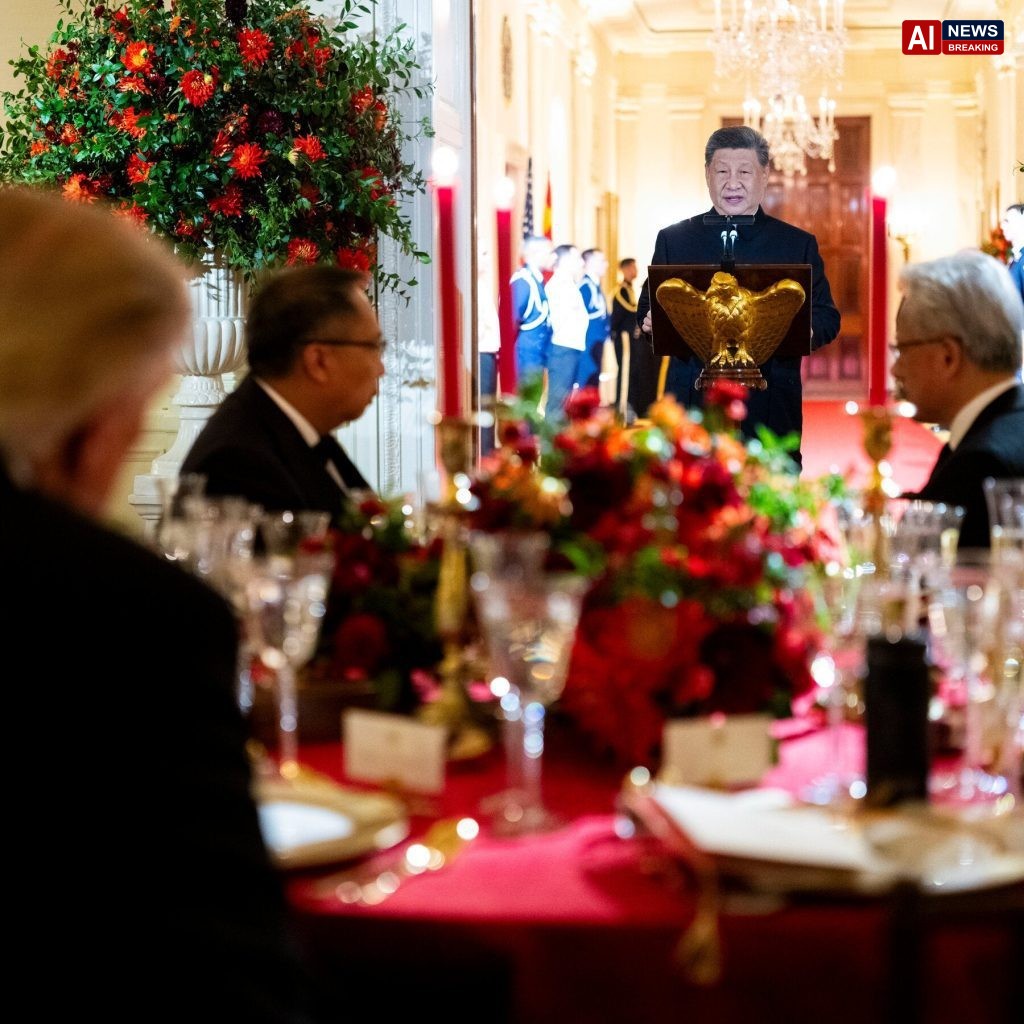
US officials suspect Chinese - AI News Breaking
Nvidia Scandal Unveils a Fierce Spy War Raging Behind Trump and Xi’s Diplomacy The United States’ suspicion that the chief executive of chip‑maker Nvidia is a target of Chinese intelligence agencies has added a new, unsettling layer to an already fraught relationship between Washington and Beijing. Sources familiar with the matter say that the allegation emerged after a joint FBI‑CIA review of the company’s supply‑chain security, prompted by a series of unexplained data‑access requests from overseas servers. While the investigation is still in its early stages, the very fact that a high‑profile American tech leader is being singled out for espionage highlights the depth of mistrust that now underpins even the most routine commercial interactions..
Nvidia, whose graphics‑processing units (GPUs) power everything from video games to artificial‑intelligence super‑computers, has long been a strategic asset for the United States. The firm’s recent partnership with the Department of Defense to develop next‑generation AI for autonomous weapons has placed it squarely in the cross‑hairs of foreign intelligence services eager to acquire cutting‑edge technology. Analysts say that Beijing’s interest is not merely academic; acquiring Nvidia’s blueprints could accelerate China’s own AI ambitions, narrowing a gap that the United States has traditionally guarded jealously..
The allegations were first reported by a senior official at the Department of Commerce, who asked for anonymity to avoid compromising ongoing operations. According to the official, the FBI intercepted encrypted communications suggesting that a Chinese operative had attempted to infiltrate Nvidia’s internal network via a third‑party contractor in Taiwan. While no breach has been confirmed, the agency’s decision to place the company under heightened surveillance underscores the seriousness with which Washington views the threat..
In Washington, the news has reverberated through the halls of power, prompting a flurry of questions from both Republicans and Democrats. Senate Intelligence Committee chair Mark Warner (D‑VA) called for a “full‑scale review of our export‑control regime” and warned that “the very fabric of our technological leadership is at risk.” Meanwhile, House Speaker Kevin McCarthy (R‑CA) urged the administration to “take decisive action against any foreign actors who think they can prey on American ingenuity.” Both sides agree that the matter transcends ordinary corporate security and touches on national sovereignty. The Chinese government, for its part, has dismissed the accusations as “baseless smears” designed to stoke anti‑China sentiment ahead of the upcoming G20 summit in Rio de Janeiro..
A spokesperson for the Ministry of State Security said that “any claim that China seeks to co‑opt foreign technology through illicit means is a gross distortion of reality.” The Ministry also warned that “unfounded allegations will only deepen the mistrust that hampers constructive dialogue between our leaders.” Diplomats say the scandal arrives at a delicate juncture in U.S.–China relations, where President Joe Biden’s team is attempting to steady ties after a series of confrontations over trade tariffs, the South China Sea, and human‑rights concerns. The newly appointed Special Envoy for Technology, Dr. Lina Patel, has been tasked with navigating the fallout, balancing the need for security with the desire to keep communication channels open..
“We cannot afford a spiral of suspicion that derails diplomatic progress,” Patel told reporters in a brief press conference on Tuesday. The incident also casts a spotlight on the broader geopolitical contest for dominance in artificial intelligence. Recent reports from think‑tanks such as the Center for a New American Security suggest that China is investing billions of dollars annually to close the AI gap, targeting firms like Nvidia for both talent and technology..
In response, the United States has accelerated its own AI initiatives, including the National AI Initiative Act, which seeks to funnel additional funding into domestic research while tightening export controls on key components. Industry insiders warn that the fallout could have a chilling effect on the collaborative spirit that has traditionally driven innovation in the semiconductor sector. “Cross‑border partnerships have been the lifeblood of chip development for decades,” says Dr..
Mei Huang, a professor of electrical engineering at Stanford University. “If companies start viewing every foreign interaction as a potential espionage risk, we risk fragmenting the global supply chain and slowing progress across the board.” Nvidia’s board of directors held an emergency meeting on Wednesday, issuing a statement that it “takes all allegations of espionage seriously” and that the company is cooperating fully with U.S. The statement emphasized that the firm has “robust cybersecurity protocols” and “zero‑tolerance” policies for any insider threats..
However, insiders note that the company has recently expanded its R&D footprint in Shenzhen, a move that some see as a pragmatic business decision but others view as a strategic vulnerability. Legal experts point out that if formal charges are eventually filed, they could set a precedent for how the United States prosecutes alleged foreign espionage involving private‑sector executives. Professor Alan Jacobs of Georgetown Law explains that “the line between corporate espionage and national security breaches is increasingly blurred in the tech era, and the courts will have to grapple with novel evidentiary standards.” He adds that any conviction could lead to harsher penalties, including asset seizures and travel bans for the individuals involved..
The scandal has also reignited debate within the United States about the balance between open‑innovation ecosystems and the need for stricter oversight. Tech‑industry lobbyists argue that overly aggressive investigations could deter foreign talent from contributing to American.
Updated: November 12, 2026