
 Pond heron found dead in Coimbatore tests positive for avian influenza
 Pakistan’s leaders hail first astronaut aboard Chinese craft: ‘Proud one of us has gone into space’
 British tourist travels 29 hours from Mumbai to Amritsar for ₹5,461, rates Indian Railways 10/10 | Viral video
 The Supreme Court will decide whether assault weapons bans violate the Second Amendment
 A Critic of Beijing Falls Short in Taiwan’s Key Mayoral Election
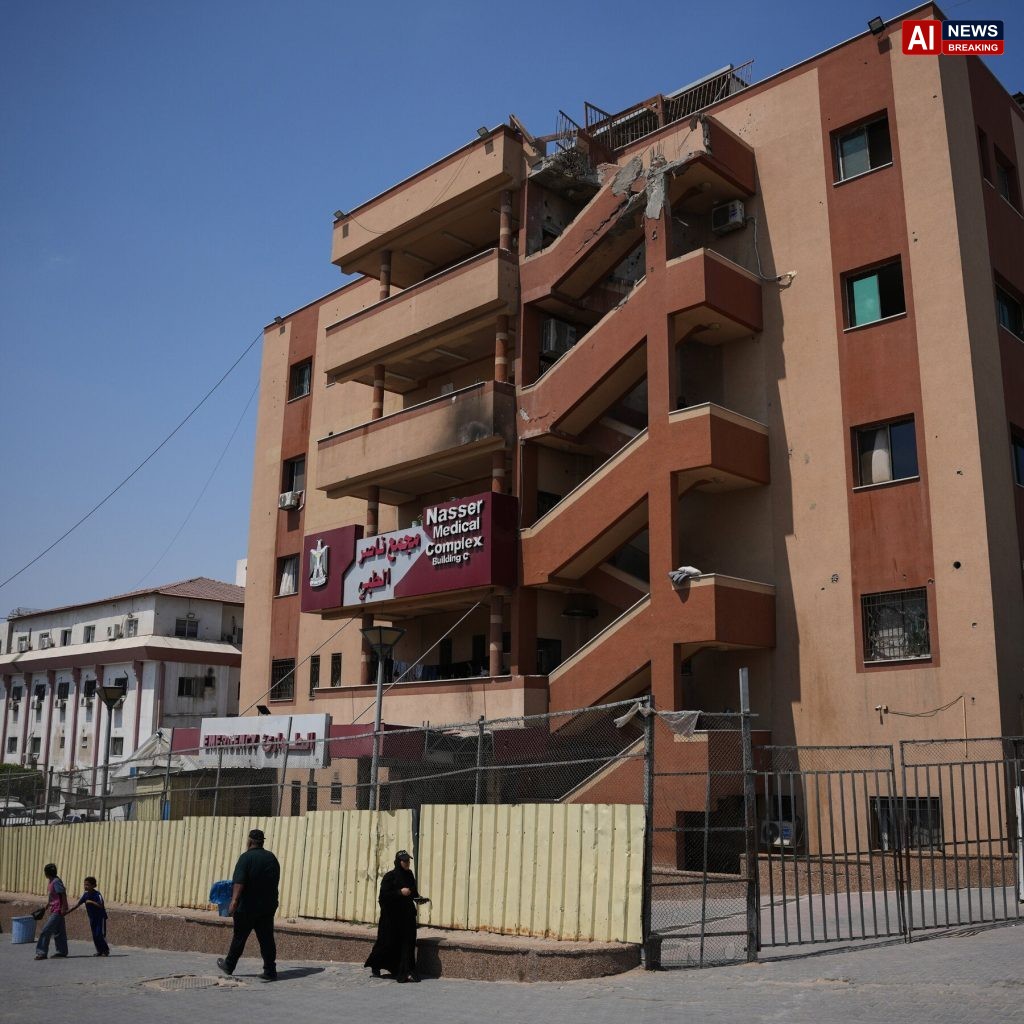
Strike on Gaza Hospital Kills at Least 6 and Injures 20, Rescuers Say
Strike on Gaza Hospital Kills at Least 6 and Injures 20, Rescuers Say - AI News Breaking
strike gaza hospital kills:
The first strike on a Gaza hospital in the summer of 2025 has left at least six people dead and 20 injured, according to emergency responders on the ground. The incident took place at Nasser Hospital in the southern city of Khan Younis, a facility that has been operating under the watchful eye of international medical organisations since the cease‑fire that was brokered earlier this year. Despite the agreement, the attack has once again drawn attention to the fragility of civilian infrastructure in the conflict zone.Witnesses reported that the building was hit by a high‑explosive projectile that exploded on the second floor, creating a shrapnel‑laden blast that tore through the operating theatre and the maternity ward..
The explosion shattered windows, collapsed structural beams, and turned the normally bustling ward into a scene of chaos and urgent medical need. Emergency teams rushed to the scene in the minutes that followed, but the damage was already extensive.A surgeon who was working in the operating theatre at the time was among the casualties. He was described as a seasoned specialist who had spent the previous decade volunteering in mobile clinics before joining the permanent staff of Nasser..
According to his colleagues, the man was taken to the hospital’s emergency department as a casualty, but he was pronounced dead at the scene. The loss has been described as a “devastating blow” to the already stretched medical team, who were already working around the clock to treat patients with chronic illnesses and injuries from the conflict.In addition to the surgeon, a senior official from the hospital’s administration was also injured. He was involved in coordinating the delivery of supplies and medical equipment when the strike occurred..
The official sustained a severe head injury, and his condition remains critical as the hospital’s medical staff continue to treat patients in the aftermath of the attack. His role had been pivotal in ensuring that the facility maintained a steady flow of medication and necessary equipment, a task that proved especially challenging given the supply chain disruptions that have plagued the region since the conflict’s escalation earlier this year.A third victim, a disabled patient who had been receiving physiotherapy for a spinal cord injury, was struck in the leg by a fragment of the bomb’s casing. He suffered a severe fracture and is now in critical condition in the intensive care unit..
His family, who live in a neighboring village, have expressed their horror at the attack. “He was only there to receive treatment. He should not have been in that place at that time,” said the patient’s sister, who was with him at the time of the explosion..
Her voice carried a mix of grief and disbelief, a sentiment echoed by many families who have seen their loved ones suffer as a result of the conflict.The strike has raised immediate questions about the compliance of all parties with the cease‑fire agreement that was reached in February 2025. The agreement, brokered by the United Nations and a coalition of Middle Eastern states, called for an immediate cessation of hostilities and a halt to all offensive operations. It also established a humanitarian corridor that was intended to allow medical and aid workers to operate free of threat..
The fact that a military target, or a misidentified one, was struck in a civilian setting appears to be a breach of the cease‑fire terms.In the hours following the incident, the hospital’s staff began to mobilise a rapid response protocol that had been established in the aftermath of the earlier waves of violence. This included the deployment of mobile medical units, the arrangement of temporary surgical tents, and the re‑allocation of staff to cover critical areas. The medical staff had to improvise in the face of damaged infrastructure and limited resources, a scenario that has become all too familiar for healthcare workers in Gaza..
Their resilience, however, was evident as they triaged patients, performed emergency surgeries, and coordinated the evacuation of the most severely injured to larger facilities in the north.International organisations have reacted swiftly. The World Health Organization issued a statement condemning the attack and calling for a renewed commitment to the cease‑fire agreement. The statement emphasised the importance of protecting medical facilities and personnel in conflict zones..
It also urged the parties to the conflict to respect the inviolability of hospitals and to ensure that all civilians can receive the care they need. The statement was echoed by the International Committee of the Red Cross, which added that it would increase its presence in the region to monitor compliance with international humanitarian law.The Israeli Defence Forces (IDF) issued a statement earlier today, stating that the strike was a mistake and that the missile was fired at what was believed to be a legitimate military target. The statement included an apology and promised an internal investigation into the incident..
Meanwhile, the Palestinian Authority’s Ministry of Health issued a statement that condemned the attack, noting that the hospital had been listed on the international registry of protected sites. The statement called for the protection of all medical facilities and demanded accountability for the perpetrators.The local community in Khan Younis has already begun to rally in support of the hospital and its staff. A crowd of several thousand residents gathered outside the damaged building to protest the attack and to call for the protection of civilian infrastructure..
They carried signs that read “No more attacks on hospitals” and “We demand justice.” The demonstrators, many of whom had lost family members in the conflict, demanded that the parties to the cease‑fire adhere to their obligations. Their chants echoed throughout the night, adding a human voice to the growing chorus of condemnation.The Nasser Hospital, which has been a key health provider for the region since its founding, faces a daunting task of recovery. The building has suffered significant structural damage, and many of its medical supplies have been destroyed or rendered unusable..
The hospital’s administration is working closely with international aid agencies to secure the necessary resources for reconstruction. They are also coordinating with the United Nations to ensure that the new facility will be equipped to handle a surge of patients and that it will be protected from further attacks. The hospital’s director, who was present at the site when the explosion occurred, is hopeful that the support from international partners will allow them to restore services in a timely manner.In the days to come, the international community will be watching closely to see whether the cease‑fire holds and whether the parties will honour the commitments made..
The attack on Nasser Hospital serves as a stark reminder that the cease‑fire, while a step towards stability, remains fragile. The loss of life and the disruption to essential medical services have underscored the urgency of enforcing the provisions that protect civilians. For the residents of Khan Younis and the wider Gaza Strip, the hope remains that the international community will act swiftly to prevent further tragedies and to rebuild the lives that have been shattered..
Updated: November 12, 2026
A strike on Nasser Hospital in Khan Younis killed six and wounded 20, including a senior surgeon, amid a cease‑fire that has already been strained by repeated attacks on civilian sites. International bodies have condemned the blast, while the Israeli military claims a mistaken target, leaving the wounded community and hospital staff scrambling to recover and rebuild.
Insight: The strike exposes a fragile cease‑fire that treats civilian safeguards as bargaining chips rather than inviolable rights, eroding trust and escalating the humanitarian crisis.
If accountability remains absent, the international community risks becoming a silent witness to repeated violations, turning the region’s fragile peace into a perpetual tinderbox.






