
 Pond heron found dead in Coimbatore tests positive for avian influenza
 Pakistan’s leaders hail first astronaut aboard Chinese craft: ‘Proud one of us has gone into space’
 British tourist travels 29 hours from Mumbai to Amritsar for ₹5,461, rates Indian Railways 10/10 | Viral video
 The Supreme Court will decide whether assault weapons bans violate the Second Amendment
 A Critic of Beijing Falls Short in Taiwan’s Key Mayoral Election
Bigger and more-frequent wildfires threaten water supplies across the US
**
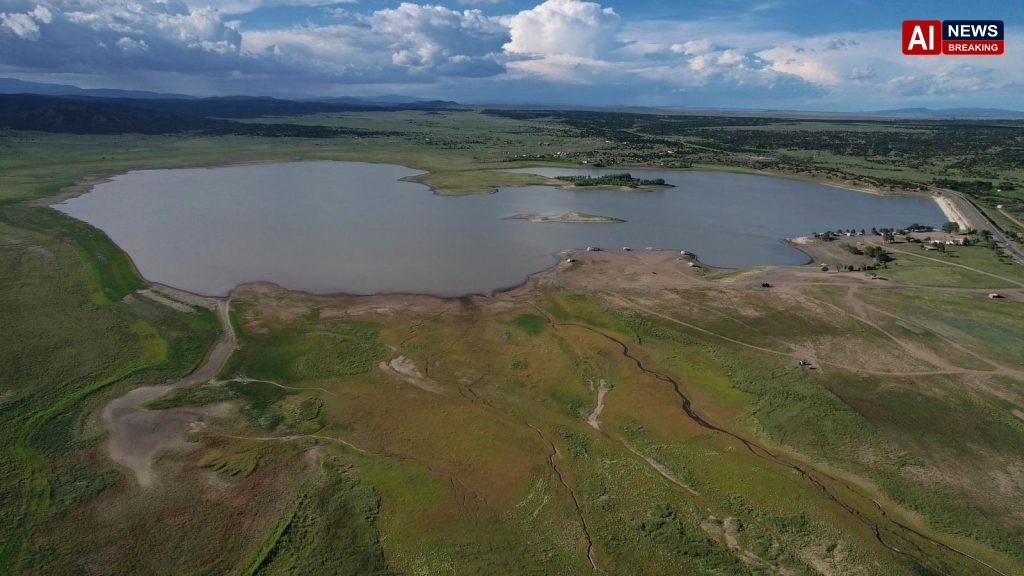
Bigger and more-frequent wildfires threaten water supplies across the US - AI News Breaking
bigger morefrequent wildfires threaten:
The United States is confronting an unprecedented convergence of wildfire activity and water scarcity, as a record‑breaking 9.2 million acres have burned so far this season, according to the National Interagency Fire Center. The sheer scale of the blazes, which have erupted across the West, the Southwest and the Southeast, is reshaping the nation’s water landscape, prompting officials to warn of dwindling supplies, contaminated streams and long‑term ecosystem damage. While the immediate threat of flames receding behind fire lines often dominates headlines, scientists and water managers say the lingering effects of smoke, ash and altered catchments could prove just as consequential for drinking water, agriculture and hydroelectric power generation.The wildfires are not only larger but also more frequent, a trend researchers attribute to a combination of hotter, drier summers, expanding urban‑wildland interfaces and the lingering legacy of past fire suppression policies..
In California alone, the 2024 fire season has already eclipsed the cumulative acreage burned in the previous five years. Similar patterns are emerging in Colorado, Montana and the Pacific Northwest, where consecutive months of high‑pressure systems have kept precipitation well below average. These conditions have left forests and grasslands tinder‑dry, allowing fires to ignite quickly and spread rapidly across diverse terrain.When fire sweeps through a watershed, the immediate impact on water quality can be stark..
Intense heat volatilises organic compounds, while the combustion of vegetation releases fine particulate matter and heavy metals into the atmosphere. As the fire front passes, ash and soot settle on soils, roads and riverbanks, creating a thin but potent layer of contaminants. Rainfall, even modest, can then wash these residues into streams, raising turbidity and introducing nutrients such as nitrogen and phosphorus that fuel algal blooms..
In the Sierra Nevada, for example, water treatment plants have reported spikes in turbidity that forced temporary shutdowns and required costly additional filtration steps.Beyond the chemical changes, the physical structure of watersheds is being reshaped. Burned slopes lose the vegetation that stabilises soil, increasing the risk of landslides and debris flows during subsequent storms. These events can clog reservoirs, damage intake structures and deposit sediment that reduces storage capacity..
The recent Creek Fire in Oregon, which charred over 300,000 acres, triggered a series of mudslides that filled the headwaters of the Willamette River with sediment, prompting the U.S. Army Corps of Engineers to lower water releases to protect downstream infrastructure. Such reductions, while necessary for safety, translate directly into reduced water availability for farmers and municipalities during the already dry summer months.The interplay between wildfire and water supply also reverberates through the energy sector..
Hydroelectric plants, which depend on consistent flow and clear water, face operational challenges when reservoirs become silted or when water quality deteriorates. The Federal Energy Regulatory Commission has warned that increased sediment loads can erode turbine blades and reduce efficiency, potentially leading to higher electricity costs. In the Pacific Northwest, where a significant portion of power comes from hydroelectric sources, utilities are already adjusting generation schedules to account for lower reservoir levels caused by both reduced snowfall and heightened evaporation linked to a warming climate.Communities downstream of burned areas are confronting a new set of public‑health concerns..
Elevated concentrations of polycyclic aromatic hydrocarbons (PAHs) and other carcinogenic compounds have been detected in drinking‑water samples after major fires in Colorado and Arizona. While treatment plants are generally capable of removing many of these pollutants, the added burden can strain aging infrastructure, especially in rural locales that lack robust filtration systems. Public‑health officials in several counties have issued boil‑water advisories and advised residents to use bottled water until water quality tests return to safe levels.In response to the mounting crisis, federal and state agencies are expanding monitoring networks and investing in resilience measures..
Geological Survey has deployed additional sensors to track real‑time changes in water chemistry across fire‑affected basins, while the Environmental Protection Agency is revising guidelines for emergency water treatment after wildfires. Some western states are accelerating the adoption of “green” infrastructure, such as vegetated swales and retention ponds, to capture runoff and filter contaminants before they reach major waterways. These interventions aim to mitigate both immediate water‑quality issues and longer‑term watershed degradation.Nevertheless, experts caution that mitigation alone will not offset the scale of the challenge..
Elena Morales, a hydrologist at the University of Utah, emphasizes that the cumulative impact of repeated burns can fundamentally alter a basin’s hydrologic cycle. “When a forest burns, you lose not only the canopy that intercepts rainfall but also the organic matter that helps the soil retain water,” she explained. “Over time, the watershed becomes less resilient, delivering less runoff to streams and recharging groundwater at a slower rate, which compounds water scarcity for communities that already rely on marginal supplies.”Policy makers are therefore grappling with the need to integrate fire management into broader water‑resource planning..
The 2024 Water Resources Development Act, pending congressional approval, proposes a coordinated framework that would allocate funds for post‑fire watershed rehabilitation, incentivise forest thinning projects that reduce fire intensity, and support research into fire‑resistant water‑treatment technologies. Proponents argue that such a holistic approach could safeguard water supplies while also addressing the root causes of more severe fire seasons, such as climate change and unsustainable land use.As the fire season progresses, the United States faces a stark reality: the health of its water systems is increasingly intertwined with the behavior of its flames. Communities, utilities and policymakers must reckon with a future where wildfires are not isolated disasters but recurring events that shape the quantity and quality of the water they depend upon..
The coming months will test the nation’s ability to adapt, innovate and protect a resource that, in the wake of burning forests, may prove as vulnerable as the landscapes themselves..
Updated: November 13, 2026
Summary: Wildfires this season have scorched a record 9.2 million acres, leaving ash, sediment, and toxic runoff that threaten water quality and supply across the West, Southwest, and Southeast.
Authorities are ramping up monitoring and green‑infrastructure projects while lawmakers push a Water Resources Development Act to weave fire management into long‑term water‑resource planning.
Wildfires are turning water scarcity from a seasonal nuisance into a chronic crisis, with ash‑laden runoff turning clean rivers into toxic rivers overnight. If we don’t weave fire‑management into water‑policy, we risk turning our most precious resource into a ticking time‑bomb for future generations






