
 Pakistan’s leaders hail first astronaut aboard Chinese craft: ‘Proud one of us has gone into space’
 British tourist travels 29 hours from Mumbai to Amritsar for ₹5,461, rates Indian Railways 10/10 | Viral video
 The Supreme Court will decide whether assault weapons bans violate the Second Amendment
 A Critic of Beijing Falls Short in Taiwan’s Key Mayoral Election
 EPA says no rise in contamination after Army detonates lead azide stockpile in Iowa
‘Get Focused on London’: How Iran’s Agents Attacked European Targets
**
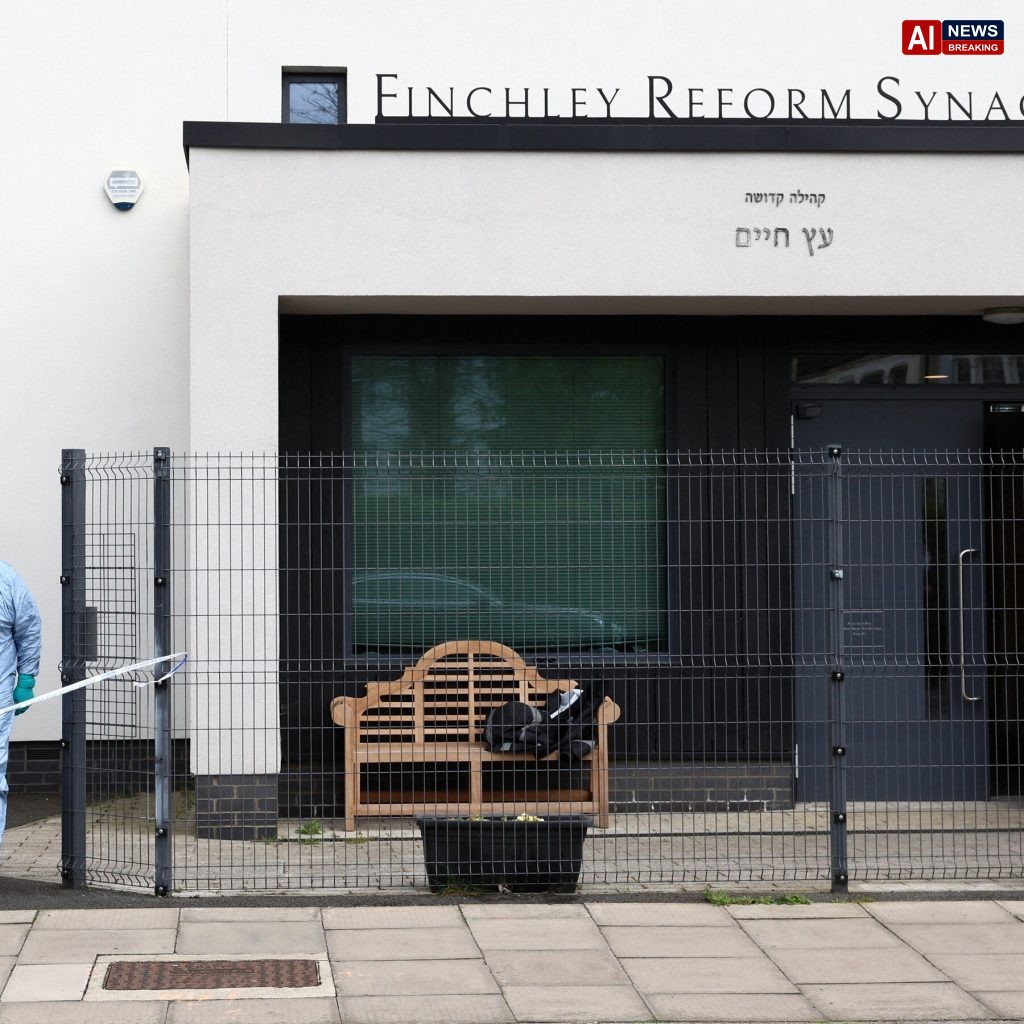
‘Get Focused on London’: How Iran’s Agents Attacked European Targets - AI News Breaking
focused london irans agents:
‘Get Focused on London’: How Iran’s Agents Attacked European Targets A wave of assaults in Britain and elsewhere in the spring sowed fear across Europe. Prosecutors shed new light on how Iran took aim at U.S. allies, using a network of covert operatives to strike at diplomatic, commercial and civilian sites..
The revelations come after a series‑long investigation by the Crown Prosecution Service, which has now disclosed details of the planning, funding and execution of the attacks. The findings illuminate a broader strategy aimed at pressuring Western governments over Tehran’s nuclear programme and regional ambitions. The first incident, a bomb‑laden package sent to a London embassy on 12 March, set off a small explosion that wounded two staff members and caused extensive property damage..
CCTV footage captured a courier in a grey hoodie slipping the parcel into the building’s reception. Forensic analysis later traced the device’s components to a cache of Iranian‑sourced materials smuggled through the United Kingdom’s ports. The attack marked a dramatic escalation from previous low‑level espionage activities..
Within weeks, a series of coordinated assaults unfolded in Paris, Berlin and Madrid. In each city, Iranian‑aligned operatives targeted think‑tanks, journalists and members of the Iranian diaspora who were vocal critics of the regime. The assaults ranged from physical assaults to sophisticated cyber‑intrusions that compromised email accounts and stole confidential documents..
Authorities believe the operations were overseen by Iran’s Ministry of Intelligence and Security, which allegedly issued direct orders to “neutralise hostile voices” across Europe. British investigators uncovered a “safe house” in West London that acted as a hub for the network. The property, owned by a front company registered in the Cayman Islands, housed weapons, falsified passports and encrypted communications equipment..
Inside, agents trained in bomb‑making, surveillance and social engineering prepared for the spring offensive. The house’s location, close to several transport links, allowed operatives to move quickly between the capital and continental Europe without drawing suspicion. Financial trails revealed that the operation was funded through a labyrinth of offshore accounts and charitable foundations..
Money was funnelled from Iran’s Revolutionary Guard Corps into European banks via shell corporations in the United Arab Emirates and Switzerland. These funds paid for procurement of explosives, rental of safe houses and the recruitment of local assets, many of whom were members of the Iranian expatriate community seeking financial gain. The complexity of the scheme has prompted calls for tighter scrutiny of charitable donations linked to high‑risk jurisdictions..
The Crown Prosecution Service’s statement highlighted that the attacks were part of a broader “Get Focused on London” campaign, a phrase allegedly used in internal memos to prioritise the United Kingdom as the primary target for retaliation. Analysts say the phrase reflects Tehran’s perception of Britain as a gateway to Europe and a key ally of the United States. By striking in London, Iran intended to send a stark warning to other NATO members that any support for sanctions or military pressure would be met with direct action on European soil..
Legal experts note that the case presents an unprecedented test of the UK’s ability to prosecute foreign‑state actors for terrorism. While the perpetrators were charged under the Terrorism Act 2000, prosecutors also invoked the Foreign Intelligence (Counter‑Intelligence and Security) Act to address the state‑directed nature of the crimes. Defense lawyers argue that the evidence, much of it derived from classified intelligence, may breach the defendants’ right to a fair trial..
The courts will have to balance national security concerns with the standards of open justice that underpin the British legal system. In the wake of the revelations, European Union officials have called for a coordinated response. A special task force, comprising officials from Europol, MI5, the German BfV and France’s DGSI, has been established to share intelligence and disrupt any remaining cells..
The task force’s mandate includes monitoring suspected Iranian diplomatic staff, tightening export controls on dual‑use technologies, and increasing protection for journalists and activists who could be future targets. EU foreign ministers have pledged to impose additional sanctions on individuals and entities identified as part of the network. Iran’s government has denied involvement, dismissing the accusations as “fabrications” designed to tarnish its reputation..
Spokespersons for the Islamic Revolutionary Guard Corps have suggested that “rogue elements” acting without official sanction were responsible. However, leaked diplomatic cables obtained by investigative journalists indicate that senior IRGC commanders were briefed on the operation’s objectives and timelines, contradicting the official narrative of deniability. The disparity between Tehran’s public statements and the evidence presented in court fuels ongoing diplomatic tension..
Human rights organisations have expressed alarm at the broader implications for civil liberties across Europe. The targeting of journalists and diaspora activists threatens the free flow of information and the safety of communities already vulnerable to intimidation. Amnesty International has called for enhanced protection measures, including safe‑house programs and rapid‑response legal aid for victims..
Meanwhile, the British Foreign Office has issued travel advisories for Iranian nationals, warning that they could be subject to increased scrutiny and questioning at border checkpoints. The attacks have also reignited debate within the United Kingdom about the country’s foreign policy posture toward Iran. Critics argue that Britain’s participation in sanctions regimes and its support for US‑led missile defence systems have made it a logical target for retaliation..
Supporters of a hard line maintain that a firm stance is necessary to deter further aggression and to uphold international non‑proliferation norms. The upcoming parliamentary debate on the Iran Sanctions Bill will likely be coloured by the recent wave of violence, as MPs.
Updated: November 14, 2026
Iran’s covert “London‑first” strike reveals how Tehran now treats the UK as a pressure valve for its broader geopolitical grievances, turning a diplomatic ally into a battlefield to deter NATO cohesion.
If Europe can’t dismantle the offshore funding and diaspora recruitment pipelines, the threat will evolve from sporadic bomb







