
 Pakistan’s leaders hail first astronaut aboard Chinese craft: ‘Proud one of us has gone into space’
 British tourist travels 29 hours from Mumbai to Amritsar for ₹5,461, rates Indian Railways 10/10 | Viral video
 The Supreme Court will decide whether assault weapons bans violate the Second Amendment
 A Critic of Beijing Falls Short in Taiwan’s Key Mayoral Election
 EPA says no rise in contamination after Army detonates lead azide stockpile in Iowa
A Mexican Artist Sang Some of His Hits. Authorities Stopped the Show, Then Arrested Him.
**
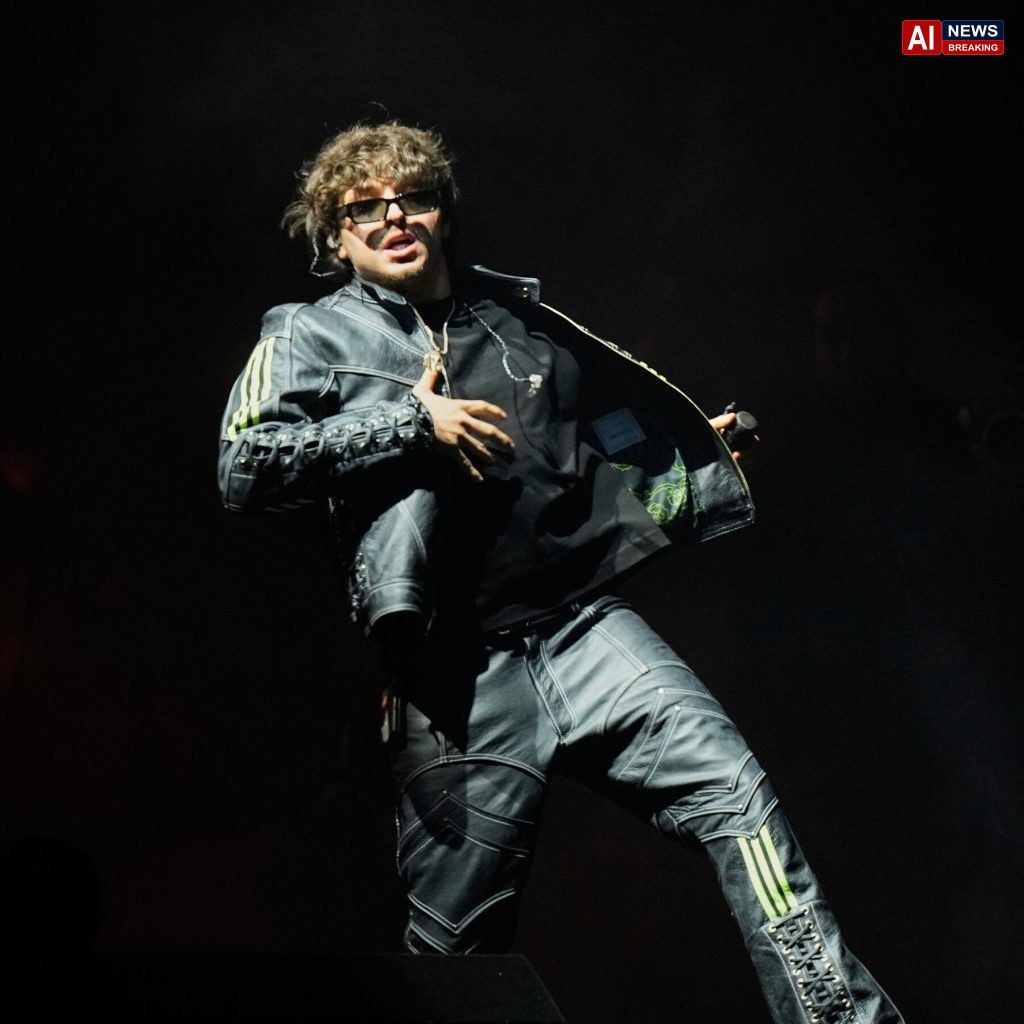
A Mexican Artist Sang Some of His Hits. Authorities Stopped the Show, Then Arrested Him. - AI News Breaking
A concert by Mexican singer Gabito Ballesteros was abruptly halted on Saturday after authorities intervened, alleging that several of the songs he performed glorified the country’s drug‑cartel culture. The event, held at a municipal venue in the city of Torreón, had drawn a crowd of several hundred fans who came to hear the popular regional‑Mexican star, known for his blend of norteño and corridos. Mid‑set, police entered the stage area, ordered the music to stop and subsequently placed the artist under arrest, sparking a fresh debate over the balance between cultural expression and public order in a nation long plagued by organized crime..
Ballesteros, 31, rose to fame in the early 2010s with a string of chart‑topping tracks that narrate life in the northern states of Mexico, often featuring lyrical references to drug trafficking, violence and the code of honor among cartel members. While his supporters argue that his music simply reflects the lived realities of many in the region, critics contend that the romanticisation of illegal activities can inspire further criminal behaviour. The police chief, José Ramírez, said the decision to stop the concert was taken after a review of the setlist, which included three songs that “explicitly celebrate cartel leaders and glorify criminal enterprises,” thereby violating national laws that prohibit the public promotion of organized crime..
The arrest was carried out under Mexico’s 2019 “Law for the Control of Criminal Organizations,” which criminalises the dissemination of content that could be interpreted as praising or encouraging the activities of drug cartels. The law, introduced amid a surge in cartel‑related violence, has been criticised by human‑rights groups for its vague wording and potential to curb artistic freedom. Legal scholar Ana López of the National Autonomous University of Mexico warned that “the line between cultural representation and propaganda is thin, and enforcement must be precise to avoid chilling legitimate artistic expression.” Following the incident, Ballesteros was taken to a local detention centre where he was questioned for several hours before being released on bail pending further investigation..
His legal team, led by attorney Carlos Mendoza, filed an appeal, arguing that the songs in question constitute “traditional corrido storytelling” that has been part of Mexican musical heritage for decades. In a statement released through the artist’s management, Mendoza insisted that “the prosecution is conflating artistic narrative with criminal endorsement, a dangerous precedent for all creators in Mexico.” Public reaction to the suspension has been sharply divided. On social media platforms, hashtags praising Ballesteros’ music trended alongside calls for stricter enforcement of anti‑cartel legislation..
Some users posted videos of the concert’s opening, highlighting the enthusiastic crowd and the artist’s charismatic stage presence, while others shared excerpts of the contested lyrics, interpreting them as overt calls to violence. The incident has also reignited a broader conversation about the role of corridos, a genre historically used to chronicle events ranging from revolutions to personal tragedies, in contemporary Mexican society. Cultural commentators note that the issue is not new..
In 2013, a similar crackdown occurred when a popular corrido band was barred from performing in the state of Sinaloa for songs that referenced the Sinaloa Cartel. That episode resulted in a lawsuit that was eventually dismissed on grounds of insufficient evidence that the music directly incited criminal acts. “We have seen a pattern where authorities target musicians as symbolic targets in the fight against cartels,” said journalist Luis García of El Universal..
“While the intention to curb glorification is understandable, the method often overlooks the nuanced role of music as a mirror rather than a catalyst.” Human‑rights organisations have expressed concern that the enforcement of the anti‑cartel law may disproportionately affect artists from poorer regions, where corridos serve as a primary form of storytelling. Amnesty International issued a brief urging Mexican officials to “ensure that any restrictions on speech are necessary, proportionate and applied without discrimination.” The group highlighted cases where musicians faced harassment, cancellation of gigs, or even physical threats after performing songs perceived as sympathetic to criminal groups, arguing that such pressure can erode democratic freedoms. Meanwhile, the local government of Torreón defended its cooperation with federal authorities, stating that the venue had been warned in advance about the potential breach of law..
Municipal mayor María Soto claimed that “the safety of our citizens is paramount,” and that the decision to halt the concert was made to prevent any possible incitement of further violence. She added that the city would continue to support cultural events that comply with the legal framework, emphasizing the need for artists to self‑regulate their content. The incident arrives at a time when Mexico is grappling with a surge in violent incidents linked to drug trafficking, with the United Nations reporting an upward trend in homicide rates for the third consecutive year..
Government officials have intensified their campaign against cartels, employing both military and police operations across multiple states. Critics argue that focusing on symbolic gestures such as censoring music diverts resources from more substantive interventions, such as socioeconomic development and anti‑corruption reforms. Legal experts anticipate that the case will likely progress to Mexico’s federal courts, where precedent regarding freedom of expression versus public security will be examined..
The outcome could set a significant legal benchmark for how the anti‑cartel law is applied to artistic works. “If the courts uphold the arrest, it may signal a broader crackdown on cultural producers,” noted Professor López, “but an acquittal could reinforce the protection of artistic speech even in the face of contentious content.” As the debate continues, Ballesteros remains a polarising figure. Fans have organised online petitions demanding his release and the resumption of the concert.
Updated: November 15, 2026






