
 Pakistan’s leaders hail first astronaut aboard Chinese craft: ‘Proud one of us has gone into space’
 British tourist travels 29 hours from Mumbai to Amritsar for ₹5,461, rates Indian Railways 10/10 | Viral video
 The Supreme Court will decide whether assault weapons bans violate the Second Amendment
 A Critic of Beijing Falls Short in Taiwan’s Key Mayoral Election
 EPA says no rise in contamination after Army detonates lead azide stockpile in Iowa
After Decades of Blood and Mistrust, Doubts Over Who’s to Blame for an Israeli Hostage
**
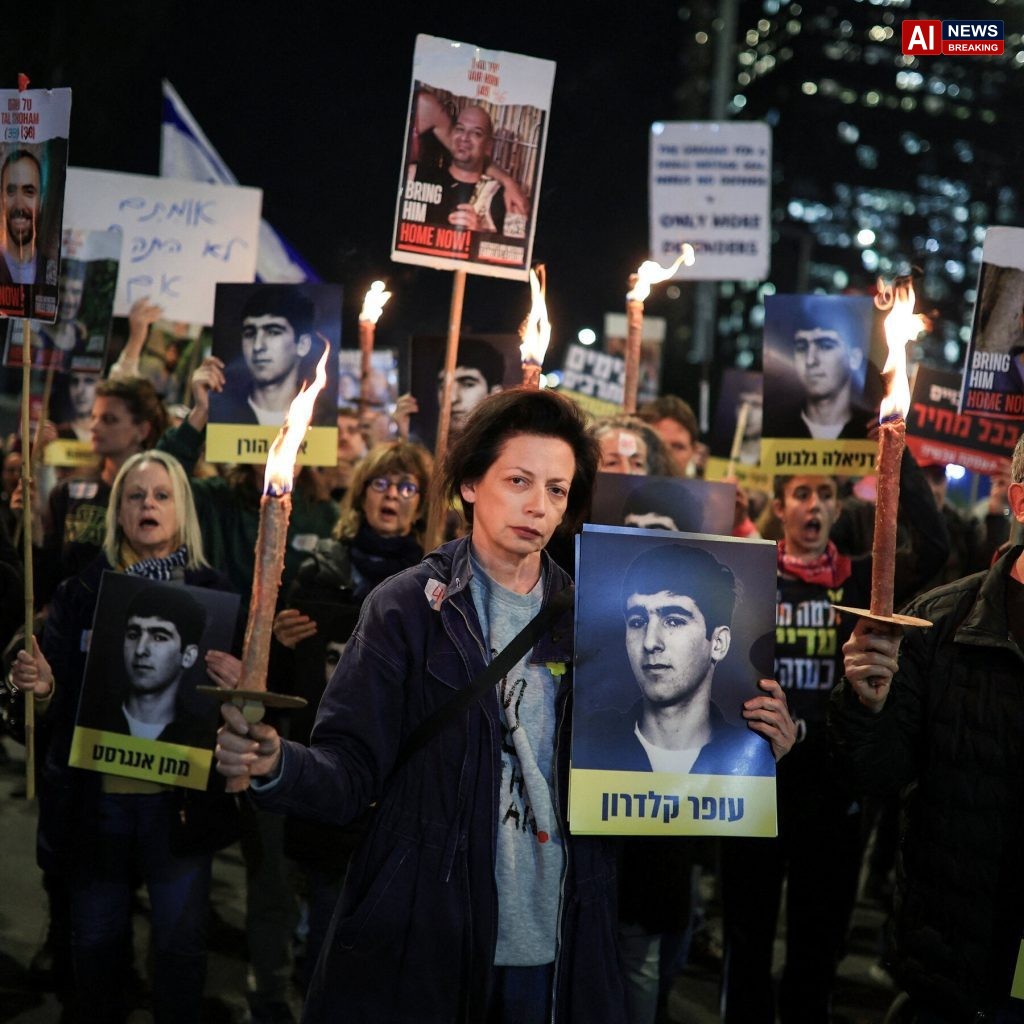
After Decades of Blood and Mistrust, Doubts Over Who’s to Blame for an Israeli Hostage - AI News Breaking
decades blood mistrust doubts:
The death of Israeli Air Force Lieutenant Yossi Cohen, whose aircraft crashed over the Syrian‑Iranian border in 2019, has long been shrouded in secrecy, speculation and competing narratives. For years the Israeli intelligence community maintained that the loss was the result of a deliberate Iranian plot, a view that underpinned a series of covert operations aimed at exacting retribution. Recent revelations, however, suggest that the attribution of blame may have been more a product of institutional bias than incontrovertible evidence, and that the subsequent kidnapping and execution of Iranian operatives in Israel were part of a retaliatory chain whose origins remain murky.When the Mirage‑2000 fighter disappeared from the radar screens above the Golan Heights, Israel’s military command immediately launched a joint investigation with its intelligence agencies..
The official briefing, released to the public after a brief period of censorship, asserted that the aircraft had been shot down by an Iranian‑supplied surface‑to‑air missile fired from a Syrian base. The narrative fit neatly into a broader strategic picture: Iran, through its network of proxies in Lebanon and Syria, had been steadily increasing its anti‑Israeli posture, and the downing of a high‑ranking officer would be a logical escalation.In the months that followed, Israel’s Mossad reportedly conducted a series of clandestine raids inside Iranian territory, targeting individuals believed to have been involved in the operation that brought down the aircraft. Two Iranian operatives, identified only by their code names “Alborz” and “Shiraz,” were abducted while travelling through Turkey and subsequently smuggled into Israeli custody..
Their eventual execution, confirmed by an anonymous source within Israel’s security establishment, was presented to the Israeli public as a decisive act of justice, reinforcing the view that Tehran was unequivocally responsible.The justification for these extrajudicial killings rested on a series of intelligence dossiers that were never made public. According to former Israeli officials who spoke on condition of anonymity, the dossiers linked the two men to a sophisticated cyber‑warfare unit that had allegedly intercepted Israeli communications in the weeks leading up to the crash. Yet the same sources admitted that the evidence was circumstantial at best, relying heavily on intercepted phone calls that could have been misattributed or even deliberately fabricated by rival agencies seeking to inflame tensions.International observers have long warned that the fog of war can obscure the truth, especially when state actors have vested interests in shaping the narrative..
A 2022 report by the International Crisis Group highlighted the paucity of independent verification surrounding the crash, noting that satellite imagery and open‑source analysis failed to corroborate the presence of Iranian missile batteries in the claimed launch zone. Moreover, the report warned that the Israeli response – a series of kidnappings and executions – risked creating a self‑perpetuating cycle of violence that could be exploited by hard‑liners on both sides.It was not until a leak of classified documents to a European investigative outlet that alternative theories began to receive serious attention. The documents, part of a broader cache concerning Middle Eastern covert operations, revealed that Israeli intelligence had, in the immediate aftermath of the crash, entertained the possibility that the aircraft had been downed by a Syrian‑operated Russian S‑300 system, malfunctioning or mis‑aimed..
The files also indicated that senior officials within the IDF had expressed reservations about pinning the incident solely on Iran without further forensic confirmation.The leak sparked a heated debate within Israel’s security establishment. A faction of senior officers argued that the political cost of acknowledging uncertainty would be too high, especially in the lead‑up to the 2023 national elections where security issues dominated the agenda. Others, including a handful of veteran Mossad operatives who had served in Syria during the 1990s, urged a more nuanced assessment, warning that a misattribution could undermine Israel’s credibility on the world stage and provoke unnecessary retaliation.In the months that followed, diplomatic channels between Jerusalem and Tehran grew increasingly strained..
Iran’s foreign ministry issued a terse statement denying any involvement in the crash, accusing Israel of “fabricating evidence to justify its illegal covert operations.” Tehran also condemned the abductions, labeling them as “state‑sponsored terrorism.” The exchange of accusations escalated into a series of retaliatory cyber attacks, with Iranian hackers claiming to have breached Israeli defense contractors, while Israeli cyber units allegedly infiltrated Iranian nuclear research networks.Public opinion within Israel appears divided. A recent poll conducted by a leading Israeli university found that 58 percent of respondents still believed Iran was to blame for Lieutenant Cohen’s death, while 27 percent expressed uncertainty, and 15 percent cited alternative actors. Among the younger demographic, skepticism was markedly higher, reflecting broader global trends of questioning official narratives in the age of digital information..
Meanwhile, families of the executed Iranian operatives have begun legal proceedings in European courts, arguing that the kidnappings violated international law and that the lack of transparent evidence should render the executions unlawful.The case underscores a broader challenge confronting modern intelligence agencies: balancing the imperative to act swiftly in the face of perceived threats with the necessity of rigorous verification. As scholars of security studies note, the allure of a clear‑cut villain can be potent, especially when political leadership seeks to rally domestic support. Yet the long‑term costs of acting on incomplete or erroneous intelligence can be profound, ranging from diplomatic fallout to the erosion of public trust.In the final analysis, the story of Lieutenant Yossi Cohen’s fatal crash and the subsequent covert reprisals remains unfinished..
While the Israeli government continues to stand by its original assessment, the emergence of alternative explanations and the growing body of investigative journalism suggest that the truth may be more complex than the binary narrative of Iranian culpability. As the region grapples with an ever‑shifting security landscape, the episode serves as a cautionary reminder that in the realm of espionage and covert warfare, certainty is often elusive, and the consequences of misattribution can reverberate far beyond the immediate victims..
Newly leaked documents cast doubt on Israel’s claim that an Iranian‑supplied missile shot down Lieutenant Yossi Cohen’s jet in 2019, suggesting a possible Syrian‑Russian system or malfunction instead. The disputed attribution fueled covert Israeli reprisals—including kidnappings and executions—while intensifying diplomatic and legal confrontations with Tehran.
Israel’s swift branding of Iran as the culprit reveals how security agencies weaponize uncertainty to cement political narratives, even when hard evidence remains thin.
The ensuing clandestine reprisals illustrate a feedback loop where myth‑making fuels escalation, eroding both regional stability and public trust in state intelligence.







