Pakistan’s leaders hail first astronaut aboard Chinese craft: ‘Proud one of us has gone into space’
 British tourist travels 29 hours from Mumbai to Amritsar for ₹5,461, rates Indian Railways 10/10 | Viral video
 The Supreme Court will decide whether assault weapons bans violate the Second Amendment
 A Critic of Beijing Falls Short in Taiwan’s Key Mayoral Election
 EPA says no rise in contamination after Army detonates lead azide stockpile in Iowa
Too Many Chips in One Basket?
**
Too Many Chips in One Basket? - AI News Breaking
many chips basket:
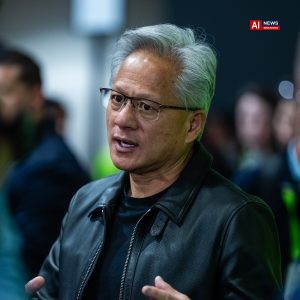
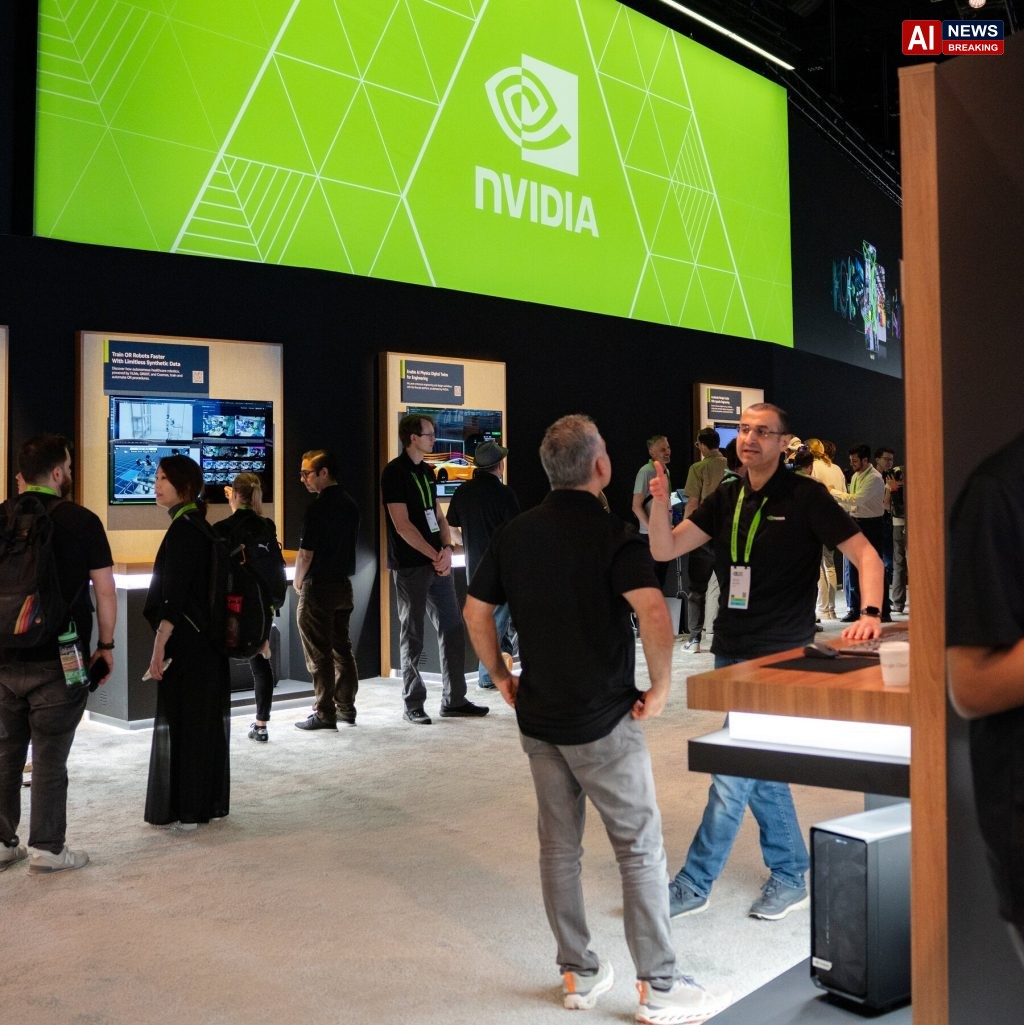
Too Many Chips in One Basket? The United States’ economic narrative over the past three years has become increasingly intertwined with the fortunes of Nvidia, the graphics‑processing‑unit (GPU) powerhouse led by its charismatic founder Jensen Huang. Investors, policymakers and analysts have repeatedly pointed to the company’s meteoric rise as a barometer of the broader tech sector, crediting its AI‑driven chips with propelling the United States to the forefront of the artificial‑intelligence race..
As the country’s stock market rallied on Nvidia’s earnings, the narrative that a single firm could act as an economic engine grew louder, shaping everything from venture‑capital allocations to federal research funding. That symbiosis was cemented in early 2023 when Nvidia’s market capitalization eclipsed that of many established conglomerates, and its shares surged past the $1 trillion mark. The surge was fueled by an unprecedented demand for its data‑center GPUs, which power large‑scale language models and other AI workloads..
The ripple effect was palpable: semiconductor manufacturers scrambled to increase capacity, universities expanded AI curricula, and the federal government announced substantial grants for AI research, all under the assumption that Nvidia would continue to dominate the supply chain. The optimism, however, rested on a fragile premise—continued growth driven by a single visionary leader. In March 2024, Jensen Huang announced his decision to step down from his day‑to‑day role, transitioning to an advisory position while remaining on the board..
The move, framed as a succession plan, surprised many who saw Huang as the personification of Nvidia’s innovation ethos. While the board appointed a seasoned executive from a rival chipmaker to fill the vacancy, industry insiders warned that the change could unsettle the company’s strategic direction. Analysts began to question whether Nvidia’s pipeline of new products could maintain its current pace without Huang’s hands‑on guidance..
The immediate market reaction was swift but measured. Nvidia’s stock dipped modestly, shedding around 4 percent in the first week after the announcement, a relatively small correction given the size of the rally that preceded it. Yet the broader tech sector felt a subtle tremor; investors re‑evaluated exposure to firms heavily dependent on Nvidia’s GPUs, from cloud providers to autonomous‑vehicle startups..
Portfolio managers noted a shift in risk assessments, emphasizing diversification over the previously celebrated concentration in AI‑centric equities. Beyond the equity markets, the policy arena is grappling with the implications of this leadership transition. The White House’s recent AI strategy, which highlighted Nvidia as a critical partner, now faces scrutiny over its reliance on a single corporate entity for national competitiveness..
Lawmakers have begun drafting inquiries into the extent of government contracts awarded to Nvidia and the potential vulnerabilities that arise from such dependence. The conversation reflects a growing unease that the United States may be placing too much of its strategic AI infrastructure in one commercial basket. Supply‑chain analysts also warn of practical challenges..
Nvidia’s manufacturing relies on a tightly integrated network of foundries, many of which are already operating at capacity limits. The company’s ambitious roadmap, which includes next‑generation H100 successors and specialized AI accelerators, demands a steady flow of silicon wafers and advanced packaging technologies. With Huang’s departure, there is concern that negotiations with partners like TSMC could become more complex, potentially slowing the rollout of critical components needed by data‑center operators worldwide..
Meanwhile, competitors are sensing an opening. AMD, Intel and emerging Chinese firms have accelerated their own AI‑chip programs, touting alternative architectures that promise lower power consumption or tighter integration with existing ecosystems. Some analysts predict that a perceived vacuum at Nvidia could catalyze a diversification of the AI hardware market, reducing the monopoly-like grip the firm currently enjoys..
Yet the reality remains that Nvidia’s software stack, including its CUDA platform, continues to be a decisive factor for developers, reinforcing its entrenched position despite any leadership shifts. The academic community, which has benefited from abundant grants tied to Nvidia’s technologies, is also re‑assessing its research pipelines. Universities that built curricula around Nvidia’s GPUs now face the prospect of having to accommodate alternative hardware, which could entail significant retraining and infrastructure costs..
Funding agencies are reportedly reviewing grant criteria to ensure that future investments are not overly contingent on a single vendor’s roadmap, a move that could broaden the scope of AI research but also dilute the rapid progress seen in recent years. Consumer sentiment mirrors these institutional concerns. The hype surrounding AI‑driven applications—ranging from generative art tools to personalized recommendation engines—has been largely powered by Nvidia’s chips..
As the public becomes more aware of the concentration of power within the semiconductor sector, calls for greater transparency and antitrust scrutiny have grown louder. Advocacy groups argue that a healthier competitive environment would foster innovation and protect against potential supply shocks that could affect everything from gaming consoles to medical imaging devices. Financial regulators are poised to examine the broader implications of Nvidia’s market dominance in light of the leadership change..
The Securities and Exchange Commission has signaled interest in reviewing disclosures related to executive transitions at firms with outsized systemic importance. While no formal action has been taken, the prospect of heightened regulatory oversight adds another layer of uncertainty for investors and could influence how Nvidia structures its governance and reporting practices moving forward. Despite the swirl of doubts, many within Nvidia’s ranks maintain confidence that the company’s underlying technology moat remains intact..
The new CEO, a veteran of large‑scale chip design, has outlined a vision that emphasizes incremental innovation, deeper partnerships with cloud providers, and a focus on energy‑efficient AI workloads..
Updated: November 15, 2026
Summary: Nvidia’s rise has become a linchpin of the U.S. AI economy, prompting heavy investment and policy focus on its GPUs, but founder Jensen Huang’s shift to an advisory role has sparked concerns over the nation’s reliance on a single chipmaker. The leadership change is prompting investors, regulators and researchers to reassess risk, diversify exposure, and scrutinize the broader implications for America’s AI strategy.
Nvidia’s exit from the CEO spotlight exposes the fragility of a tech ecosystem that has long treated a single chip‑maker as a national “engine,” prompting a ripple‑effect where investors, policymakers, and academia must now re‑engineer their exposure and research agendas.
If the company’s leadership