
 Pakistan’s leaders hail first astronaut aboard Chinese craft: ‘Proud one of us has gone into space’
 British tourist travels 29 hours from Mumbai to Amritsar for ₹5,461, rates Indian Railways 10/10 | Viral video
 The Supreme Court will decide whether assault weapons bans violate the Second Amendment
 A Critic of Beijing Falls Short in Taiwan’s Key Mayoral Election
 EPA says no rise in contamination after Army detonates lead azide stockpile in Iowa
Fewer students are traveling from abroad to study at US universities, report shows
**
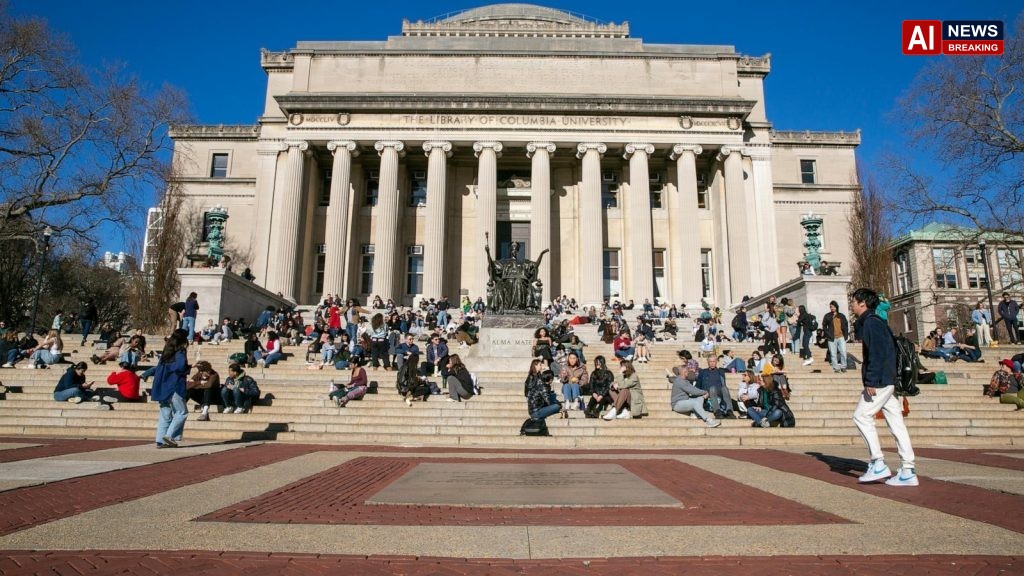
Fewer students are traveling from abroad to study at US universities, report shows - AI News Breaking
fewer students traveling abroad:
Fewer students are traveling from abroad to study at US universities, report showsThe latest data from the Institute of International Education (IIE) indicate a noticeable decline in the number of foreign nationals enrolling in American colleges and universities over the past two academic years. In the 2022‑23 academic year, 830,000 international students were enrolled, a drop of roughly 7 per cent from the 896,000 recorded in 2020‑21, the highest level ever reached. The downward trend has accelerated since 2020, when a sharp surge in applications coincided with the pandemic‑induced shift to online learning and a perception that the United States offered a relatively open and welcoming environment for overseas scholars.Analysts attribute the recent contraction to a combination of policy shifts, heightened visa restrictions and a broader reorientation of higher education priorities under the Trump administration..
The administration’s “America First” agenda, launched in 2017, introduced a series of measures aimed at tightening immigration controls, including the reduction of the duration of Optional Practical Training (OPT) for STEM graduates, increased scrutiny of H‑1B visa petitions and the introduction of a “public charge” rule that placed additional barriers on students seeking permanent residency after graduation. While the Supreme Court struck down the public charge provision in 2020, the lingering uncertainty it created has continued to affect prospective applicants.The IIE report also highlights a geographic re‑distribution of enrolments. China, which had supplied 369,000 students in 2020‑21, fell to 254,000 in 2022‑23, a loss of more than 30 per cent..
India, the second‑largest source market, saw a smaller but still significant decline, from 202,000 to 176,000 students. Together, the two countries accounted for nearly two‑thirds of the overall drop. In contrast, enrolments from nations in the Middle East and Africa displayed modest gains, suggesting that the United States remains an attractive destination for scholars from regions less affected by travel bans or diplomatic tensions.Universities across the country have felt the impact on their balance sheets..
International tuition fees, typically higher than domestic rates, have traditionally subsidised a large share of research budgets, campus infrastructure projects and even some undergraduate programmes. At a time when public funding for higher education is already under strain, the loss of revenue from overseas students is prompting administrators to reassess financial models. Some institutions, particularly those with a heavy reliance on foreign enrolments such as the University of Southern California and New York University, have announced contingency plans that include expanding recruitment efforts in Latin America and Europe, and bolstering scholarship packages to retain remaining applicants.Student organisations and advocacy groups warn that the decline could have long‑term consequences for academic diversity and the United States’ global standing in research..
“When we lose a generation of international scholars, we are not just losing tuition – we are losing fresh perspectives, collaborative networks and the cultural exchange that fuels innovation,” said Dr Maya Patel, director of the Center for Global Education at the University of Michigan. Patel pointed to the fact that, in 2021, international students authored or co‑authored more than 30 per cent of papers published in top‑tier scientific journals, underscoring their pivotal role in the nation’s research output.The federal government has responded with a mixed signal. In early 2023, the Department of State announced a modest increase in the number of H‑1B visas allocated to recent graduates, citing the need to retain talent in critical fields such as artificial intelligence and biotechnology..
Yet, simultaneous efforts to tighten asylum procedures and expand the “zero‑tolerance” policy at the border have created a climate of unpredictability for prospective students and their families. Immigration lawyers report a surge in requests for expedited visa processing, often accompanied by higher legal fees, as applicants attempt to navigate an increasingly complex system.Higher‑education leaders are also confronting the reality that competition for talent is no longer confined to the United States. Canada, the United Kingdom, Australia and several European Union members have introduced more generous post‑study work pathways, streamlined visa processes and targeted scholarships to attract the same pool of high‑achieving students..
Canada’s recent “Post‑Graduation Work Permit” extension, for example, allows graduates to remain in the country for up to three years, a policy that has already yielded a 12 per cent rise in inbound student numbers since 2021.Nevertheless, some experts argue that the current dip may be temporary, driven largely by short‑term policy turbulence rather than a permanent shift in demand. “The United States still offers unparalleled research facilities, faculty expertise and a robust job market for graduates,” said Dr Luis Ortega, a senior fellow at the Brookings Institution. Ortega cautioned that if policymakers were to adopt a more predictable and welcoming stance toward international scholars, enrolment numbers could rebound quickly, especially as the global economy recovers and families regain the financial capacity to send children abroad.University presidents across the country are already adjusting recruitment strategies in anticipation of a longer‑term realignment..
Many have expanded virtual outreach, leveraging digital platforms to host webinars, virtual campus tours and online faculty‑student interactions. Others are forging partnerships with community colleges and technical institutes in partner countries, creating pipeline programmes that allow students to complete part of their studies abroad before transferring to a US institution for the final degree. These initiatives aim to diversify the applicant pool and reduce reliance on any single source market.The IIE’s report concludes with a call for coordinated action among federal agencies, educational institutions and private sector stakeholders to restore confidence in the United States as a premier destination for global talent..
It recommends a review of visa processing times, clearer guidelines for post‑study work authorisation and the reinstatement of scholarships that were cut during the pandemic. As the nation grapples with workforce shortages in science, technology, engineering and mathematics, the urgency of reversing the current trend has taken on a new dimension, linking the fortunes of higher education directly to broader economic and security considerations..
Updated: November 16, 2026
The U.S. is losing its talent pipeline as policy uncertainty erodes the allure of its research hubs, threatening to shift the global academic balance toward more welcoming rivals.
If Washington can simplify visas and signal stability, the country may yet recover its standing, but until then, the academic and innovation ecosystems risk







