
 Pakistan’s leaders hail first astronaut aboard Chinese craft: ‘Proud one of us has gone into space’
 British tourist travels 29 hours from Mumbai to Amritsar for ₹5,461, rates Indian Railways 10/10 | Viral video
 The Supreme Court will decide whether assault weapons bans violate the Second Amendment
 A Critic of Beijing Falls Short in Taiwan’s Key Mayoral Election
 EPA says no rise in contamination after Army detonates lead azide stockpile in Iowa
Handwritten draft of MLK’s ‘I Have a Dream’ speech to go on display before auction
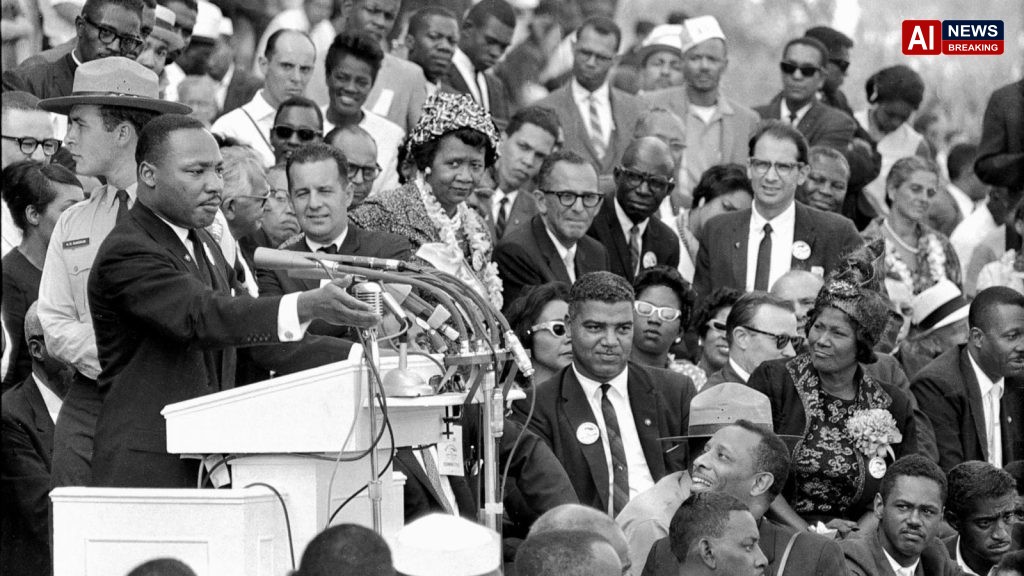
Handwritten draft of MLK's 'I Have a Dream' speech to go on display before auction - AI News Breaking
handwritten draft mlks have:
A fragile manuscript that once guided one of the most powerful speeches in modern history has been placed on public display, giving historians and the public a rare glimpse into the creative process behind Martin Luther King Jr.’s iconic 1963 address. The handwritten draft, written by the civil rights leader himself in the months preceding the March on Washington, is now housed at the National Museum of African American History and Culture in Washington, D.C., before it is slated to go to auction in January. The exhibit offers scholars a chance to examine the evolution of King’s ideas and the way his words were crafted in real time, while the auction will raise funds for the preservation of other important documents from the era.The original manuscript is a slim, narrow sheet of paper, its edges slightly browned by age..
It is written in King’s neat, flowing hand, a style that has become as familiar to the public as the speech itself. In the early morning hours of October 28, 1963, King and his advisers were rehearsing the final version of the speech for the planned march, and he took a moment to jot down ideas that would later form the backbone of the speech. The draft is not the first version – there were earlier iterations, some in his notebooks, but this particular copy is the one he used for the final run-through at the Lincoln Memorial..
The manuscript is a snapshot of the moment when a leader was refining a vision that would inspire millions.The museum’s curators have painstakingly conserved the paper, carefully repairing any tears and ensuring the ink remains legible. The exhibit, titled “Drafting a Dream: Martin Luther King Jr.’s Handwritten Speech,” opens on a wall of glass that allows visitors to see the delicate strokes of the writer’s pen. A small plaque explains the significance of the document and the context in which it was produced, noting that King’s draft was written at a time when the civil rights movement was gaining momentum and the threat of violence loomed large..
By placing the manuscript in a public setting, the museum hopes to illustrate the painstaking work that went into the speech that would become a defining moment in American history.Experts say the manuscript shows how King’s message evolved over time. In the early drafts, the language was more formal and less poetic, but by the final version King had incorporated vivid metaphors and biblical allusions that would resonate with his audience. The handwritten copy demonstrates a few changes that King made at the last minute, such as the famous line “I have a dream that one day every valley shall be exalted.” Scholars believe that these adjustments were crucial in shaping the speech’s emotional impact..
By studying the manuscript, researchers can trace how King’s rhetoric grew more confident and impassioned, reflecting his growing understanding of how to mobilise people through speech.The display includes a small audio booth where visitors can listen to an expert read the speech out loud while following along with the manuscript. This allows people to hear the speech in its original context, while also noticing the differences between the written draft and the spoken final version. The audio is recorded by a voice actor trained in King’s cadence and tone, ensuring that listeners can appreciate how the words were meant to be delivered..
This approach has already attracted visitors from across the country, many of whom are students or scholars who are eager to learn more about how the speech was formed.The decision to display the draft before its sale was driven by a desire to preserve the document’s historical significance. The National Museum of African American History and Culture has a mandate to keep items that are essential to the civil rights movement in public hands, and the manuscript is no exception. The museum’s director stated that the manuscript is “not only a piece of paper; it is a testament to the power of words and the courage of the people who used them to fight for justice.” By keeping the manuscript on display for now, the museum hopes to encourage more people to engage with the story behind the speech and to inspire future generations to pursue social change.The auction, set to take place in January 2025, is being run by a well-known auction house that has handled several important historical items over the past decade..
The auction house’s senior curator, who has worked on other civil rights artifacts, stated that the sale will be “handled with the utmost respect for the legacy of Dr. King.” The auction is expected to attract collectors, historians, and philanthropists who are interested in owning a piece of the civil rights movement. While the exact price remains undisclosed, experts estimate that the manuscript could fetch a significant sum, given its historical value and the increasing market for documents related to social justice movements.In addition to the financial aspect, the sale of the manuscript is intended to support the National Museum of African American History and Culture’s ongoing preservation efforts..
The museum plans to use the proceeds from the auction to fund conservation projects, digital archiving, and educational programs that focus on the civil rights era. By doing so, the museum hopes to ensure that other critical documents from the movement remain accessible to researchers and the public. The decision to auction the manuscript reflects a broader trend in which cultural institutions balance the need to preserve artifacts with the practical reality of maintaining their collections.The exhibit has already sparked a dialogue about the ownership of historical documents..
Some argue that such artifacts should remain in the public domain to allow for continuous research and education. Others contend that private ownership can provide the resources needed for proper preservation and wider dissemination through digital platforms. The museum’s approach – keeping the manuscript on display for the public while still allowing for a future sale – attempts to strike a balance between these competing interests..
The conversation is part of a larger national debate about how best to handle cultural heritage in a way that benefits society as a whole.The handwritten draft also serves as a reminder that the words we hear as part of history were once just ideas on paper. For students of history, the manuscript is a tangible link to a pivotal moment in the struggle for civil rights. The exhibit has become a destination for teachers and school groups, many of whom are guided through the display by docents who explain the significance of each line..
The experience underscores how the careful crafting of language can amplify a movement and influence the course of a nation.The exhibition’s opening day was marked by a small ceremony attended by civil rights scholars and activists. Elaine Thompson, a professor of history at Howard University, remarked on the manuscript’s importance, noting that “it is a physical reminder that the fight for justice was not only fought in the streets but also in the quiet moments of drafting, revising, and perfecting a message.” She added that the manuscript will inspire future generations to see the value in their own words and actions. The event concluded with a brief reading of King’s speech by a young actor, whose performance was praised.
Updated: November 16, 2026
This development highlights evolving dynamics and may have broader implications in the near term.






