
 Pakistan’s leaders hail first astronaut aboard Chinese craft: ‘Proud one of us has gone into space’
 British tourist travels 29 hours from Mumbai to Amritsar for ₹5,461, rates Indian Railways 10/10 | Viral video
 The Supreme Court will decide whether assault weapons bans violate the Second Amendment
 A Critic of Beijing Falls Short in Taiwan’s Key Mayoral Election
 EPA says no rise in contamination after Army detonates lead azide stockpile in Iowa
Tamil Nadu government withdraws 600 cases against farmers and teachers
**
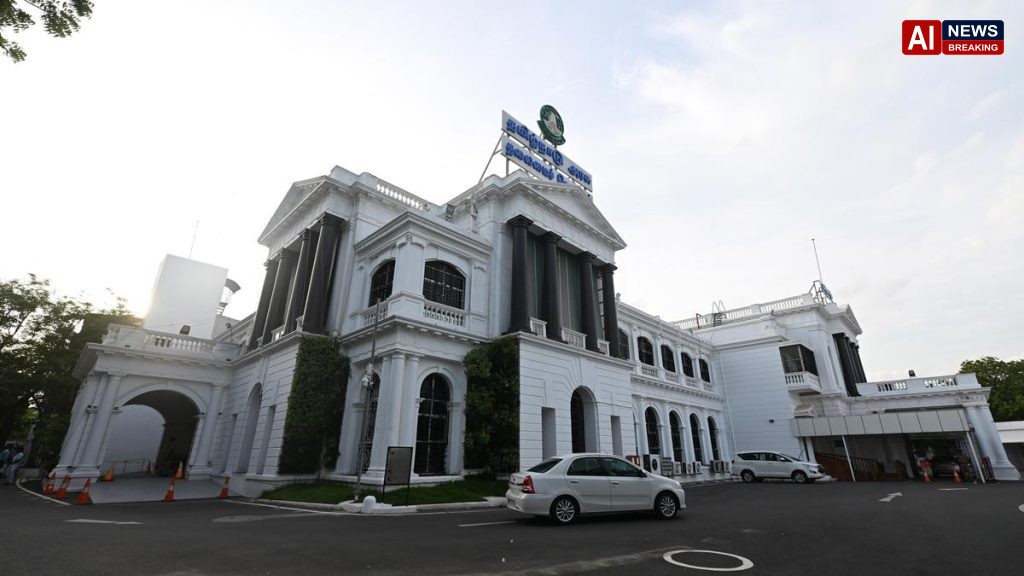
Tamil Nadu government withdraws 600 cases against farmers and teachers - AI News Breaking
In a surprise move that has stunned both the political establishment and the rural communities of Tamil Nadu, the state government announced on Tuesday the withdrawal of 600 criminal cases that had been filed against farmers and teachers over the past two years. The decision, announced by the chief minister in a short speech on the floor of the Legislative Assembly, was made “suo motu” – that is, at the government’s own initiative, without any formal complaint or request from the affected parties.The cases, which had ranged from accusations of vandalism and assault to allegations of illegal land use, had been brought against a wide spectrum of people. Among them were several smallholder farmers who had protested against land acquisition plans, a group of school teachers who had staged a sit‑in to demand better pay, and a handful of community leaders who had been accused of inciting unrest during a series of local elections..
The prosecution, many observers say, was largely driven by a political strategy that sought to deter dissent and to consolidate the ruling party’s image of a law-and-order state.The chief minister’s announcement was brief, but it carried weight. “We have reviewed the evidence and have concluded that the cases lack merit. Accordingly, we will withdraw all 600 charges against the farmers, teachers, and other citizens,” he said, while a hush fell over the assembly..
He added that the state would take steps to ensure that any future accusations would be based on factual evidence and not political expediency.The decision comes after a series of high-profile protests that erupted across the state last year. Farmers, whose livelihoods depend on the region’s complex irrigation systems, had taken to the roads to demand greater transparency from the government over water distribution. The teachers’ strike, which began in late August, saw educators walk out of schools in the capital city, demanding a pay raise that would bring their salaries in line with national averages..
The protests, while largely peaceful, drew the attention of the police and the political establishment, leading to a number of arrests and charges that, in many cases, were seen by opposition parties as politically motivated.Opposition leaders have been quick to praise the decision. The leader of the Tamil Nadu Democratic Party, a former teacher herself, said that the withdrawal of the cases would be “a watershed moment for civil liberties in the state.” She added that the ruling party’s action “demonstrates a willingness to listen to the people’s concerns rather than suppress them.” Meanwhile, the state’s chief opposition spokesperson, who has long criticised the government for its heavy-handed approach, called the move “a necessary step towards restoring trust between the government and its citizens.”Despite the optimism expressed by many, some critics remain wary. Legal experts caution that the withdrawal of criminal charges does not automatically mean that the allegations were entirely unfounded..
“Withdrawal can be a sign of either genuine innocence or a political settlement,” said Dr. Anil Kumar, a professor of constitutional law at Madras University. “What remains to be seen is whether this action will set a new precedent that protects the rights of those who dare to speak out, or whether it will simply be a temporary truce while the government waits for a more convenient political climate.”The decision also has implications for the state’s budget and the functioning of its judicial system..
The 600 cases had already incurred significant costs in terms of court time, police investigations, and public expenditure on legal representation for the accused. According to an internal audit released by the state’s Department of Finance, the cost of maintaining these cases was estimated at over ₹200 million. The withdrawal of the cases is expected to free up resources that can be redirected towards infrastructure development and social welfare programmes.In response to the announcement, the chief minister also promised to investigate the procedural aspects that led to the filing of the cases..
He said that the state would establish an independent commission to review the criteria used by police and prosecutors in deciding when to file charges against individuals involved in public dissent. “Our justice system must be fair and transparent,” he said. “We will examine whether there were any lapses or violations of due process that contributed to the wrongful filing of these cases.”The move has already been met with a wave of mixed reactions in the state’s rural districts..
A farmer in the northern district of Erode, who has been a vocal critic of the state’s land acquisition policies for the past five years, expressed relief at the decision. “For years we have been accused of vandalism for simply demanding fair treatment,” he said. “This is a vindication for us.” He added that he hopes the decision will encourage other farmers to continue advocating for their rights without fear of prosecution.In contrast, a teacher from the capital city’s public school system voiced concern about the lack of clarity on how the withdrawal would be implemented..
“It is one thing to say that the charges are withdrawn, but how do we ensure that the teachers who were involved in the strike are not re‑accused in the future?” she asked. She called for a clear legal framework that would protect educators from being targeted for their participation in peaceful demonstrations.The chief minister’s decision has also sparked a debate among political analysts about the balance between law enforcement and civil liberties. Some argue that the state has a duty to maintain public order, while others emphasize the importance of protecting the rights of ordinary citizens to express dissent..
The fact that the government has chosen to withdraw such a large number of cases may signal a shift in policy that prioritises dialogue over coercion.The announcement will be closely watched by other states that have faced similar protests and have responded with criminal charges against dissenters. If Tamil Nadu’s approach proves to be effective, it could serve as a model for other jurisdictions grappling with the challenge of balancing order and freedom. The state’s decision to withdraw the cases and establish an independent commission may represent a new chapter in the relationship between the Tamil Nadu government and its citizens, one that relies on transparency, accountability, and the rule of law rather than punitive measures..
Updated: November 16, 2026






