
 Pakistan’s leaders hail first astronaut aboard Chinese craft: ‘Proud one of us has gone into space’
 British tourist travels 29 hours from Mumbai to Amritsar for ₹5,461, rates Indian Railways 10/10 | Viral video
 The Supreme Court will decide whether assault weapons bans violate the Second Amendment
 A Critic of Beijing Falls Short in Taiwan’s Key Mayoral Election
 EPA says no rise in contamination after Army detonates lead azide stockpile in Iowa
Bilkis Bano case: Supreme Court suspends sentence, grants bail to two convicts
**
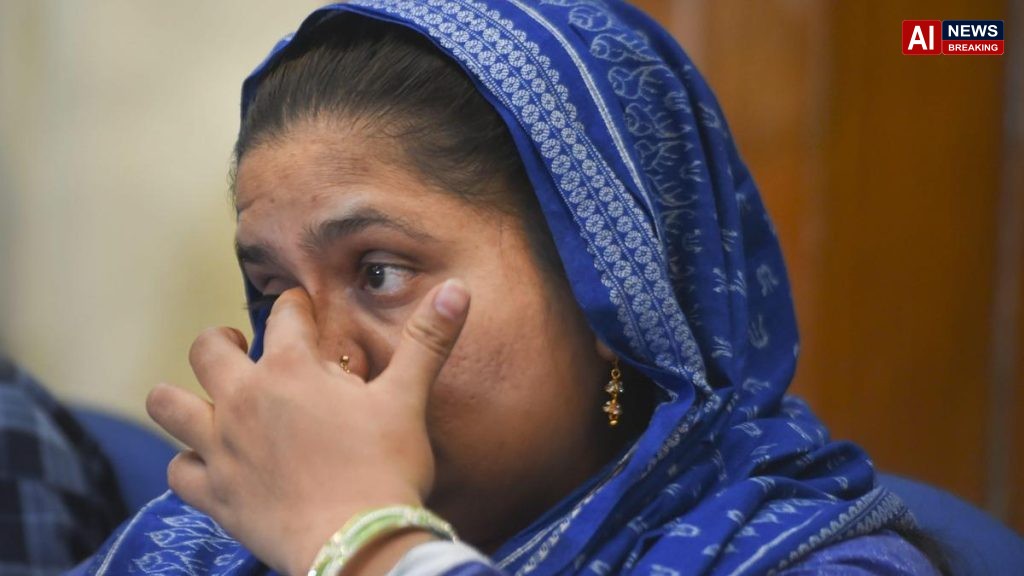
Bilkis Bano case: Supreme Court suspends sentence, grants bail to two convicts - AI News Breaking
bilkis bano case supreme:
The Supreme Court on Tuesday set aside the trial‑court sentences of two men convicted in the 2005 Bilkis Bano case, granting them bail pending a full hearing of their appeals. The judges, addressing a packed courtroom, observed that the appellants had already spent more than 17 years behind bars and noted that one of them suffered from a severe physical handicap, factors they said warranted a careful re‑examination of the case on both factual and legal grounds. Their remarks, delivered in a concise order, signalled a shift in a saga that has long occupied India’s collective conscience and sparked intense debate over the balance between retributive justice and procedural fairness.The Bilkis Bano case, which began with the harrowing ordeal of a 19‑year‑old woman who was allegedly gang‑raped by members of the Indian Army during the 2002 Gujarat riots, has been emblematic of the broader tensions that have characterised post‑riot litigation..
In 2013, a special court convicted 11 army personnel, handing down death sentences to eight and life imprisonment to three, while also ordering compensation for Bilkis Bano and her surviving children. The verdict was hailed by many as a rare instance of accountability for security forces, but it also attracted criticism for perceived procedural shortcuts and for the manner in which the trial was conducted.Since the convictions, the appellate process has been fraught with delays, petitions, and intermittent stays of execution. The two appellants whose bail was granted – identified only as Private Soldiers A and B in court documents – have consistently maintained their innocence, arguing that the evidence against them was circumstantial and that key witnesses, including Bilkis Bano herself, were either coerced or lacked credibility..
Their defence counsel also highlighted the deterioration of the accused’s health, especially in the case of Private Soldier A, who suffers from a debilitating spinal condition that limits his mobility and has required regular medical attention.The Supreme Court’s decision to suspend the sentences does not equate to an exoneration. Rather, it reflects the apex court’s prerogative to ensure that the rights of the accused are protected while the appellate process unfolds. The bench, comprising Justice A.N..
Ramesh, emphasized that the principle of “bail as a matter of right” applies when the appellant has already served a substantial portion of his sentence, provided that there are compelling reasons to reconsider the conviction. The court also noted that the passage of time can erode the reliability of evidence, a factor that merits scrutiny in a case heavily reliant on victim testimony and forensic reports that are now over two decades old.Legal analysts suggest that the ruling may be driven by a broader trend in the judiciary to revisit convictions that rest on what is perceived as “thin” evidential foundations, especially in high‑profile cases that have attracted public and political attention. Professor Meera Singh of the National Law School of India points out that the Supreme Court has, in recent years, shown an increased willingness to entertain bail applications for convicts whose sentences have already been partially served, particularly where health concerns are raised..
“The court is navigating a delicate line between upholding the verdicts of lower courts and ensuring that the constitutional rights of the accused are not trampled by the passage of time,” she said.Human rights organisations, meanwhile, have expressed cautious optimism that the Supreme Court will use the upcoming hearings to scrutinise the investigative and trial procedures that underpinned the original convictions. The International Federation for Human Rights (FIDH) released a statement urging the court to examine whether the victims’ testimonies were obtained in accordance with due process, and whether the forensic examinations met international standards. “Justice for the victims cannot be achieved through shortcuts or rushed verdicts; it must be rooted in rigorous, transparent, and fair proceedings,” the statement read.For Bilkis Bano, the development is a bitter reminder that the legal battle she has waged for more than two decades is far from over..
In an interview with a local newspaper last week, she said she remains “determined to see the truth emerge,” but expressed disappointment that the Supreme Court’s order seemed to prioritize the health of the accused over the suffering endured by her and her children. She added that the compensation awarded to her family has barely covered medical expenses and that the protracted legal process continues to exact an emotional toll.The case has also reignited debate within the political sphere. Members of the opposition have seized upon the bail grant as evidence of a “softening” on accountability for security forces, while supporters of the ruling party argue that the Supreme Court is simply adhering to constitutional safeguards..
In the Lok Sabha, a senior minister defended the judiciary’s independence, stating that “the courts must weigh every element, including the passage of time and health considerations, before delivering final judgments.”As the Supreme Court prepares to hear the full appeals, it is expected to address several critical issues: the admissibility and reliability of the original forensic evidence, the credibility of witness statements recorded under duress, and the applicability of the “right to speedy trial” doctrine in a case that has stretched over 20 years. Legal scholars anticipate that the bench may also consider whether the death sentences imposed on the other convicts should be commuted, given the evolving jurisprudence on capital punishment in India.The Bilkis Bano saga, now entering its third decade, continues to serve as a litmus test for India’s ability to reconcile the demands of justice with the imperatives of due process. The Supreme Court’s interim order, while granting temporary relief to the two appellants, underscores the complexity of adjudicating crimes that are as much about societal wounds as they are about legal transgressions..
As the nation watches the proceedings unfold, the ultimate verdict will likely reverberate beyond the courtroom, influencing public confidence in the legal system and shaping the discourse on accountability for state actors in times of communal unrest..
Updated: November 16, 2026
The Supreme Court’s bail move signals a judicial pivot from symbolic retribution toward procedural exactitude, exposing how time‑worn evidence can erode even the most politically charged convictions.
If the court leans into this “rights‑over‑revenge” calculus, India’s ability to hold state actors






