
 Pakistan’s leaders hail first astronaut aboard Chinese craft: ‘Proud one of us has gone into space’
 British tourist travels 29 hours from Mumbai to Amritsar for ₹5,461, rates Indian Railways 10/10 | Viral video
 The Supreme Court will decide whether assault weapons bans violate the Second Amendment
 A Critic of Beijing Falls Short in Taiwan’s Key Mayoral Election
 EPA says no rise in contamination after Army detonates lead azide stockpile in Iowa
Relentless Attacks on Ukraine’s Power Grid Threaten to Make Cities Unlivable
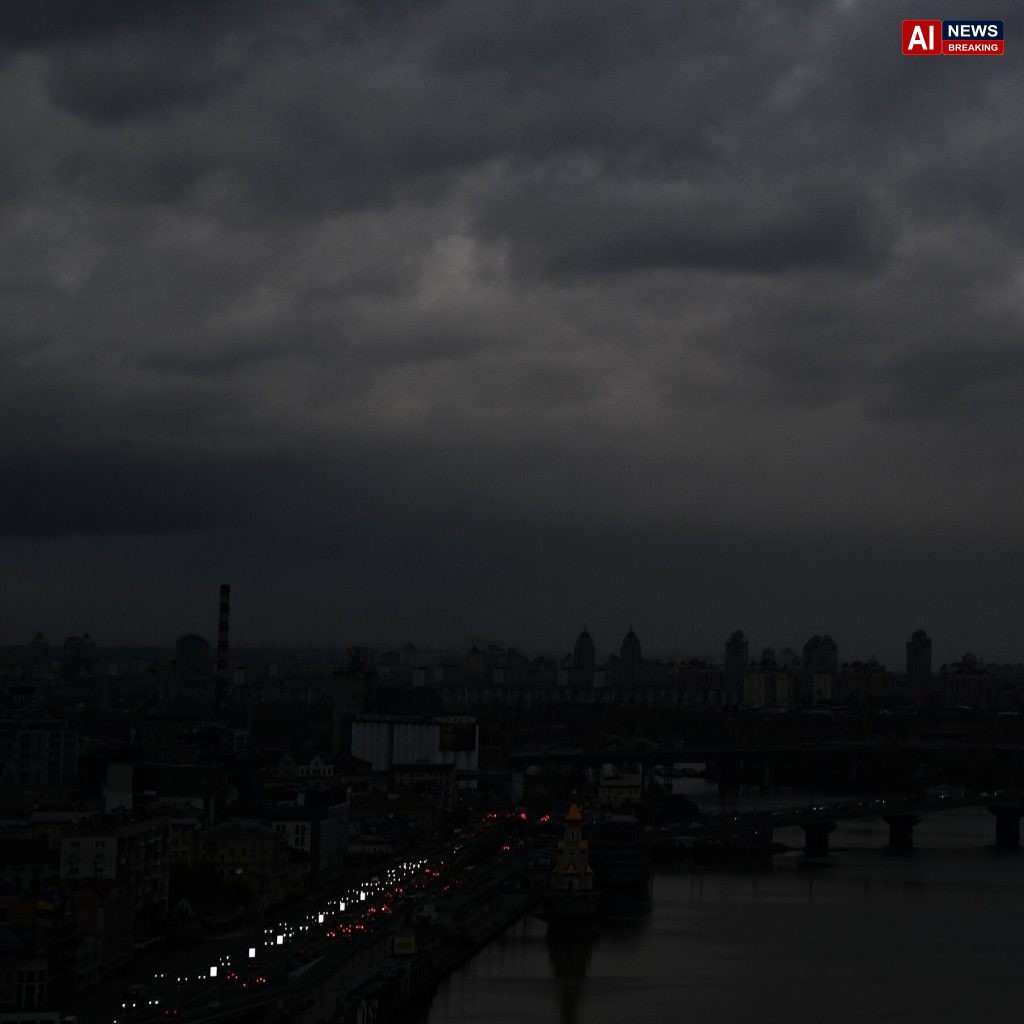
Relentless Attacks on Ukraine’s Power Grid Threaten to Make Cities Unlivable - AI News Breaking
relentless attacks ukraines power:
The relentless bombardment of Ukraine’s power infrastructure has intensified in recent weeks, prompting concerns that winter could see major cities across the country deprived of heat, water and basic sanitation. While Russian officials continue to speak of a “peaceful settlement,” the scale and coordination of the attacks suggest a strategic effort to cripple civilian services and undermine morale ahead of the cold months.Since early October, Ukraine’s energy grid has suffered a series on large‑scale strikes on high‑voltage transmission lines, substations and fuel depots. According to the Ukrainian Energy Ministry, more than 30 critical facilities have been damaged or destroyed, leaving roughly three‑quarters of the population without reliable electricity at some point during the last month..
In Kyiv, power outages have become a daily occurrence, with residents forced to rely on generators, candles and improvised heating solutions. Similar patterns are emerging in other regional centres such as Kharkiv, Dnipro and Odesa, where the loss of electricity has disrupted water treatment plants and sewage systems.The Ukrainian government has attributed the campaign to a coordinated effort by Russian forces, describing it as “a calculated attempt to weaponise the winter.” Military analysts point to the timing of the strikes, which coincide with the approach of sub‑zero temperatures, as evidence of intent. “Targeting the power grid in early winter maximises civilian hardship and puts additional pressure on the Ukrainian authorities,” said Dr Anatoly Ivanov, a senior fellow at the Institute for Strategic Studies in Kyiv..
Russian state media, however, have denied any systematic targeting of civilian infrastructure, claiming that any damage is the result of “defensive operations” against Ukrainian military assets.International observers have voiced alarm over the humanitarian implications. The United Nations Office for the Coordination of Humanitarian Affairs (OCHA) warned that prolonged power cuts could jeopardise the delivery of essential services, including heating in hospitals, cold‑chain storage for medicines and the operation of water purification plants. “A sustained loss of electricity in winter poses an acute risk to public health, especially for vulnerable groups such as the elderly, children and those with chronic illnesses,” the agency’s spokesperson said in a briefing on Tuesday.Ukraine’s response has been a mix of rapid repairs, emergency power imports and calls for increased international assistance..
The state utility, Ukrenergo, has mobilised repair crews around the clock, often working in dangerous conditions amid ongoing shelling. In recent days, Ukraine has received emergency shipments of generators and fuel from NATO partners, including a contingent of mobile power units supplied by the United Kingdom and the United States. These arrivals have helped restore limited electricity to critical facilities, but experts caution that they are insufficient to meet the full demand of a nation of nearly 30 million people.The broader context of the attacks reflects a pattern observed in previous conflicts where energy infrastructure is targeted to erode civilian resilience..
In the early months of the 2022 invasion, Russia launched a series of strikes on power plants and grid nodes, prompting a massive international push to bolster Ukraine’s energy security. The current wave, however, appears more focused on sustained disruption rather than a single shock, suggesting an evolution in tactics. “We are seeing a shift from one‑off attacks to a systematic campaign aimed at keeping the grid offline for as long as possible,” noted Dr Olena Hrytsenko, a professor of security studies at the National University of Kyiv-Mohyla Academy.Humanitarian organisations on the ground report a growing strain on communities already coping with displacement and food insecurity..
In Kyiv’s Borshchahivka district, families have resorted to stacking firewood in basements and sharing scarce heating resources with neighbours. “We have three children, and the radiator stopped working two days ago. The cold is getting unbearable,” said one resident, who asked to remain anonymous for safety reasons..
In the south, where power cuts have also impacted desalination plants, the scarcity of clean water has forced residents to rely on bottled supplies that are dwindling.The economic fallout is expected to be significant. Energy losses translate into reduced industrial output, especially in sectors such as metallurgy and chemicals that depend on steady electricity. The World Bank warned that prolonged outages could set back Ukraine’s post‑war reconstruction by years, eroding foreign investment and slowing the recovery of critical infrastructure..
“A functional power grid is the backbone of any economic revival. Without it, the path to stability becomes far more arduous,” the institution’s regional director explained.Diplomatically, the attacks have intensified calls for a stronger international response. In a recent session of the United Nations Security Council, several members urged the adoption of a resolution that would label the targeting of civilian energy infrastructure as a violation of international humanitarian law..
Russia, a permanent member, vetoed the proposal, prompting a debate over the effectiveness of existing mechanisms to deter such conduct. Meanwhile, the European Union announced an additional €500 million package to support Ukraine’s energy resilience, emphasizing the need for rapid reconstruction of damaged facilities and the deployment of renewable energy solutions as a longer‑term safeguard.As winter deepens, the situation remains fluid. Ukrainian officials have warned that without swift and sustained assistance, the combination of power outages, heating shortages and water disruptions could create a humanitarian crisis of unprecedented scale in Europe..
The next weeks will test the resilience of both the Ukrainian population and the international community’s capacity to respond to a conflict that increasingly blurs the line between military objectives and civilian survival..
Updated: November 16, 2026
Winter‑time grid attacks are a calculated pressure valve, turning basic utilities into weapons that force Ukraine’s leadership into desperate, visible pleas for aid—exactly the leverage Moscow hopes to extract.
If the world’s response stalls, the ensuing humanitarian collapse could become the conflict’s defining narrative, eclipsing battlefield gains







