
 Pakistan’s leaders hail first astronaut aboard Chinese craft: ‘Proud one of us has gone into space’
 British tourist travels 29 hours from Mumbai to Amritsar for ₹5,461, rates Indian Railways 10/10 | Viral video
 The Supreme Court will decide whether assault weapons bans violate the Second Amendment
 A Critic of Beijing Falls Short in Taiwan’s Key Mayoral Election
 EPA says no rise in contamination after Army detonates lead azide stockpile in Iowa
Airstrikes on Iran Missile Sites May Shed Light on Justification for Dams
Airstrikes on Iran Missile Sites May Shed Light on Justification for Dams - AI News Breaking
airstrikes iran missile sites:
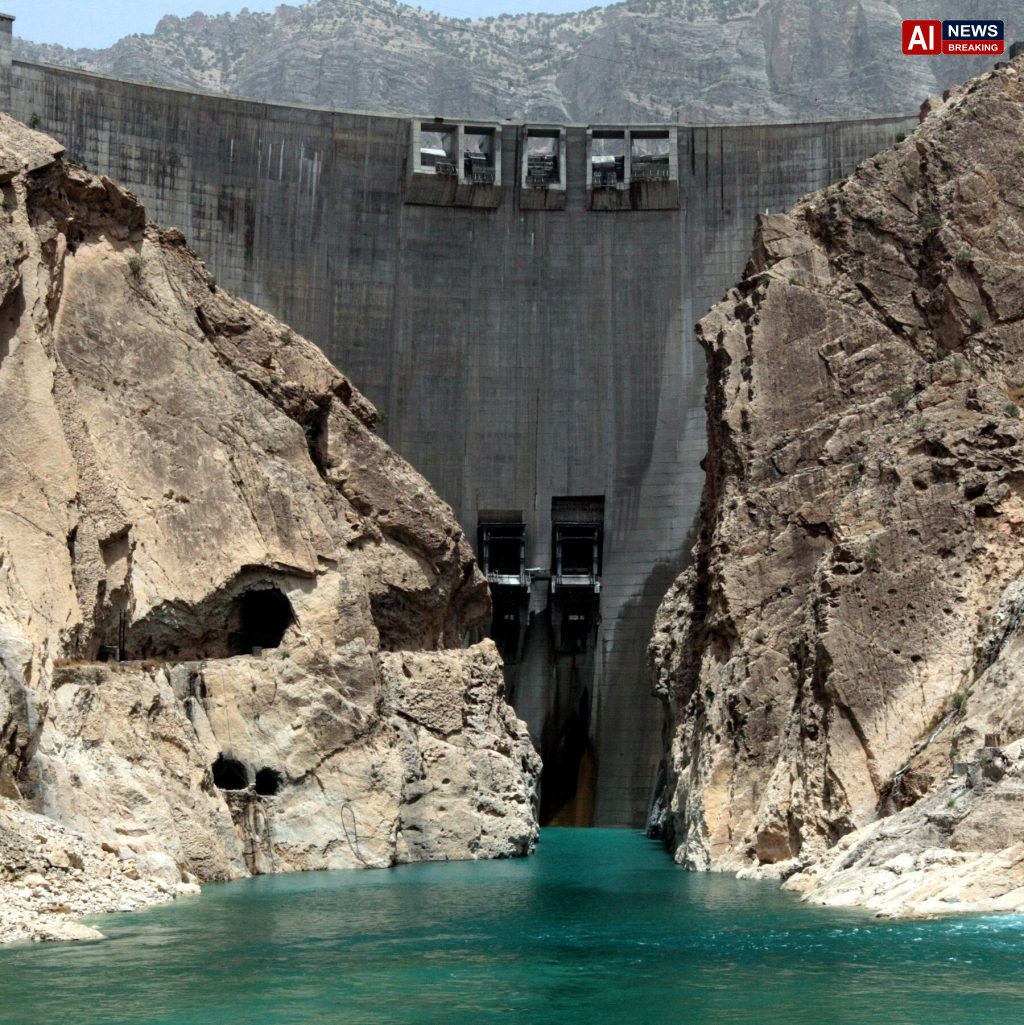
The recent reports of airstrikes on Iranian missile launch sites have sparked a new debate among environmental scholars and policy analysts, not because of the immediate military implications but because of the wider context in which these strikes occurred. In several weeks of satellite images and intercepted communications, the United States and its allies allegedly targeted launch complexes situated in the Zagros foothills, a region that is also home to a sprawling network of dams and reservoirs that have long been criticised by environmentalists for their opaque justifications.The link between the two has been made by a group of independent researchers who argue that the strategic choice of missile sites in proximity to hydroelectric infrastructure reveals a deliberate pattern of resource control. They point out that many of the dams were built under the guise of “energy security” and “regional development,” yet no independent studies have verified a substantial increase in electricity generation or a measurable reduction in water shortages..
Instead, the facilities have largely remained underutilised, while their construction has displaced thousands of local farmers and altered river ecosystems.According to the research team, the choice of missile sites in the same valleys as these dams was no accident. The missile launch platforms were built to take advantage of the natural protection offered by the surrounding cliffs and the low visibility of the area, which is also a major water storage hub for the country’s arid south. The same physical geography that makes the valley a natural shield for weaponry also makes it a strategic asset for controlling water distribution..
In this sense, the military and the water infrastructure planners appear to have worked hand in hand, or at least shared a common objective of exerting regional dominance.The implications are significant. If a state is willing to invest heavily in military installations to safeguard its water assets, it casts doubt on the official narrative of “public welfare” that has been used to justify the dams. Critics of the infrastructure projects have long argued that the construction of dams in the region was driven not by energy needs but by a desire to monopolise water resources for elite political groups..
The recent airstrikes, they contend, confirm that the government treats water as a strategic reserve, protecting it with the same force used to defend borders.International environmental watchdogs, such as the International Rivers Alliance, have reacted with caution. In a statement, the organization said it had been “aware of the military relevance of water infrastructure in the region, but has not yet been able to confirm any direct link between defence planning and dam construction.” They also highlighted the need for greater transparency in both military and infrastructure projects to prevent misuse of public resources.The Iranian government, meanwhile, has issued a brief statement claiming that the airstrikes were a response to “unlawful threats” posed by hostile elements. It dismissed any connection between the missile sites and water infrastructure, suggesting that the proximity of the two was purely coincidental..
Tehran’s official spokesperson also reiterated that the dams were part of a long‑term plan to ensure energy security for a growing population.Analysts disagree. Leila Karim, a professor of Middle Eastern studies at the University of Oxford, argues that the strategic placement of missile launch sites near dams is a classic example of “dual-use infrastructure.” She notes that the same routes and bridges that provide access to missile silos also facilitate the transport of water‑related equipment, making these sites invaluable for both defence and resource management. “When you see a pattern of infrastructure development that serves multiple, often conflicting, purposes, it indicates a broader strategy of resource dominance,” she says.The debate is further complicated by the international legal framework..
The United Nations Convention on the Law of the Non‑Proliferation of Military Equipment in the Environment (UNCLMEE) has called for clearer delineation between military and civilian infrastructure to avoid conflicts of interest. Iran’s ratification of the treaty in 2018 was a milestone, yet the recent airstrikes raise questions about how the country interprets its obligations under the agreement.Meanwhile, environmental NGOs on the ground are calling for an independent audit of the dams’ performance. “We are not just asking if the dams produce enough electricity,” says Amir Neshat, director of the Iranian Water Conservation Association..
“We want to know why they were built in the first place, how they affect local communities, and whether they can be repurposed for more sustainable uses.” The audit would involve satellite imagery, water flow measurements, and socioeconomic surveys, and would be the first comprehensive assessment of the region’s hydro infrastructure.In the broader geopolitical context, the airstrikes have already begun to shift the narrative surrounding Iran’s military and environmental policies. If the dual-use nature of the infrastructure is proven, it could weaken international support for the country’s missile development programmes and lead to increased scrutiny of its water management practices. At the same time, it may prompt neighboring states to reassess their own infrastructure strategies in light of the potential for militarisation of natural resources.The unfolding situation underscores the interconnectedness of military strategy and environmental management..
As analysts and activists continue to investigate the motives behind the construction of Iran’s dam network, the airstrikes have illuminated a new dimension of state power: the use of armed force to protect and control natural resources. Whether this revelation will translate into policy change or simply deepen suspicions remains to be seen, but it is clear that the justification for the country’s vast water projects is now being scrutinised under a new, more critical lens..
Updated: November 16, 2026
Insight: The strikes have turned water infrastructure from a silent backdrop into a battlefield, exposing how Iran’s “energy security” narrative masks a bid for regional resource dominance. If the dual‑use link is confirmed, it could force a recalibration of both its missile ambitions and its water‑management legitimacy.






