
 Pakistan’s leaders hail first astronaut aboard Chinese craft: ‘Proud one of us has gone into space’
 British tourist travels 29 hours from Mumbai to Amritsar for ₹5,461, rates Indian Railways 10/10 | Viral video
 The Supreme Court will decide whether assault weapons bans violate the Second Amendment
 A Critic of Beijing Falls Short in Taiwan’s Key Mayoral Election
 EPA says no rise in contamination after Army detonates lead azide stockpile in Iowa
Karthigai Deepam lit only at deepa mandapam for over 150 years: Tamil Nadu government tells Supreme Court
**
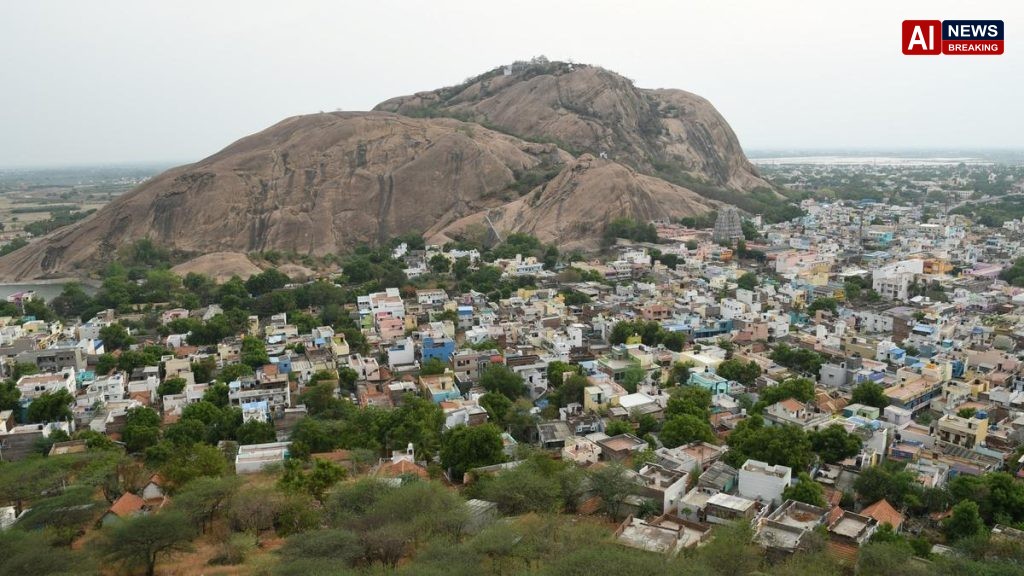
Karthigai Deepam lit only at deepa mandapam for over 150 years: Tamil Nadu government tells Supreme Court - AI News Breaking
karthigai deepam only deepa:
Karthigai Deepam lit only at deepa mandapam for over 150 years: Tamil Nadu government tells Supreme Court The Supreme Court hearing on Tuesday saw the Tamil Nadu government present a detailed brief on the historic lighting of the Karthigai Deepam festival, arguing that the tradition has always been confined to the deepa mandapam rather than the hilltop. According to the government’s submission, no established practice, custom, or prior claim exists for illuminating the flame on the summit of Thirupparankundram Hill or on the stone pillar now referred to as the “deepathoon.” The petitioners contend that the hilltop lighting is an unprecedented change that could disrupt the local ecosystem. The court’s bench, comprising three eminent judges, expressed scepticism over the state’s assertion, noting that the Karthigai Deepam festival has historically been a communal celebration involving a wide array of rituals..
They questioned whether the state’s claim of exclusive control over the deepa mandapam’s lighting was based on any legal precedent or administrative order. The bench highlighted the need for clarity in the legal basis for restricting the customary practice of lighting the flame on the hilltop, which has been a part of the festival for several centuries. In response, the state’s counsel cited a series of administrative orders dating back to the early 20th century, which they argue formally established the deepa mandapam as the sole site for the festival’s lighting..
They further pointed to a 1968 decree that explicitly prohibited the lighting of the flame on any other structure within the temple precincts. The counsel also presented a historical account that described the hilltop as a sacred viewing point for devotees, but not as a site for the actual lighting of the lamp. The petitioners, led by a coalition of local temples and heritage organisations, countered that the hilltop has long been regarded as the symbolic centre of the Karthigai Deepam celebration..
They presented oral histories from elders who recounted that the flame was traditionally lit on the stone pillar at the hill’s summit during the early 1900s. They argue that the state’s insistence on a single site disregards the evolving nature of the festival and the community’s collective memory. The court asked the government to clarify whether any legislative act had authorized the exclusive use of the deepa mandapam..
The state responded by providing a copy of a 1983 ordinance that, according to the government, gave the temple authorities the power to designate a single location for the festival’s main event. The ordinance, however, was never formally incorporated into the state’s legislative framework, raising questions about its legal weight. In the same vein, the opposition presented a 2002 memorandum from the Tamil Nadu Archaeology Department that listed the hilltop and the deepa mandapam as distinct heritage sites..
The memorandum suggested that both locations carried equal religious significance and should be treated as separate entities. The court noted that the memorandum was not legally binding but could be indicative of the cultural landscape at the time. The bench further probed the environmental impact of the hilltop lighting..
The government’s environmental officer argued that the hilltop is a protected ecological zone, and any large-scale illumination could cause damage to the local flora and fauna. The officer cited studies showing increased soil erosion and disturbance to nesting birds during the festival period. The court acknowledged the environmental concerns but pointed out that the state had not provided any contemporary environmental assessment to justify the ban..
The petitioners replied that the environmental risks could be mitigated through controlled lighting techniques, such as using LED lamps or installing flame holders that minimise heat output. They also suggested that the festival’s organisers could collaborate with conservation groups to ensure that the hilltop remains undamaged. The court, however, remained unconvinced, stating that the state’s environmental arguments needed to be supported by up-to-date data..
In a broader context, the court examined the role of the Supreme Court in adjudicating disputes involving religious customs. The bench noted that the Indian Constitution protects the freedom of religion and the right to practice cultural traditions. They urged both parties to seek an amicable resolution that respects the community’s heritage while ensuring compliance with environmental and legal standards..
The court also reminded the state that any regulatory action should be grounded in a clear statutory mandate. The government concluded its submission by reiterating its commitment to preserving the sanctity of the Karthigai Deepam festival. It urged the court to consider the long-standing tradition of lighting the flame at the deepa mandapam and to recognise the potential cultural and ecological implications of altering this practice..
The state’s counsel requested that the Supreme Court issue a directive reaffirming the current arrangement until a comprehensive review is undertaken. The bench adjourned the hearing, stating that it would deliberate further on the merits of the case and seek additional evidence from both sides. The court emphasized the importance of balancing religious freedom, cultural heritage and environmental protection..
It also signalled that any future decisions would be guided by the principles of equity and the precedent set by similar cases involving festival rituals across the country. The outcome of this case will likely influence how Tamil Nadu and other Indian states manage the intersection of tradition, law and ecological stewardship. The Supreme Court’s ruling will serve as a benchmark for resolving disputes over customary practices that involve public access to sacred sites..
Whether the government’s claim of exclusive control over the deepa mandapam will stand remains to be seen as the court continues to weigh the competing interests of heritage preservation and community rights..
The Tamil Nadu government told the Supreme Court that the Karthigai Deepam flame has been lit exclusively at the deepa mandapam for over a century, citing historic orders to block hill‑top lighting. Judges questioned the legal basis of that claim, weighing heritage customs, environmental concerns and the community’s long‑standing practice of illuminating the hill summit.
The court’s insistence on “single‑site” control reveals a tension between bureaucratic authority and living tradition: history is not static, and communities shape rituals as much as laws. Balancing religious freedom with environmental stewardship will set a precedent for how modern states negotiate the sacred spaces that have evolved over centuries






