Pakistan’s leaders hail first astronaut aboard Chinese craft: ‘Proud one of us has gone into space’
 British tourist travels 29 hours from Mumbai to Amritsar for ₹5,461, rates Indian Railways 10/10 | Viral video
 The Supreme Court will decide whether assault weapons bans violate the Second Amendment
 A Critic of Beijing Falls Short in Taiwan’s Key Mayoral Election
 EPA says no rise in contamination after Army detonates lead azide stockpile in Iowa
South Korea to Examine How K-Pop Industry Treats Underage Performers
**
South Korea to Examine How K-Pop Industry Treats Underage Performers - AI News Breaking
south korea examine kpop:
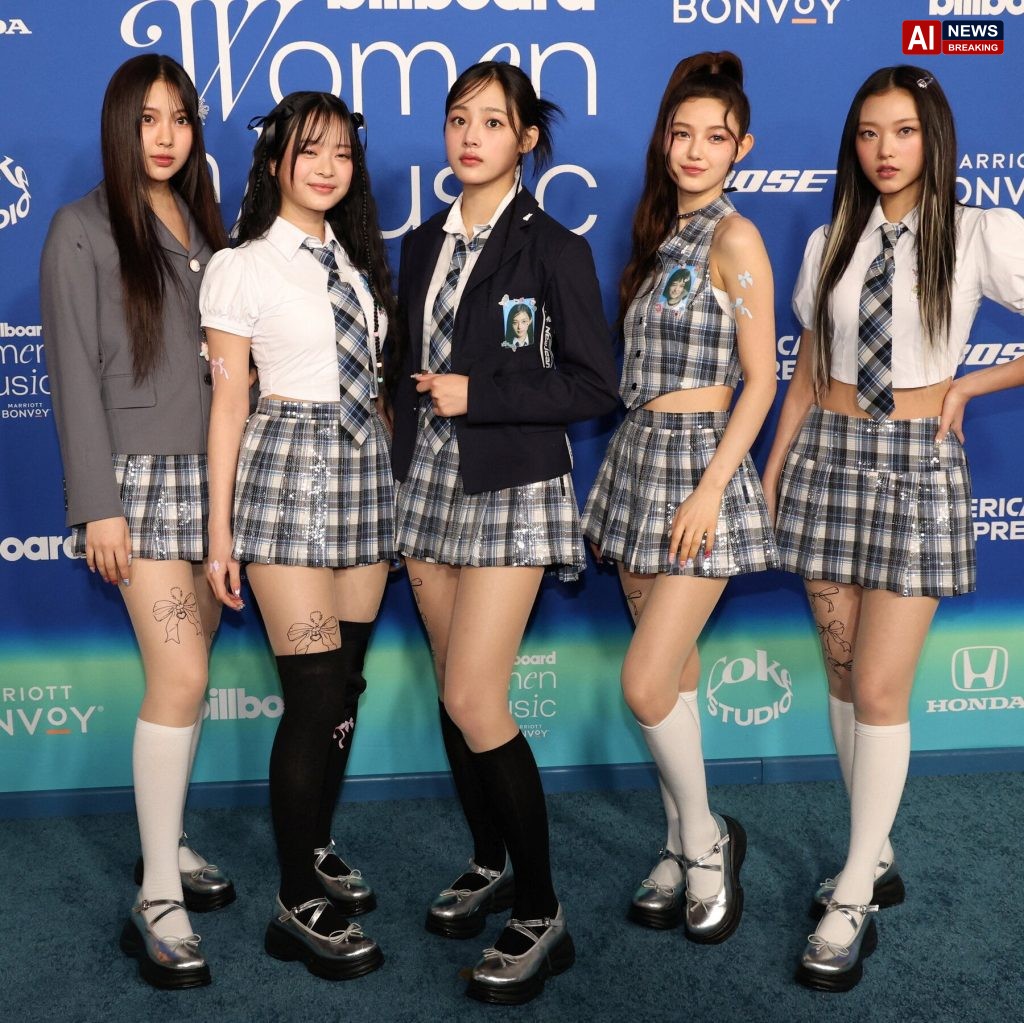
South Korea’s Ministry of Culture, Sports and Tourism announced on Tuesday it will launch a comprehensive review of the music industry’s treatment of underage performers, following a New York Times exposé that revealed the restrictive contracts signed by the pop group NewJeans when its members were between 14 and 17 years old. The investigation highlighted how the group’s contract, which was signed in 2020, imposed stringent clauses that limited the members’ freedom to negotiate, restricted their earnings and tied them to a single agency for an extended period. The ministry said it will investigate the wider industry to ensure that young artists are protected from exploitative practices.The review will focus on three main areas: the length and content of contracts, the working conditions of minors and the mechanisms in place to prevent abuse..
The ministry said it will engage with industry stakeholders, including talent agencies, performers’ unions, and legal experts, to develop guidelines that comply with international labour standards. “We recognise that the music industry has become a global cultural powerhouse, but we also acknowledge that young people in the sector require special safeguards,” a ministry spokesperson said.Industry experts note that the New York Times report was not the first to expose harsh contract terms for young performers. In 2020 a report by The Korea Herald had already described how trainees could be bound to agencies for up to seven years, with a portion of their earnings going to the agency as a “training fee”..
The new review will examine whether these contracts continue to be enforced, and if they are aligned with the country’s child labour laws and the International Labour Organization’s conventions.In the United States, the entertainment industry has faced similar scrutiny. In 2019 the US Federal Trade Commission released guidelines to protect children in the media, limiting the number of hours they can work and requiring a portion of earnings to be saved in a custodial trust. “South Korea’s move could bring the country in line with global best practices,” said Dr..
Hye-jin Kim, a professor of entertainment law at Seoul National University. “However, the challenge will be to balance the creative ambitions of young artists with the need to protect them from predatory contracts.”The ministry’s review will also examine the enforcement of existing legislation. Under the Act on the Protection of Children and Juveniles, children are prohibited from engaging in work that may endanger their health, safety or development..
Critics argue that many underage performers are exempted from these provisions under a “special category” for artistic training. The review will consider whether that exemption is justified or whether the industry’s practices are in conflict with the act’s principles.The NewJeans investigation also raised questions about the role of parental consent. While parents can sign contracts on behalf of their minor children, the New York Times article found that in some cases parents were not fully aware of the clauses that would bind their children for years..
The ministry said it will assess whether current consent procedures are transparent enough to ensure that parents truly understand the terms they are agreeing to on behalf of their children.The review will be conducted over the next six months, with a provisional report expected by the end of the year. The ministry said it will also hold public hearings, inviting musicians, talent managers and legal advocates to share their experiences. “We want a transparent dialogue that leads to practical reforms,” the spokesperson added..
The ministry also stated that it would look into the financial structures of contracts, specifically the proportion of income that flows to agencies versus the artists, and whether the so-called “training fee” is proportionate to the services provided.In response to the announcement, several agencies have expressed concern that stricter regulations could hamper their ability to nurture talent. “The industry has built a global reputation on rigorous training and long-term development,” said the CEO of a leading talent agency. “We believe that we already have robust mechanisms to protect young artists, and that a blanket review could stifle innovation.” However, several artists have spoken out in support of the review..
A former trainee who now works as a composer said that “the contract was very vague and left no room for negotiation, which is frightening for anyone who wants to pursue a career in music.”The review will also consider the broader socio-cultural context in which K‑Pop operates. The genre has become an economic engine for the country, generating billions in revenue from album sales, concerts and merchandise. At the same time, the intense competition has led to a culture of long hours and high pressure for young artists..
“If we want the industry to thrive sustainably, we need to ensure that the young people who feed it are not exploited,” said a senior cultural policy analyst.Finally, the ministry said it would collaborate with international bodies to align South Korea’s policies with global standards. The country is a signatory to several ILO conventions that protect child labour, and it has also committed to the United Nations’ Sustainable Development Goals, which include ensuring inclusive and sustainable industrial development. “Our objective is to create a framework that protects young artists while maintaining the creative vitality of the K‑Pop industry,” the spokesperson said..
The review, if successful, could serve as a model for other creative industries around the world facing similar challenges..
South Korea’s Ministry of Culture is launching a six‑month review into music‑industry contracts for minors after a New York Times exposé highlighted restrictive deals for the pop group NewJeans. The inquiry will examine contract length, working conditions, parental consent and financial structures, aiming to align industry practices with international child‑labour standards while balancing creative development.
South Korea’s probe signals a tipping point—if the new guidelines truly curb predatory contracts, they could redefine K‑Pop’s “golden ladder” into a safer, more equitable career path for its youngest stars.
But agencies will watch closely: tightening rules risk curbing the intensive