
 Pakistan’s leaders hail first astronaut aboard Chinese craft: ‘Proud one of us has gone into space’
 British tourist travels 29 hours from Mumbai to Amritsar for ₹5,461, rates Indian Railways 10/10 | Viral video
 The Supreme Court will decide whether assault weapons bans violate the Second Amendment
 A Critic of Beijing Falls Short in Taiwan’s Key Mayoral Election
 EPA says no rise in contamination after Army detonates lead azide stockpile in Iowa
What to Know About Trump’s Trip to Asia
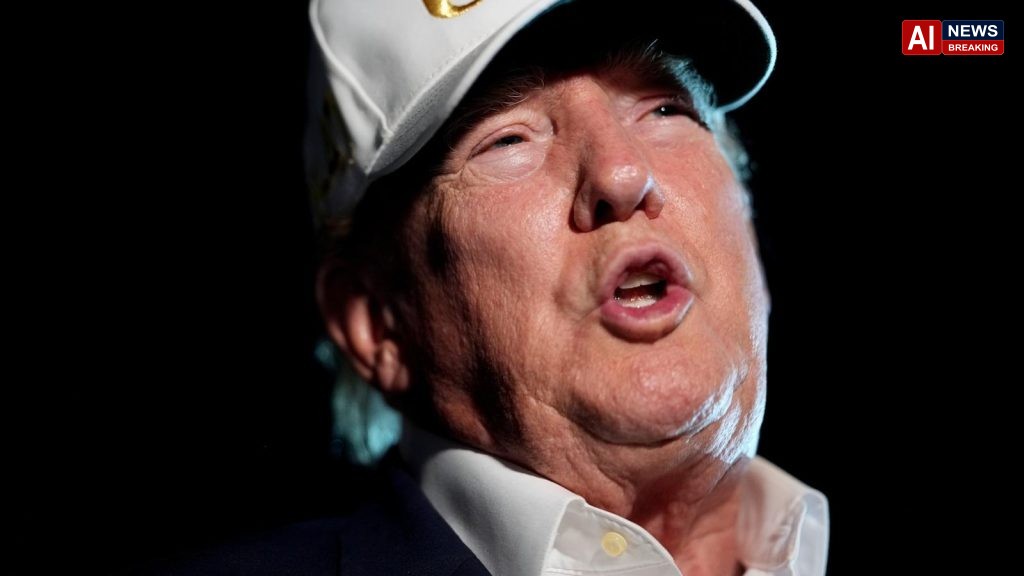
Trump says his deportation policy 'might have been too tough' for voters in the election - AI News Breaking
what know about trumps:
Title: What to Know About Trump’s Trip to Asia Paragraph 1 In a move that has drawn global attention, former President Donald Trump is slated to travel across the Asia-Pacific region next week, with a schedule that includes stops in Tokyo, Seoul, and Jakarta. president, who has long been an outspoken critic of China’s trade practices, is expected to use the trip to showcase his administration’s trade and foreign‑policy stances, many of which remain relevant in today’s diplomatic landscape. While some observers see this as a personal diplomatic tour, others view it as a strategic effort to galvanise support for a broader anti‑trade‑war initiative..
Paragraph 2 Trump’s itinerary is packed with high‑profile meetings, beginning with a brief summit with the Japanese Prime Minister. The two leaders will discuss a range of issues from supply‑chain resilience to regional security concerns, as tensions in the South China Sea continue to simmer. Trump’s emphasis on “America first” policies is expected to resonate with Japan’s own push for greater autonomy in defence and trade negotiations, especially in light of the United Kingdom’s post‑Brexit trade deals..
Paragraph 3 On the second day, the former president is set to meet with South Korea’s President Yoon Suk‑yeol. The agenda will likely cover the Korean Peninsula’s nuclear security framework and the ongoing U.S.‑South Korea defence treaty. Trump’s personal rapport with Yoon, cultivated during his presidency, may help to smooth talks about a possible new defense budget..
The meeting could also signal a shift toward a more aggressive stance against North Korea’s recent missile tests. Paragraph 4 Jakarta’s headline promises a focus on trade and climate. Indonesian President Joko “Jokowi” Widodo will host Trump to discuss the expansion of trade agreements and investment opportunities..
Jokowi, who has recently pledged to reduce Indonesia’s carbon emissions, may use the platform to rally support for the Green Climate Fund, a topic Trump has often championed through his administration’s environmental deregulation policies. The dialogue will likely address the need for sustainable infrastructure in Indonesia’s rapidly urbanising regions. Paragraph 5 A significant portion of Trump’s schedule will be dedicated to meeting with Australian Prime Minister Anthony Albanese..
Albanese has expressed a clear desire for a “de‑escalation in the conflicts,” particularly in the context of the Indo‑Pacific security climate. He will also address trade barriers that have hampered Australian exports. Albanese’s call for reduced tensions aligns with his broader foreign‑policy agenda, which includes a push for stronger ties with the United States and the United Kingdom, as well as a balanced approach to China..
Paragraph 6 During the Australian meeting, Trump is likely to emphasize the importance of free‑trade agreements and the need for “mutually beneficial” economic ties. He may also discuss the Australian Defence Force’s participation in joint exercises with the U.S. Navy in the South China Sea, an area where both nations have overlapping security concerns..
These exercises are seen as a deterrent to China’s assertive maritime claims, and Trump’s participation could be a symbolic gesture of continued U.S. Paragraph 7 In addition to official meetings, Trump will host a series of press conferences in each country, where he will outline his vision for U.S. His remarks will likely focus on trade, defence, and the importance of “protecting American interests.” The former president will also touch on his views regarding the Belt and Road Initiative, stating that it poses a strategic challenge that must be counterbalanced by strengthening alternative trade corridors..
Paragraph 8 The trip comes amid a flurry of diplomatic activity in the region. China has recently announced new tariffs on U.S. goods, prompting the United States to seek allies that can provide both economic and security support..
Trump’s presence in Asia could galvanise these allies, helping them to negotiate more favorable trade terms and to coordinate defence strategies, particularly against the backdrop of the Taiwan Strait’s rising tensions. Paragraph 9 Critics argue that Trump’s visit is a form of political posturing rather than genuine diplomatic engagement. They point out that his policy positions during his presidency were often at odds with the multilateral institutions that have governed Asia‑Pacific relations for decades..
Nevertheless, many business leaders see his visit as a potential boon for trade, especially for industries that have struggled under recent tariff disputes. Paragraph 10 The logistics of the trip will be complex, with security details involving both U.S. The former president will be escorted by a mix of U.S..
Army personnel and local security agencies, ensuring a smooth transition between cities. This arrangement is reminiscent of his previous visits, where a tight security detail was in place to maintain his safety and the smooth conduct of official engagements. Paragraph 11 Beyond official engagements, Trump’s itinerary includes a series of informal meetings with local business leaders..
He will meet with CEOs from key sectors such as automotive, technology, and agriculture, hoping to attract investment into U.S.‑based ventures. These meetings are part of a broader strategy to showcase the United States as a reliable partner for business and to counterbalance China’s growing influence over Asian markets. Paragraph 12 The outcome of the trip could influence U.S..
foreign‑policy direction in the years to come. Should Trump successfully rally support from regional allies, it may encourage a shift toward a more hard‑line stance against China. Conversely, if his meetings fall short of expectations, the U.S.
Updated: November 16, 2026
This development highlights evolving dynamics and may have broader implications in the near term.






