Pakistan’s leaders hail first astronaut aboard Chinese craft: ‘Proud one of us has gone into space’
 British tourist travels 29 hours from Mumbai to Amritsar for ₹5,461, rates Indian Railways 10/10 | Viral video
 The Supreme Court will decide whether assault weapons bans violate the Second Amendment
 A Critic of Beijing Falls Short in Taiwan’s Key Mayoral Election
 EPA says no rise in contamination after Army detonates lead azide stockpile in Iowa
Study Hard, Get a Career and Get Ahead? It’s Not What It Used to Be.
**
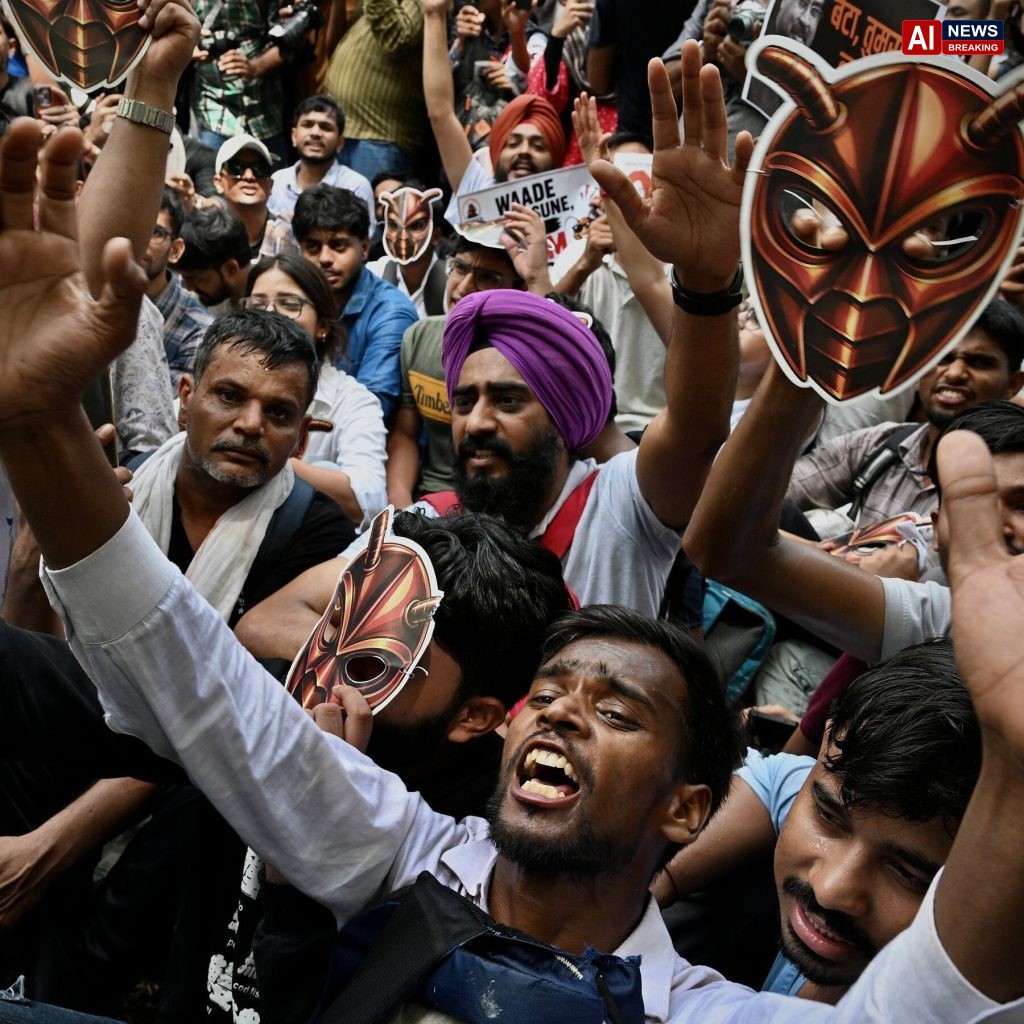
Study Hard, Get a Career and Get Ahead? It’s Not What It Used to Be. - AI News Breaking
study hard career ahead:
The belief that hard work and education guarantee a secure career and upward mobility has long underpinned social contracts across the globe, from the bustling streets of Mumbai to the polished avenues of Paris. For generations, families have invested in schooling, apprenticeships and university degrees, confident that these credentials would translate into stable jobs and a better standard of living. Yet recent data and personal testimonies suggest that the implicit meritocratic bargain is fraying..
In many advanced economies, the correlation between academic achievement and secure employment is weakening, while in emerging markets the promise of rapid advancement through diligence is being undercut by structural inequities and volatile labour markets.In India, enrolment in higher education has surged dramatically over the past two decades, with the number of students entering universities more than doubling since 2000. Despite this expansion, graduate unemployment rates have hovered around 12 per cent, and for many fields the gap between the number of graduates and the availability of suitable positions has widened. Employers cite a mismatch between curricula and industry needs, while graduates point to rising tuition fees and the burden of student loans that erode any financial advantage a degree might confer..
The result is a growing cohort of highly educated young adults who find themselves underemployed, taking temporary or low‑skill work far removed from their qualifications.France presents a parallel, albeit with different historical contours. The French model of elite schooling, epitomised by the Grandes écoles, has traditionally served as a pipeline to senior positions in the public and private sectors. Yet reforms aimed at widening access have produced a more heterogeneous student body, while the country’s labour market has become increasingly fragmented..
The rise of precarious contract work, known as “emploi précaire”, has meant that even graduates from prestigious institutions are no longer assured of long‑term, full‑time positions. Moreover, automation and digitalisation have reshaped demand for skills, leaving many with classical academic backgrounds struggling to adapt to fast‑moving sectors such as fintech and artificial intelligence.The erosion of the meritocratic promise is not confined to the Global North or to high‑skill occupations. In sub‑Saharan Africa, where primary school enrolment has risen sharply, the quality of education remains uneven, and the informal economy continues to dominate..
Young people who manage to secure secondary or tertiary qualifications often encounter labour markets that cannot absorb them, prompting migration to urban centres or overseas in search of opportunities. This exodus not only depletes local talent pools but also reinforces a narrative that success is contingent on geographic mobility rather than on the effort invested at home.A key driver of this shift is the changing nature of work itself. The gig economy, characterised by short‑term contracts and platform‑mediated labour, rewards flexibility and digital proficiency more than formal credentials..
In both developed and developing nations, platforms such as Uber, Deliveroo and Upwork have created millions of jobs that are technically “self‑employed” but lack the stability, benefits and career progression traditionally associated with full‑time employment. For many, the decision to join these platforms is less a matter of preference than a necessity driven by a scarcity of conventional jobs.At the same time, technological advances are redefining the skill sets that employers value. Automation threatens routine tasks across sectors, from manufacturing to clerical work, while machine learning and data analytics demand specialised knowledge that can be acquired outside the university system through bootcamps, online courses and vocational training..
This decentralisation of skill acquisition challenges the monopoly that universities once held over credentialing, further diluting the link between a degree and employability.Economic inequality also plays a crucial role in undermining meritocracy. In societies where wealth concentration is rising, access to quality education increasingly depends on family resources. Private tutoring, elite schools and international study programmes remain out of reach for many, creating a bifurcated system in which the privileged can continue to leverage education for advancement, while the rest face diminishing returns on their investment..
Studies in the United Kingdom, for example, show that graduates from state schools are significantly less likely to secure high‑earning positions than their peers from independent schools, even when controlling for academic performance.Policy responses have begun to acknowledge these complexities, but implementation lags behind the pace of change. In India, the government’s National Education Policy 2020 emphasizes skill‑based learning and greater industry collaboration, yet funding constraints and bureaucratic inertia hinder rapid reform. France has introduced measures to reduce precarious employment, such as extending unemployment benefits and promoting apprenticeship schemes, but critics argue that these initiatives are insufficient to counteract deep‑seated market forces..
Across the board, there is a growing call for social safety nets that decouple income security from employment status, reflecting a recognition that the old model of work‑based welfare is no longer tenable.The cultural impact of this transition is profound. The narrative that hard work inevitably leads to success has long been a cornerstone of national identity and personal ambition. As more individuals confront the reality that education does not guarantee a stable career, confidence in institutions wanes, and social cohesion can be strained..
Surveys in several European countries reveal rising dissatisfaction with the idea of meritocracy, with many respondents citing perceived unfairness and lack of opportunity as sources of anxiety.Ultimately, the dismantling of the meritocratic bargain does not signal its complete demise, but rather a reconfiguration of how societies reward effort and talent. A more nuanced social contract may emerge, one that blends traditional education with lifelong learning, embraces flexible work arrangements, and provides universal safeguards against poverty irrespective of employment status. Such a framework would require coordinated action from governments, businesses and civil society, acknowledging that the promise of advancement must adapt to the realities of a rapidly evolving global economy..
Updated: November 16, 2026
Rising graduate unemployment and precarious gig work across India, France and sub‑Saharan Africa reveal that formal education no longer guarantees stable, well‑paid jobs, as market demands shift toward digital skills and flexible labour. Policymakers are urged to redesign social contracts, emphasizing lifelong learning, skill‑aligned training and universal safety nets to offset the waning meritocratic promise.
The collapse of the classic “degree = job” narrative exposes a widening chasm between effort and reward, forcing societies to rethink what counts as merit. If meritocracy morphs into a hybrid of formal credentials, gig‑based flexibility, and universal safety nets, it could restore faith—but only if governments and