Pakistan’s leaders hail first astronaut aboard Chinese craft: ‘Proud one of us has gone into space’
 British tourist travels 29 hours from Mumbai to Amritsar for ₹5,461, rates Indian Railways 10/10 | Viral video
 The Supreme Court will decide whether assault weapons bans violate the Second Amendment
 A Critic of Beijing Falls Short in Taiwan’s Key Mayoral Election
 EPA says no rise in contamination after Army detonates lead azide stockpile in Iowa
These Ukrainians Aren’t in Combat. But They Deal With War Every Day.
**
These Ukrainians Aren’t in Combat. But They Deal With War Every Day. - AI News Breaking
these ukrainians arent combat:
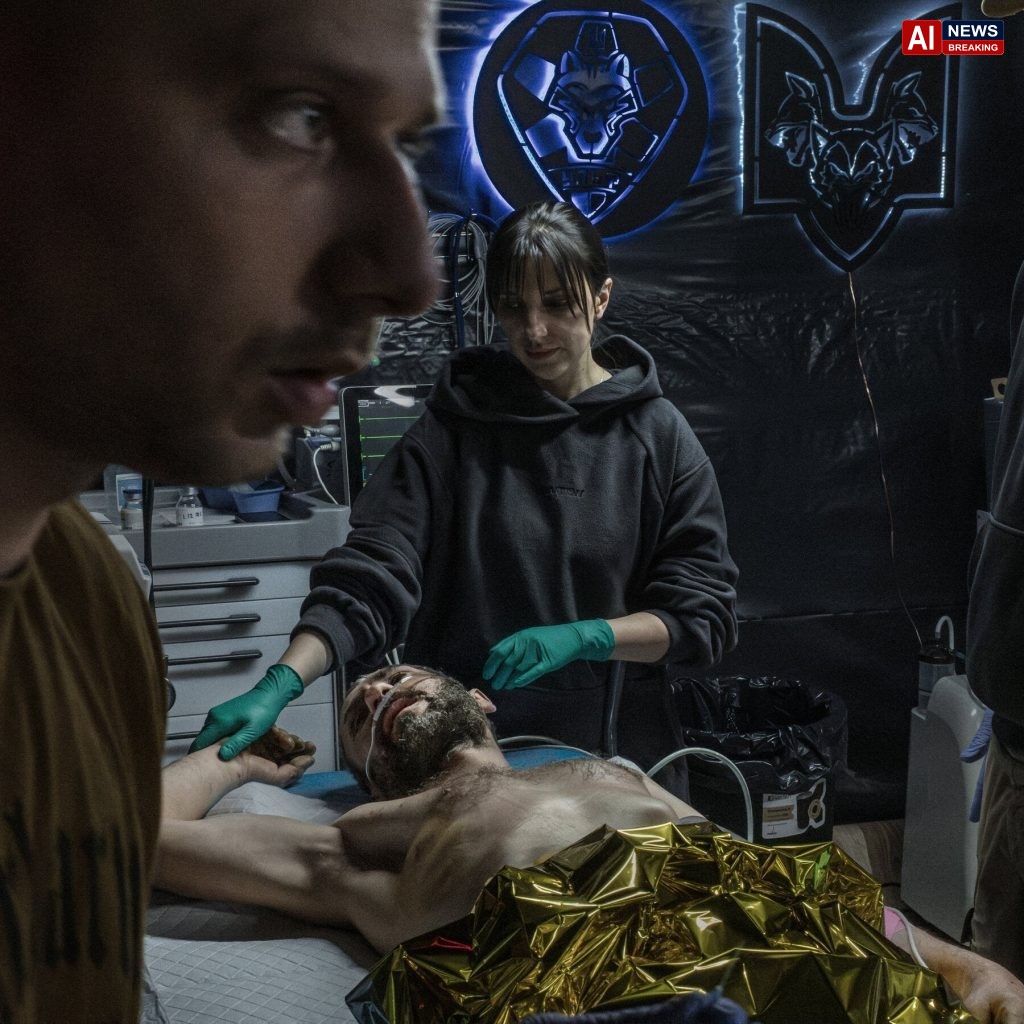
These Ukrainians Aren’t in Combat. But They Deal With War Every Day. In a makeshift hospital on the outskirts of Kharkiv, Dr Olena Kovalenko begins her day before sunrise, checking supplies that have arrived in battered containers..
The facility, a former school turned into a triage centre, receives a steady stream of civilians injured by shelling. Kovalenko, a surgeon trained in peacetime oncology, now performs emergency amputations and wound debridement with limited anaesthesia. She says the constant threat of air raids forces her to balance patient care with personal safety, often treating the same person multiple times as complications arise from delayed treatment..
Across the city, in a cramped courtyard beside a bombed-out apartment block, 52‑year‑old Mykhailo Hryshchenko lifts heavy wooden coffins for families who have lost loved ones. A former construction worker, Hryshchenko was conscripted as a gravedigger after his own house was reduced to rubble. He works under a tarp, shielding the bodies from the elements while local volunteers chant prayers..
The psychological toll is evident in his quiet demeanor; he remarks that each burial reminds him that the war’s casualties are not only soldiers but entire generations of civilians. Nearby, in a modest office converted from a former bakery, therapist Lena Moroz conducts group sessions for trauma survivors. Her clientele ranges from children who have witnessed explosions to elderly residents who recall the 2014 conflict..
Moroz employs cognitive‑behavioural techniques adapted to a context where safety cannot be guaranteed. She notes that the most common symptom is hyper‑vigilance, as patients remain on edge, listening for the distant rumble of artillery. Despite limited resources, her team has seen a gradual reduction in severe anxiety cases, attributing progress to community support networks..
In the morgue of the same hospital, pathologist Dr Andriy Lysenko works in a dimly lit room filled with steel tables and refrigerated units. His role, largely unseen by the public, involves determining cause of death for bodies that arrive without identification. Lysenko’s findings often influence legal investigations, especially in cases where civilian casualties may involve alleged war crimes..
He explains that the lack of proper documentation during chaotic evacuations complicates his work, yet he strives to provide families with answers, a small solace amid pervasive loss. The daily routines of these four professionals intersect at a community centre where volunteers distribute food and hygiene kits. The centre, funded by international NGOs, serves as a hub for coordination among medical staff, mental‑health workers, and mortuary teams..
Here, Kovalenko and Moroz share information about patients who may need psychological follow‑up after surgery, while Hryshchenko receives updates on families awaiting the return of their relatives’ remains. This collaborative approach, though improvised, reflects a broader societal effort to maintain dignity in the face of relentless conflict. War has forced many Ukrainians to adapt their skills to new, often harrowing, responsibilities..
Kovalko’s former specialization in oncology required meticulous planning and long‑term patient monitoring; now she must make split‑second decisions with scant resources. Hryshchenko, once a builder of homes, now constructs graves with a precision born of necessity. Moroz, trained in urban psychotherapy, must address collective trauma without the safety of stable environments..
Lysenko, whose career once focused on research, now confronts the immediate need for forensic clarity in chaotic circumstances. Despite the grim backdrop, moments of humanity surface. During a lull in fighting, Kovalenko organized a small celebration for a child who survived a shrapnel wound, decorating the ward with hand‑drawn balloons..
Hryshchenko recounted how a group of teenagers sang folk songs while he dug a grave, turning sorrow into a shared ritual. Moroz’s sessions often end with participants sharing meals, reinforcing social bonds that combat isolation. Lysenko, after completing a difficult autopsy, took a brief walk outside to watch the sunrise, noting that the light offered a brief respite from the darkness of his work..
The psychological burden on those who are not on the front lines is profound. Studies by Ukrainian health ministries indicate a rise in post‑traumatic stress disorder among civilian workers, comparable to rates among combat troops. Dr Kovalenko admits she experiences flashbacks to the sounds of explosions she heard while operating, while Moroz reports that listening to patients recount their losses can trigger secondary trauma..
Hryshchenko, who rarely speaks of his own grief, has begun attending informal counselling sessions offered by the same therapist he helps. International observers have highlighted the crucial role these non‑combatants play in sustaining the war‑torn nation’s resilience. Aid agencies allocate funds specifically for medical and mental‑health services, recognizing that a healthy civilian population underpins military effectiveness..
However, logistical challenges, such as disrupted supply lines and targeted attacks on infrastructure, impede consistent delivery of essential medicines and protective equipment. Lysenko emphasizes that without reliable forensic capacity, accountability for violations remains elusive, undermining both justice and deterrence. Looking ahead, the four professionals express cautious optimism..
Updated: November 17, 2026
In Kharkiv’s makeshift hospitals, schools and bakeries, a surgeon, a gravedigger, a therapist and a pathologist juggle life‑saving care, burials and trauma counseling amid relentless shelling, improvising with scarce resources to keep civilian life afloat. Their intertwined daily routines highlight how ordinary Ukrainians have been forced to adopt harrowing new roles, sustaining community resilience while bearing the psychological toll of war.
The makeshift resilience of Ukraine’s civilian healers blurs the line between front‑line combat and home‑front survival, signaling that the nation’s true battlefield is its capacity to preserve dignity amid daily horror. As forensic, medical and psychological networks intertwine under fire, they become the inadvertent arbiters of both immediate morale and future accountability for war crimes.